

Understanding Boundaries - Advocates for Youth 2026

Get Form
Understanding Boundaries - Advocates for Youth Preview on Page 1

Here's how it works

01. Edit your form online
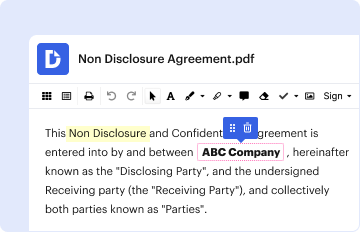
Type text, add images, blackout confidential details, add comments, highlights and more.
02. Sign it in a few clicks
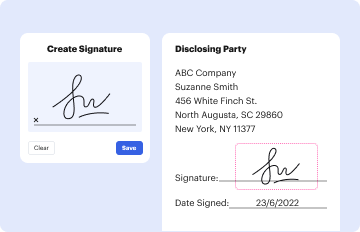
Draw your signature, type it, upload its image, or use your mobile device as a signature pad.
03. Share your form with others
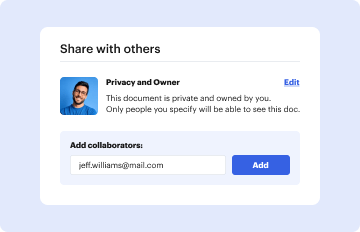
Send it via email, link, or fax. You can also download it, export it or print it out.

How to use or fill out Understanding Boundaries - Advocates for Youth

Form edit decoration
9.5
Ease of Setup
DocHub User Ratings on G2
9.0
Ease of Use
DocHub User Ratings on G2
  1. Click ‘Get Form’ to open it in the editor.
  2. Begin by reviewing the learning objectives outlined in the document. This will help you understand the key concepts related to personal boundaries that need to be addressed.
  3. Fill out the 'Setting and Respecting Boundaries' worksheet. Discuss each scenario with your group, ensuring that one person records your answers in the provided space.
  4. Complete the homework assignment titled 'What’s Your Advice?' by reading each situation carefully and writing down your advice for each case.
  5. Utilize our platform's commenting feature to add notes or questions as you work through the document, enhancing collaboration with peers.

Engage with our platform today to streamline your document editing and form completion process for free!

See more Understanding Boundaries - Advocates for Youth versions

We've got more versions of the Understanding Boundaries - Advocates for Youth form. Select the right Understanding Boundaries - Advocates for Youth version from the list and start editing it straight away!
Versions Form popularity Fillable & printable
2017 4.4 Satisfied (45 Votes)
be ready to get more

Complete this form in 5 minutes or less

Get form

Got questions?

We have answers to the most popular questions from our customers. If you can't find an answer to your question, please contact us.
Contact us
2.1 Why Prioritise Boundaries Successful youth work is built upon a trusted relationship that supports open communication and the sharing of information. Boundaries are intended to support this effective and professional relationship, whilst identifying limits around appropriate behaviours in the relationship. Guidance on Personal, Professional, and Environmental Boundaries National Youth Agency wp-content uploads 2024/02 g National Youth Agency wp-content uploads 2024/02 g
You can help your child set boundaries by talking with them about their feelings and what others might be feeling. This helps them develop empathy and understand how boundaries can be helpful. You can also teach your child to advocate for themselves by modeling your own boundaries.
Associating language with boundaries can help give children and young adults a framework to setting their own boundaries; for example: I feel like youre a little too close to me, can you take a step back so we can talk or I dont really like to be tickled, I would prefer a hug. 5 ways to teach your teens healthy boundaries - Youth Villages Youth Villages 5-ways-to-teach-your-teens-he Youth Villages 5-ways-to-teach-your-teens-he
Examples of personal boundaries might include: Personal Space: This pertains to your comfort with physical proximity and touch. Communication: Im not comfortable with close physical contact unless I initiate or agree to it. Self-Care: This boundary involves ensuring you have time and space for self-care activities.
Be clear about rules and what is/is not appropriate. Give examples of appropriate alternatives. Explain to the student a better way of doing/saying/acting. Document crossed boundaries. Boundaries when Working with Minors - Human Resources Carnegie Mellon University child-protection training bou Carnegie Mellon University child-protection training bou

Security and compliance

At DocHub, your data security is our priority. We follow HIPAA, SOC2, GDPR, and other standards, so you can work on your documents with confidence.

Learn more
ccpa2
pci-dss
gdpr-compliance
hipaa
soc-compliance
be ready to get more

Complete this form in 5 minutes or less

Get form

People also ask

The 4 Cs of boundaries are Clarity, Consistency, Communication, and Consequences. Clarity: Be clear about what youre comfortable with and what youre not. Consistency: Enforce your boundaries regularly so others know you mean what you say. Communication: Express your boundaries openly and respectfully.
Examples of boundaries that can be used with your teen agreed curfews on school nights and weekends. clear expectations and schedules for school, study and homework. clear dating guidelines and expectations. clear expectations for parties and socialising. check-ins when theyre out or away from home.

Related links