




01. Edit your form online
Type text, add images, blackout confidential details, add comments, highlights and more.

Type text, add images, blackout confidential details, add comments, highlights and more.

Draw your signature, type it, upload its image, or use your mobile device as a signature pad.

Send it via email, link, or fax. You can also download it, export it or print it out.
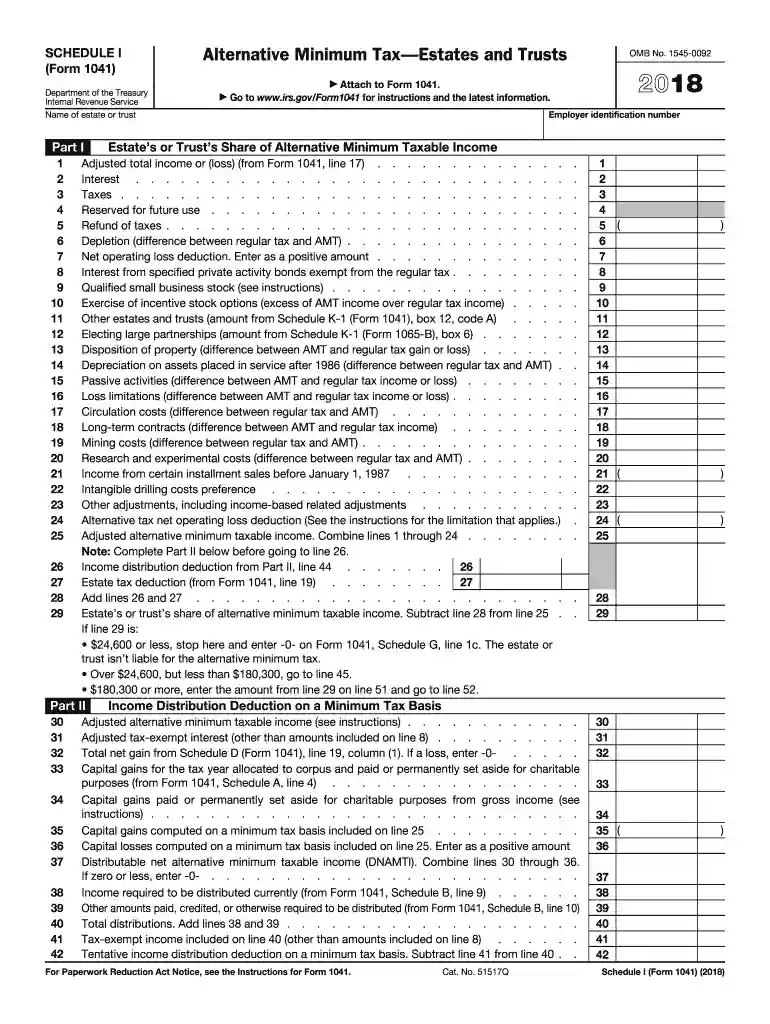
IRS Tax Form 1041 is used primarily for reporting income, gains, losses, deductions, and credits related to estates and trusts. It is akin to a corporate tax return but is designed for fiduciaries, the individuals or entities responsible for managing an estate or trust. The 2016 version of Form 1041 laid the groundwork for calculating the taxable income of these entities, ensuring compliance with federal tax obligations.
Estates and trusts are financial entities separate from their beneficiaries, and they are required to file an annual income tax return if they have any income above specified thresholds. The form serves to reconcile the income and deductions of these entities with their tax responsibilities, similar to how individuals use Form 1040 to report personal taxes.
Correct usage of IRS Tax Form 1041 involves a series of steps beginning with gathering all necessary financial information for the estate or trust in question. The form is prepared annually for these entities when, during the tax year, they generate $600 or more in gross income, have a non-resident alien as a beneficiary, or when they are meant to report alternative minimum tax (AMT) computations.
The form functions as a comprehensive tool where fiduciaries report the entity's annual income, allowable deductions, gains, and distributions to beneficiaries. Supporting documentation is crucial in creating an accurate reflection of the estate or trust's financial activities for the year in question.
Identify Income Sources: List all income types such as dividends, interest, rent, and capital gains.
Calculate Deductions: Account for allowable deductions like trustee fees and administrative expenses.
Determine Distributable Net Income (DNI): The amount of income available for distribution to beneficiaries, serving as a key component for taxation.
File Necessary Schedules: Attach schedules like Schedule K-1 to report each beneficiary's share of income and deductions.
Acquiring IRS Tax Form 1041 can be done through multiple avenues. The IRS website is the most direct source, where forms are available as downloadable PDFs. Additionally, forms can be requested via mail from the IRS or acquired through certified tax software providers like TurboTax or QuickBooks, which guide users through the preparation process.
Completing IRS Tax Form 1041 involves critical steps that ensure all financial activities are properly reported. Detailed attention must be given to each step to avoid errors and ensure full compliance.
Complete Part I – Income: Enter all sources of income, such as capital gains and dividends, ensuring accurate categorization of each.
Fill Out Part II – Deductions: Account for allowable expenses that may reduce the taxable income of the estate or trust.
Calculate Tax in Part III: Use this section to compute total tax liability by considering the income distribution deduction and taxes applicable.
Report Distributions – Schedule B: This section deals with the amount distributed to beneficiaries and how it impacts taxable income and DNI.
Attach Schedule(s) K-1: Mandatory for each beneficiary, it details their share of income, deductions, and credits.
Final Review and Filing: Ensure all figures align with supporting documents before submitting.
Key elements critical for the completion of Form 1041 include:
Legally, IRS Tax Form 1041 is required when an estate or trust has financial activity above specified thresholds. It ensures compliance with federal obligations, providing a structured approach to report income and allocate deductions effectively. Failure to comply can result in significant penalties or legal consequences.
Understanding the language of IRS Tax Form 1041 ensures accuracy and compliance. Key terms include:
For the 2016 tax year, the deadline for filing IRS Tax Form 1041 was April 17, 2017, unless an extension was applied for, which would grant an additional six months to October. Extensions and deadlines should be closely monitored to avoid penalties.
We've got more versions of the irs tax form 1041 2016 form. Select the right irs tax form 1041 2016 version from the list and start editing it straight away!
| Versions | Form popularity | Fillable & printable |
|---|---|---|
| 2025 | 4.2 Satisfied (59 Votes) | |
| 2024 | 4.8 Satisfied (46 Votes) | |
| 2023 | 4.5 Satisfied (39 Votes) | |
| 2022 | 4.6 Satisfied (24 Votes) | |
| 2021 | 4.8 Satisfied (63 Votes) | |
| 2020 | 4.4 Satisfied (182 Votes) | |
| 2019 | 4.2 Satisfied (142 Votes) | |
| 2018 | 4.2 Satisfied (74 Votes) | |
| 2017 | 4.4 Satisfied (129 Votes) | |
| 2016 | 4.4 Satisfied (183 Votes) | |
| 2015 | 4.4 Satisfied (114 Votes) | |
| 2014 | 4 Satisfied (28 Votes) |
At DocHub, your data security is our priority. We follow HIPAA, SOC2, GDPR, and other standards, so you can work on your documents with confidence.
Jan 12, 2017 Due date of return. For calendar year estates and trusts, file Form 1041 and. Schedule(s) K-1 by April 18, 2017. The due date is April 18,Read more
Apr 26, 2017 Indicate by check mark whether the registrant is a shell company (as defined in Rule 12b-2 of the Act). Yes ☐ No ☒.Read more
They each signed Form 8855, and they filed it on October 15, 2016. The combined income and expenses of the trust and the estate were reported on one Form 1041.Read more


