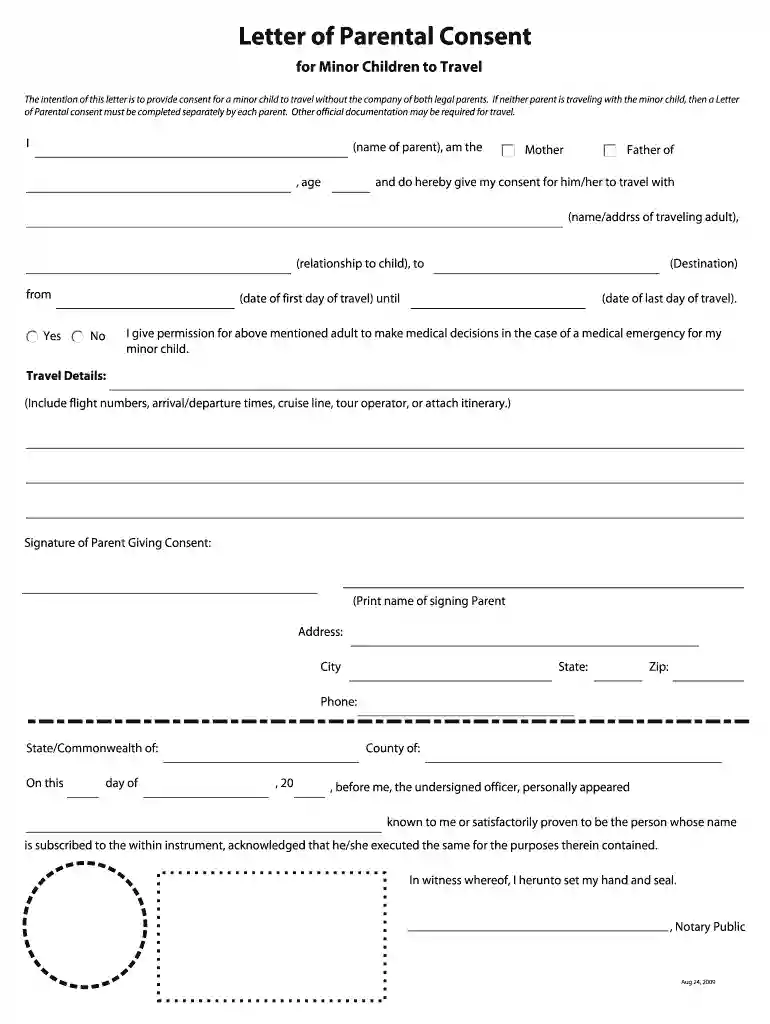
Understanding the Child Travel Consent Form
The child travel consent form is a legal document that grants permission for a minor to travel without one or both parents. This form is crucial when the child is traveling with another adult or alone, ensuring that all parties involved are aware of and agree to the travel arrangements.
Importance of the Child Travel Consent Form
A child travel consent form serves multiple essential purposes:
- Legal Protection: This document protects both the child and the accompanying adult by providing legal permission to travel. It helps avoid potential misunderstandings or legal issues at borders or during travel.
- Emergency Medical Decisions: In cases where a parent or guardian is not present, the form can include terms for medical decision-making concerning the minor. This ensures that prompt medical care can be administered if necessary.
- Travel Specifics: It contains details about the travel itinerary, including dates, destinations, and contact information for the parents or guardians, which can expedite border crossing and help authorities verify that the travel is legitimate.
Key Elements of the Child Travel Consent Form
To create an effective child travel consent form, consider including the following elements:
- Identification Information: Include full names, dates of birth, and addresses of both the child and the parent or guardian providing consent.
- Travel Itinerary: Clearly outline the travel plans, including departure and arrival dates, as well as flight information or other transportation details.
- Emergency Contacts: Provide contact information for parents or guardians, including phone numbers and email addresses, allowing for immediate reach in case of emergencies.
- Medical Consent: Specify permission for medical treatment in emergencies, detailing any known medical conditions or allergies the child may have.
Steps for Completing the Child Travel Consent Form
Creating a child travel consent form involves several steps:
- Gather Required Information: Collect personal information about the child, parents, and the adult accompanying the child, including their relationship.
- Draft the Document: Use a template to construct the form, ensuring all necessary elements are included for clarity and legality.
- Review for Accuracy: Double-check all details for accuracy and ensure there are no missing elements. This includes spelling names correctly and confirming travel details.
- Signatures and Notarization: The form typically requires the signature of the consenting parent or guardian. To enhance its legal standing, consider having the document notarized.
- Distribute Copies: Make several copies of the signed and notarized form. The child should carry one, and copies should be provided to the accompanying adult and stored in your records.
Legal Considerations for the Child Travel Consent Form
Understanding the legal framework surrounding child travel consent is vital:
- Jurisdictional Requirements: Laws can vary by state or country regarding travel with minors. Familiarize yourself with the specific requirements applicable to your travel destination.
- Notarization: While notarization is not always legally required, it adds a layer of validation to the document, potentially easing travel complications.
- Parental Rights: If one parent is not present, ensure that the consent from the other parent is clear to avoid any disputes regarding custody or travel permissions.
Situations Requiring a Child Travel Consent Form
Various situations necessitate the use of a child travel consent form:
- Traveling with a Grandparent or Relative: Often, children travel under the care of a family member other than their parents. A consent form ensures the caregiver has the authority to manage the child’s travel.
- School Field Trips: Educational travel often requires a consent form from parents to legitimize the journey and protect against liability.
- International Travel: Many airlines and border control authorities require a child travel consent form when minors are traveling without parents to prevent child abduction and trafficking.
Variations of the Child Travel Consent Form
Different jurisdictions or situations may require specific variations of the child travel consent form:
- International Travel Consent: Some countries mandate additional documentation or specific forms for minors traveling internationally.
- Emergency Medical Consent: Some forms explicitly include medical consent aspects, allowing caretakers to make medical decisions in emergencies.
- Notarized vs. Non-Notarized Versions: Depending on the situation, parents may choose to notarize their consent form or use a non-notarized version if legally acceptable.
Compliance and Best Practices
To ensure compliance with travel regulations, adhere to these best practices:
- Check with Legal Authorities: Before travel, verify any specific requirements with legal authorities or consulates regarding traveling with minors.
- Updating Documentation: Always ensure that the travel consent form is current, especially if travel plans change, to reflect the latest information accurately.
- Maintain Copies: Keep copies of the form with the child and ensure the accompanying adult has one available during travel.
Using a child travel consent form is a vital process for ensuring safe and legal travel for minors. Understanding its requirements and nuances helps prevent disruptions, making travel arrangements more effective and secure.