Hvac air balance report template excel 2026

Get Form
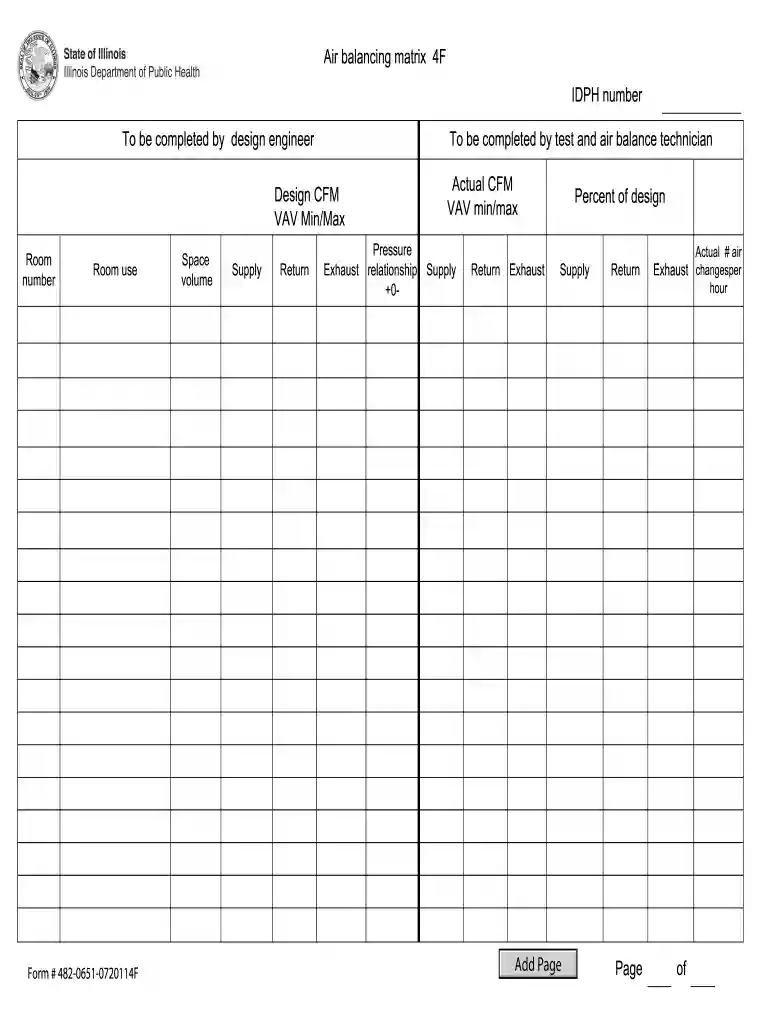
hvac air balance report template excel Preview on Page 1

Here's how it works

01. Edit your hvac air balance report template excel online
Type text, add images, blackout confidential details, add comments, highlights and more.

02. Sign it in a few clicks
Draw your signature, type it, upload its image, or use your mobile device as a signature pad.

03. Share your form with others
Send air balance report via email, link, or fax. You can also download it, export it or print it out.

Definition and Meaning of HVAC Air Balance Report Template

An HVAC air balance report template is a structured document utilized by engineers and technicians to record and verify the performance of air conditioning and ventilation systems. It primarily serves as a certification tool to ensure compliance with specific design specifications and regulatory standards, such as NFPA 90A/90B. The report provides critical data about airflow measurements, pressure relationships, and system efficiency, which are integral to maintaining optimal indoor air quality and system performance.

The template typically includes various fields for documenting:

  • Design specifications: Details the intended design criteria, including airflow rates and temperature settings.
  • Actual measurements: Documented values of airflow (measured in CFM), temperature, and pressure that have been recorded during testing.
  • Compliance checks: Verification that the system meets the necessary industry standards and regulations for safety and efficiency.

Using this template not only streamlines the reporting process but also provides an easy reference for future audits and assessments.

Key Elements of the HVAC Air Balance Report Template

An effective HVAC air balance report template should comprise several essential elements to facilitate clear and comprehensive reporting. Key components include:

  • Header Information: This section typically includes the project title, date, and location. A brief description of the system being balanced is also useful.
  • Field Measurements: Actual airflow data, including quantities for each register and return, should be presented clearly. It may include:
    • Airflow rates (CFM)
    • Temperature readings
    • Pressure differentials
  • Comparative Analysis: A comparison of actual measurements against design specifications helps in evaluating performance effectiveness.
  • Comments Section: This area allows technicians to note any observations or anomalies encountered during testing, which could affect air distribution.
  • Signatures: Validation of the report by certified professionals or responsible engineers reinforces its legitimacy and acceptance.

Including these elements ensures the report is comprehensive and valuable for all stakeholders involved, from HVAC technicians to regulatory bodies.

Steps to Complete the HVAC Air Balance Report Template

Completing the HVAC air balance report template involves a defined series of steps to ensure accurate documentation and certification of air balancing processes. The following steps should be taken:

  1. Preparation: Gather all necessary baseline data about the HVAC system, including design specifications and previous documentation.
  2. Conduct Measurements: Using calibrated equipment, measure the actual airflow and pressure at designated points throughout the system. Document these values meticulously.
  3. Fill Out Fields: Input recorded values into the appropriate sections of the template, ensuring clarity and organization. This may include creating graphs or charts for visual representation where applicable.
  4. Analyze Data: Compare recorded values against design specifications to identify any discrepancies that need further investigation or remediation.
  5. Review and Finalize: Have the report reviewed by a certified professional. Make any necessary corrections before finalizing the document.
  6. Obtain Signatures: Ensure that the report is signed by the technician conducting the tests and the responsible engineer, affirming its accuracy and completeness.
  7. Distribute the Report: Share the finalized report with relevant stakeholders, including facility managers and regulatory bodies if necessary.

Following these steps ensures that the air balancing report is thorough, accurate, and compliant with industry standards.

Who Typically Uses the HVAC Air Balance Report Template

The HVAC air balance report template is a vital tool primarily used by:

  • HVAC Engineers: They rely on the report for designing effective ventilation and airflow systems in commercial and residential applications.
  • Air Balancing Technicians: These professionals utilize the template to document their field measurements and analysis during air balancing procedures.
  • Facility Managers: Managers use the reports to maintain compliance with safety standards and to ensure optimal operation of HVAC systems.
  • Regulatory Authorities: Inspectors may review the report to verify that installations meet national and state guidelines, ensuring public safety and health standards.
  • Consultants: They may employ the report in comprehensive assessments of HVAC systems for projects requiring certification or upgrades.

By understanding the user base, firms can tailor the template to meet specific requirements, improving its effectiveness as a documentation tool.


decoration image ratings of Dochub

Why Use the HVAC Air Balance Report Template

Utilizing the HVAC air balance report template offers several advantages, making it an essential part of HVAC system management. These benefits include:

  • Standardization: The template provides a consistent format, facilitating easier comparison and review across projects and organizations.
  • Compliance Assurance: It helps ensure adherence to regulatory standards and design specifications, which is crucial for passing inspections and audits.
  • Efficiency in Data Collection: Streamlining data recording into a structured format reduces errors and saves time for technicians in the field.
  • Improved System Performance: By documenting and analyzing airflow, facilities can identify performance gaps and inefficiencies, leading to enhanced indoor air quality and energy savings.
  • Easy Reference for Future Maintenance: The recorded data serve as a historical reference, beneficial for ongoing maintenance and future system modifications.

Incorporating the HVAC air balance report template within standard operating procedures fosters a culture of quality control and systematic compliance, thus promoting reliability within HVAC services.

See more hvac air balance report template excel versions

We've got more versions of the hvac air balance report template excel form. Select the right hvac air balance report template excel version from the list and start editing it straight away!
Versions Form popularity Fillable & printable
2011 4.9 Satisfied (222 Votes)
be ready to get more

Complete this form in 5 minutes or less

Get form

Got questions?

We have answers to the most popular questions from our customers. If you can't find an answer to your question, please contact us.
Contact us

Yes, electronically drawing your signature is acceptable, but only if you use a tool that complies with industry regulations and policies. Try DocHub, which ensures eSignature validity under ESIGN and UETA requirements. All you need to approve your air balance report template electronically is an account with DocHub and an internet connection. Once you open your file in our editor, click Sign and select the Draw option.

If you want to edit your air balancing report sheet download on the internet quickly, it does not matter what browser you employ. DocHub’s straightforward editing tools are available using any internet browser. Just open the appropriate tab in the editor, add your file, and fill it out without stress.

A test and balance report should provide a complete record of the design, preliminary measurements, and final test data. The report should include any discrepancies between the test data and the design specifications, along with reasons for those discrepancies.
What an HVAC Test and Balance Report Is Used for. HVAC test and balance reports are crucial to the operation of commercial air conditioning and heating systems. These reports give building managers information on how their systems operate, so they can make key HVAC installation and maintenance decisions.

Security and compliance

At DocHub, your data security is our priority. We follow HIPAA, SOC2, GDPR, and other standards, so you can work on your documents with confidence.

Learn more
ccpa2
pci-dss
gdpr-compliance
hipaa
soc-compliance

People also ask

3:33 6:23 Balanced Air Flow TIps - YouTube YouTube Start of suggested clip End of suggested clip So make sure these are open and obstructed too now the return that doesn't have any livers. And it'sMoreSo make sure these are open and obstructed too now the return that doesn't have any livers. And it's a little easier to spine. Now. Not only does your heating system supply. Air to the room.
An HVAC air balance report template is a document to record the results of an HVAC system's air balance. Air balancing involves assessing the amount of air at grilles and registers. An air balance report template walks you through the necessary measurements to evaluate the HVAC system.
To find each room's share of available airflow, multiply the room's design cfm by 80%. This will ensure that each supply register will deliver even temperatures into each room and an equal percent of required ventilation after balancing. For example, the kitchen design cfm is 190 cfm. Multiply 190 cfm by 80% (.
What an HVAC Test and Balance Report Is Used for. HVAC test and balance reports are crucial to the operation of commercial air conditioning and heating systems. These reports give building managers information on how their systems operate, so they can make key HVAC installation and maintenance decisions.
For the complete building HVAC system, I would recommend a proactive rebalance frequency of every two to three years.

test and balance report