Commercial electrical load calculation worksheet excel 2026

Get Form
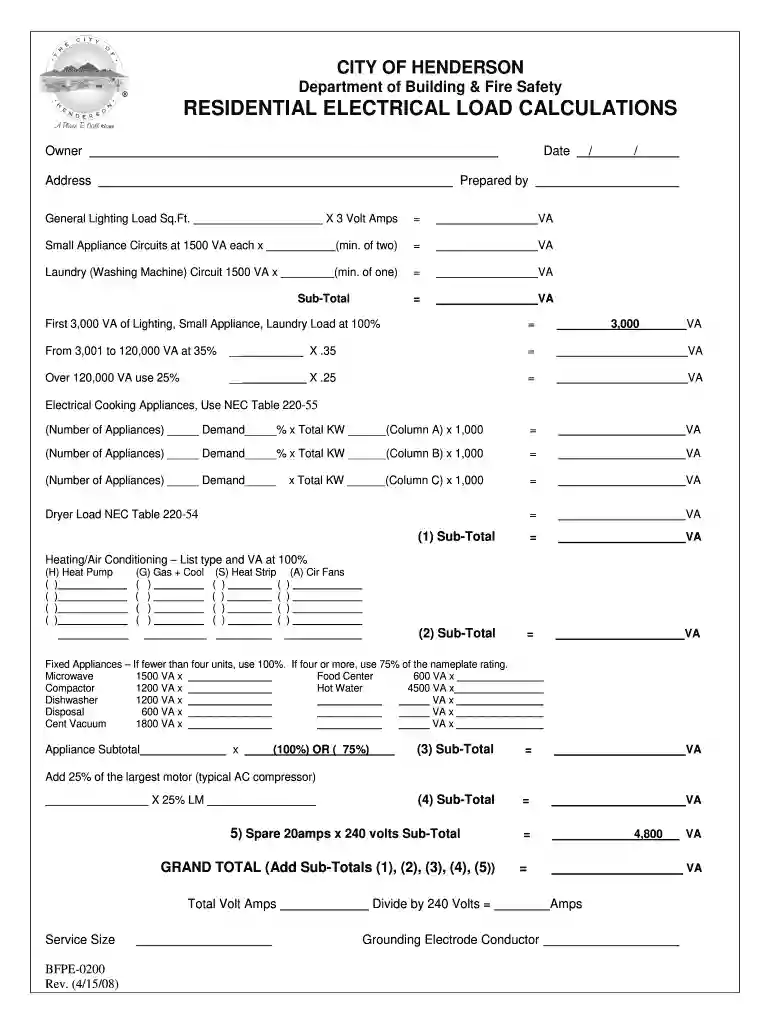
commercial electrical load calculation worksheet excel Preview on Page 1

Here's how it works

01. Edit your commercial electrical load calculation worksheet excel online
Type text, add images, blackout confidential details, add comments, highlights and more.

02. Sign it in a few clicks
Draw your signature, type it, upload its image, or use your mobile device as a signature pad.

03. Share your form with others
Send load calculation sheet via email, link, or fax. You can also download it, export it or print it out.

Understanding the Commercial Electrical Load Calculation Worksheet

The commercial electrical load calculation worksheet serves as a vital tool for professionals in electrical engineering, construction, and facility management. This document is designed to assist in determining the electrical needs of commercial buildings, ensuring compliance with regulatory standards, and maintaining safety.

Importance of Accurate Load Calculations

Accurate load calculations are essential in the design, installation, and operation of electrical systems in commercial settings. Proper load assessment helps in:

  • Preventing Overloads: Ensuring that the electrical systems can handle the expected loads without tripping circuits or causing equipment damage.
  • Efficiency Optimization: Enhancing energy efficiency, which can lead to significant cost savings on utilities.
  • Safety Compliance: Adhering to the National Electrical Code (NEC) requirements, thereby reducing fire risks and ensuring safe operation.

Essential Components of the Worksheet

The worksheet includes various components that contribute to comprehensive load calculations:

  • General Lighting Loads: Estimations based on square footage and applicable codes.
  • Specific Appliance Loads: Measurement of unique appliance demands, such as HVAC systems, kitchen equipment, and lighting fixtures.
  • Small Appliance Circuits: Dedicated circuits for small appliances, calculated separately to ensure sufficient power supply.

Step-by-Step Process to Complete the Worksheet

Completing a commercial electrical load calculation worksheet involves several steps:

  1. Determine Building Area: Accurately measure the total square footage of the commercial space.
  2. Calculate General Lighting Load: Use NEC guidelines to calculate the square foot load, typically 3 VA per square foot.
  3. Assess Specific Loads: Identify and catalog all major electrical appliances and equipment, recording their individual power requirements.
  4. Include Future Expansion: Consider potential future equipment or expansion needs by including additional load factors into calculations.
  5. Sum All Loads: Compile all calculated loads to determine the total electrical demand on the system.
  6. Account for Demand Factors: Apply NEC demand factors to optimize calculated loads, reflecting realistic operational usage.

Common Use Cases for the Worksheet

The commercial electrical load calculation worksheet is utilized across various scenarios:

  • New Construction Projects: Employed by architects and engineers to design electrical systems for new commercial buildings.
  • Renovation Projects: Used to assess the adequacy of existing electrical systems and plan upgrades as needed.
  • Facility Management: Facilities managers use the worksheet to monitor and adjust electrical load distribution to maintain efficiency and safety.

Relevant Terminology to Know

Understanding specific terminology is critical for effective communication and accurate calculations. Key terms include:

  • VA (Volt-Amperes): A unit measuring electrical power in scenarios where power factor is not considered.
  • Demand Load: The maximum load expected to be drawn by a facility at any one time.
  • Branch Circuits: Circuits that supply electrical power to specific outlets or devices within a building.

Legal and Compliance Considerations

Professionals utilizing this worksheet must ensure compliance with local, state, and national codes:

  • NEC Compliance: Following the National Electrical Code ensures safety and minimizes liability.
  • Local Amendments: Being aware of any local amendments to the NEC that could affect calculations and compliance standards.

Examples and Templates

Utilizing a pre-designed electrical load calculation worksheet template can streamline the process. Many online sources offer:

  • Free Downloadable Worksheets: Access templates in Excel or PDF formats that help simplify data entry and calculation.
  • Interactive Tools: Some platforms provide online calculators that automatically adjust loads based on user input.

Additional Resources for Load Calculations

For ongoing projects and updates:

  • Professional Guidelines: Consult resources from electrical engineering organizations.
  • Local Utility Companies: Reach out for specific guidelines regarding load calculations that align with regional standards.

Incorporating the information and practices outlined helps ensure that commercial electrical load calculations are thorough, compliant, and effective, leading to enhanced safety and operational efficiency in commercial environments.

See more commercial electrical load calculation worksheet excel versions

We've got more versions of the commercial electrical load calculation worksheet excel form. Select the right commercial electrical load calculation worksheet excel version from the list and start editing it straight away!
Versions Form popularity Fillable & printable
2008 4.9 Satisfied (41 Votes)
be ready to get more

Complete this form in 5 minutes or less

Get form

Got questions?

We have answers to the most popular questions from our customers. If you can't find an answer to your question, please contact us.
Contact us
Three Phase Current Calculation kW = kVA x pf. kVA = kW/pf. kVA = kW / power factor = 23/0.86 = 26.7 kVA (26700VA) Current = VA / voltage = 26700 / 230 = 116 A. VLL =3 x VLN VLN = VLL / 3. kVA = kW / power factor = 12 / 0.86 = 13.9 kVA (13900 VA) Current = VA / voltage = 13900 / 230 = 60 A.
You can use the load calculation formula, Power (W) = Voltage (V) Current (A).
Lighting Load: Calculate based on the buildings square footage and the type of lighting used. For example, office buildings typically require 1.3 watts per square foot for lighting while garages only require 0.3 Watts per square footage.
To calculate the commercial electric load, you would need to measure the current and voltage of each electric load in the commercial building and then use the formula P = VI to calculate the power consumption of each load.
Electrical Power Load Calculation Worksheet Excel Tool. Procedure for Calculating Load Usage. Step-1: Total Load Connected. Step-2: 70% Connected Load Utilization Factor. Step-3: Total Required KVA. ​Step-4: Considering 80% Generator Efficiency.

Security and compliance

At DocHub, your data security is our priority. We follow HIPAA, SOC2, GDPR, and other standards, so you can work on your documents with confidence.

Learn more
ccpa2
pci-dss
gdpr-compliance
hipaa
soc-compliance
be ready to get more

Complete this form in 5 minutes or less

Get form