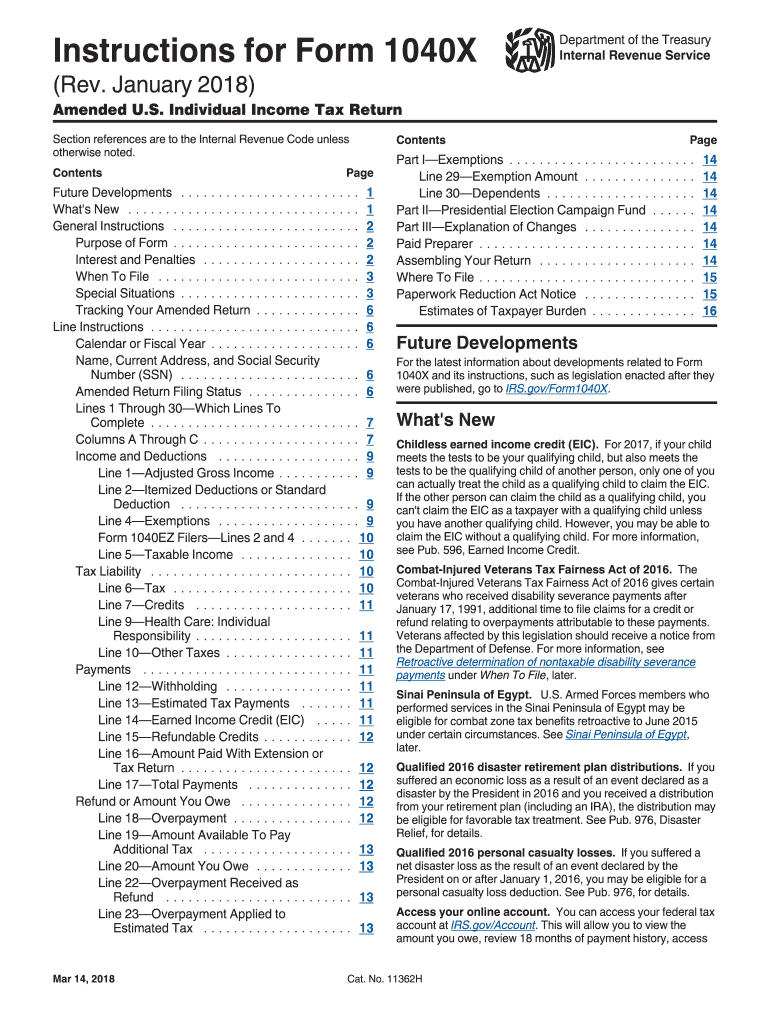







Understanding Form 1040X and Its Instructions
Form 1040X, known as the "Amended U.S. Individual Income Tax Return," is utilized to correct errors on previously filed tax returns. This includes changes in filing status, income, deductions, or credits. The form allows taxpayers to file an amended return to ensure accuracy and compliance with IRS regulations.
How to Use the Instructions for 1040X 2017
- Review the Filing Status: Ensure your original filing status was correct. If not, you can change it with Form 1040X.
- Follow Line-by-Line Instructions: Each line on the form has corresponding instructions that guide you on what information to provide.
- Correct Income Entries: Amend your income if there were discrepancies in the original report.
- Adjust Deductions and Credits: Use the form to report any changes to deductions or credits that you did not claim or miscalculated.
- Track Refund or Payment: You'll need to update your refund status or balance due as changes may affect these amounts.
Obtaining the Instructions for 1040X 2017
- Download via IRS Website: The IRS website offers downloadable PDF versions of Form 1040X and its instructions.
- Request by Mail: Contact the IRS to have a physical copy mailed to you.
- Visit IRS Offices: Obtain the form in person from IRS Taxpayer Assistance Centers.
Steps to Complete Form 1040X Instructions
- Gather Original Tax Documents: Before amending, have your original tax return and supporting documents ready.
- Determine What Needs Correction: Identify specific errors or omissions on your original return.
- Fill Out Personal Information: Ensure your personal details match those from the original filing.
- Make Corrections According to Instructions: Adjust entries as specified in the instructions for every section that requires modification.
- Complete Part III, Explanation of Changes: Provide a clear and detailed explanation of the changes being made.
- Attach Required Schedules or Forms: If your amendments affect other schedules, include those with your amended return.
Importance of the 1040X Instructions
- Ensures Compliance: Helps prevent penalties by ensuring your tax filings are accurate.
- Avoids Overpayments or Underpayments: Correcting errors ensures you pay only what is owed or receive due refunds.
- Legal Requirement: Complying with IRS regulations by correcting prior errors or omissions is a legal requirement.
Key Elements in 1040X Instructions
- Filing Status Changes: Guidance on how to update your filing status if it was incorrect.
- Correcting Income: Steps to amend reported income.
- Adjusting Deductions/Credits: Details on how to fix errors related to deductions and credits.
Filing Deadlines for Amended Returns
- Typical Deadline: While there is no strict deadline for filing an amended return, to claim a refund, it must generally be filed within three years from the original filing date or within two years from the payment date, whichever is later.
- Importance of Timely Filing: Timely filing ensures eligibility for refunds and avoids any potential late amendment issues.
Required Documents for Amending Returns
- Original Tax Return: Reference and compare corrections.
- Proof of Changes: Supporting documents like revised W-2s or 1099s.
- Corrected Schedules: Include any revised schedules affected by your amendments.
Legal Use and Compliance
Using Form 1040X and its instructions is not only vital for correcting inaccuracies but also ensures taxpayers fulfill their legal obligations. Compliance with these procedures helps maintain clear tax records and avoids potential disputes or audits by the IRS.
By following these instructions and guidelines, taxpayers can appropriately amend their tax returns for the year 2017, ensuring their filings are accurate and in line with current tax laws.