
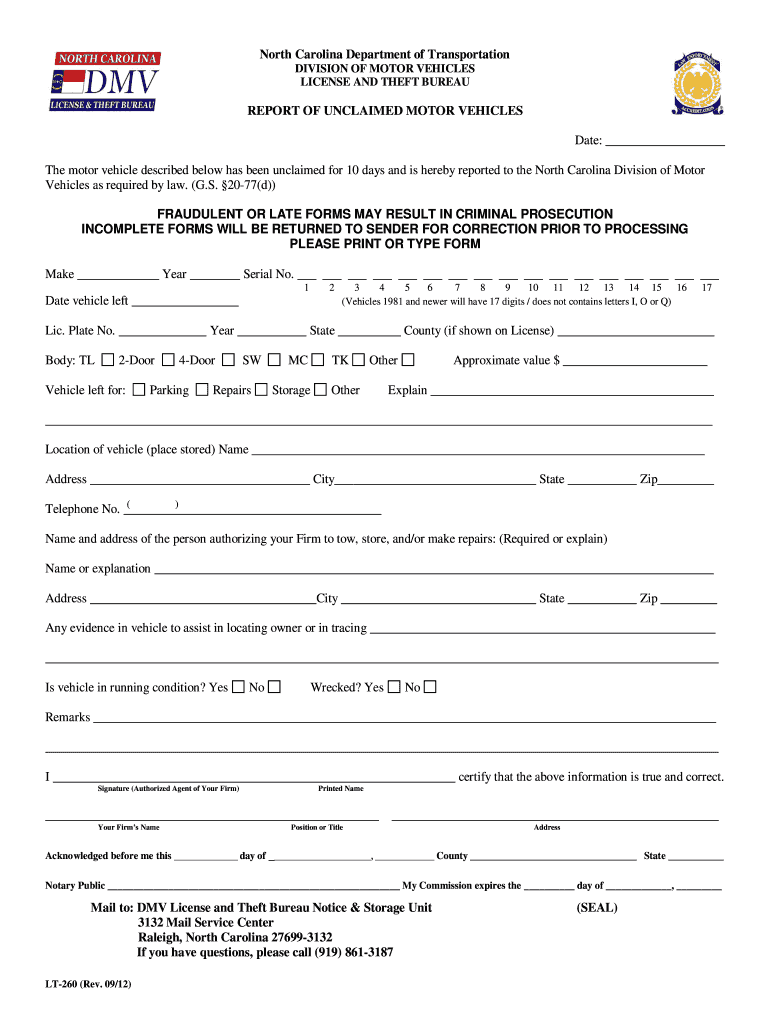







Definition and Purpose of the LT 260 Form
The LT 260 form is a document used by the North Carolina Department of Transportation’s Division of Motor Vehicles. It serves the specific purpose of reporting unclaimed motor vehicles, particularly those that have been left unattended for a period of ten days or more. This form is essential for generating an official record of these vehicles, allowing for appropriate measures to be taken, such as towing or salvaging.
- Legal Requirement: Filling out the LT 260 is a compliance measure mandated by North Carolina law to ensure accountability regarding abandoned vehicles.
- Unclaimed Vehicle Conditions: The LT 260 is used primarily for vehicles that do not have discernable owners, evidenced by the lack of contact or attempts to recover the vehicle.
- Applicability: This form applies to various situations, including private property management, where vehicles may have been left without permission.
Key Components of the LT 260 Form
The LT 260 form comprises several critical sections that must be accurately completed to fulfill reporting requirements effectively.
Vehicle Information Section
This section requires comprehensive details about the vehicle in question. Information typically includes:
- Make and Model: Specify the manufacturer and model of the vehicle.
- Year of Manufacture: Include the year the vehicle was made.
- Vehicle Identification Number (VIN): This unique number is crucial for identifying the vehicle and must be correct to avoid issues.
- Color: Providing the vehicle's color assists in identification efforts.
Location and Storage Information
Details regarding where the vehicle was found and where it has been moved post-reporting must be filled out. Key components often include:
- Location of Abandonment: This involves specifying the address or location coordinates where the vehicle was discovered.
- Name and Address of Storage Facility: If the vehicle is moved to a storage location, this information is crucial for future retrieval.
Responsibilities and Authorizations
The LT 260 requires signatures and authorizations from designated individuals to ensure that the reporting process is legitimate and follows legal protocols.
Certifying Agent Information
A certified agent authorized to manage the vehicle's situation must sign off on the form. Important details include:
- Name and Title: The agent's full name and position must be documented.
- Contact Information: Providing a contact number or email ensures that further information can be exchanged as needed.
- Signature: A physical signature or electronic confirmation may be necessary to validate the authenticity of the report.
Legal Considerations Related to the LT 260 Form
Understanding the legal implications of the LT 260 form is vital for compliance and protecting oneself against liability.
Compliance with State Laws
Filing the LT 260 aligns with state regulations governing unclaimed property and vehicles. Key regulations include:
- Abandonment Laws: Familiarity with state laws regarding vehicle abandonment is essential for anyone handling such cases. Non-compliance can lead to fines or legal challenges.
- Liability Issues: Without proper reporting through the LT 260, properties may face legal consequences for failing to manage abandoned vehicles responsibly.
Important Consequences of Misreporting
Submitting false information on the LT 260 could have severe repercussions, such as:
- Fines: Individuals or organizations may incur penalties for fraud or misrepresentation.
- Legal Disputes: Incorrect details may lead to disputes with vehicle owners or law enforcement agencies.
Submission Process for the LT 260 Form
Completing and submitting the LT 260 form involves specific steps that ensure a smooth reporting process.
Filing Steps
- Complete All Required Fields: Ensure that all information is provided completely and accurately.
- Obtain Necessary Signatures: Gather all required authorizations from responsible parties in a timely manner.
- Submit the Form: The LT 260 can typically be submitted via mail or potentially online, depending on current state guidelines.
Follow-Up Actions
After submission, staying proactive about the report's status is essential:
- Track Submission: Maintaining documentation of the submission confirmation helps in tracking the process.
- Monitor for Responses: Be prepared to respond to any inquiries or requests from the DMV regarding the submitted report.
Key Elements Related to the LT 260 Form
Several elements complement the use of the LT 260 form, each playing a part in the broader process of vehicle management and reporting.
Forms and Resources
- NC DMV Website: The official North Carolina DMV website provides resources and information updates related to the LT 260 and other motor vehicle-related documents.
- Guides and Instructions: Accessing downloadable guides or manuals can offer insightful information for correctly completing the form.
Additional Forms
Additional forms may be necessary for those managing abandoned vehicles regularly, such as:
- LT 261: Depending on the specific type of vehicle scenario, other forms may be required for completion.
By understanding these aspects, individuals and agencies in North Carolina can effectively utilize the LT 260 form for managing unclaimed vehicles, thereby ensuring compliance and accountability within the transportation system.




