




01. Edit your marriage certificate kenya pdf online
Type text, add images, blackout confidential details, add comments, highlights and more.

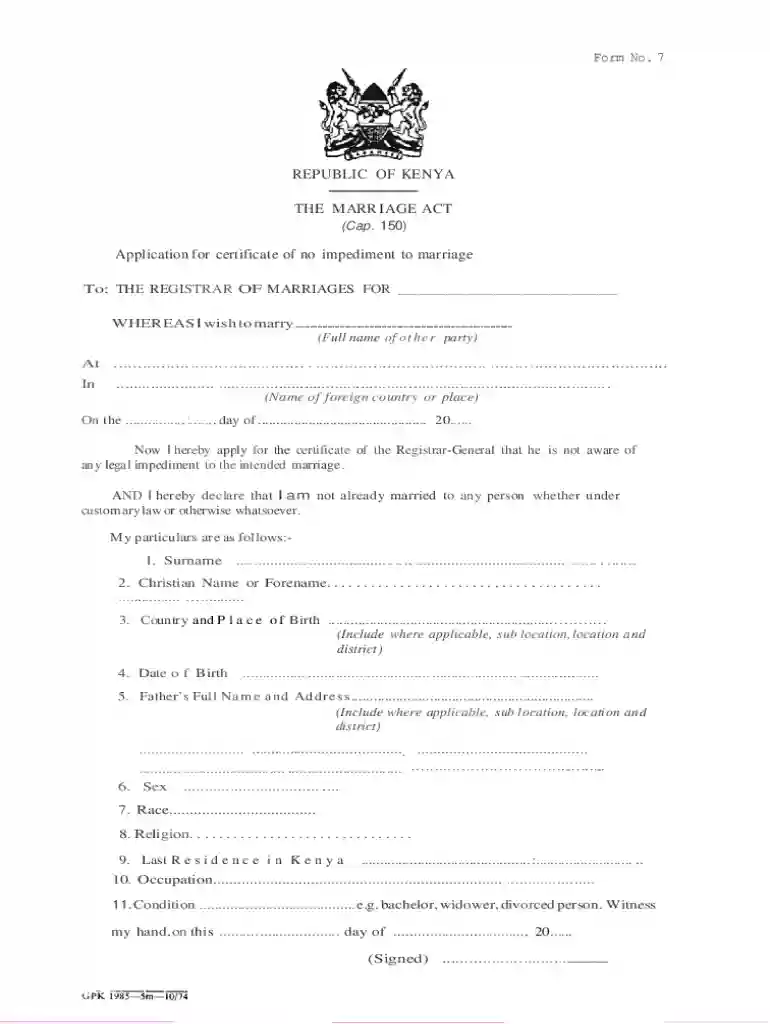
Type text, add images, blackout confidential details, add comments, highlights and more.

Draw your signature, type it, upload its image, or use your mobile device as a signature pad.

Send marriage certificate kenya via email, link, or fax. You can also download it, export it or print it out.
A certificate of no impediment to marriage is an official document that verifies an individual’s eligibility to marry. It is chiefly used to affirm that there are no legal barriers or constraints preventing a person from entering into a marriage. Typically, this certificate is required when one partner is a foreign national wishing to marry in a country different from their own, as authorities seek to confirm that the individual is not legally bound to another person.
The concept serves multiple purposes:
Understanding the significance of this document is crucial for individuals planning to wed, especially in jurisdictions with stringent marital laws.
Obtaining a certificate of no impediment to marriage typically involves several steps, varying by state and jurisdiction. The general process generally includes:
Determine the Issuing Authority: Each state or country may have specific offices responsible for issuing marriage-related certificates. It's essential to identify whether the document is to be obtained from municipal, state, or embassy offices.
Collect Required Documents:
Submit Application: Fill out the required forms, which may vary by location. This can typically be done online, by mail, or in person, depending on the jurisdiction.
Pay Fees: There may be a fee associated with issuing the certificate. Ensure to check the current rates and payment methods accepted.
Waiting Period: Some jurisdictions may require a waiting period to process the application; this could range from a few days up to several weeks.
Receive the Certificate: Upon approval, you will receive the official certificate, which may be needed to present to authorities where the marriage will take place.
Being aware of the specific processes and requirements in your state can help streamline the application.
Understanding specific terminology associated with the certificate of no impediment to marriage can facilitate navigating the application process effectively. Key terms include:
Familiarizing yourself with these terms can provide clarity and ease when navigating legal requirements.
Completing a sample certificate of no impediment to marriage involves careful attention to detail and adherence to specific guidelines. Here's a structured approach to follow:
Gather Your Information:
Fill Out the Sample Form:
Include Supporting Documents:
Review for Completeness:
Submit the Completed Certificate Sample:
Following these steps can help ensure a smooth application process for obtaining your certificate.
The legal utility of a certificate of no impediment to marriage is substantial, especially in cross-border relationships where jurisdictions differ. The certificate serves several important functions:
Understanding the legal implications associated with this certificate reinforces its importance in the marriage process and ensures compliance with regulations in both home and foreign jurisdictions.
We've got more versions of the marriage certificate kenya pdf form. Select the right marriage certificate kenya pdf version from the list and start editing it straight away!
At DocHub, your data security is our priority. We follow HIPAA, SOC2, GDPR, and other standards, so you can work on your documents with confidence.
There is no legal impediment to our marriage, including, but not limited to, a prior marriage of either party that has not been legally terminated by deathRead more
To qualify for a Certificate of Non-Impediment, you must reside within the City of New York and must not presently be married. The Certificate of Non-ImpedimentRead more


