







Understanding the Certificate of Compliance in Indiana
The Certificate of Compliance in Indiana serves as proof of insurance for particular vehicles and is often required by the Bureau of Motor Vehicles (BMV). This document is specifically designed for situations where electronic submission of proof of insurance is not feasible. Understanding the purpose and structure of this form is vital for vehicle owners and insurance agents alike.
Definition and Purpose of the Certificate of Compliance
The Certificate of Compliance is a formal declaration that certifies a vehicle is insured in accordance with Indiana state laws. This document includes essential information regarding the vehicle, the owner, and the insurance policy. Its primary purpose is to provide validation of insurance coverage and financial responsibility, which is crucial for individuals involved in traffic accidents, registration processes, or legal inquiries regarding vehicle insurance.
- Legal Requirement: Indiana law mandates that all vehicles must have insurance. The Certificate serves as legal proof when required.
- When Needed: The form is typically used when a vehicle owner has been involved in an accident or other situations where proof of insurance is needed but electronic options are unavailable.
Key Components of the Indiana Certificate of Compliance Form
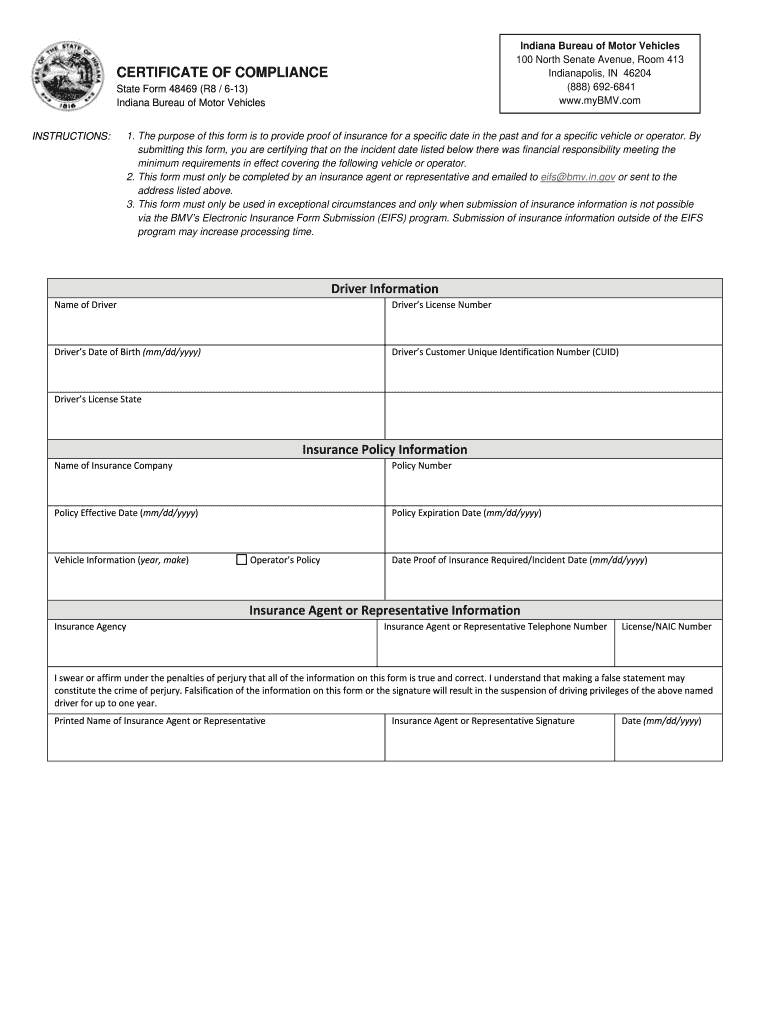
The Indiana Certificate of Compliance form is structured to convey specific information clearly. Typically, it includes the following sections:
- Driver Information: Name, address, and contact details of the vehicle owner.
- Insurance Policy Details: Provider's name, policy number, effective dates, and coverage specifics.
- Vehicle Information: Vehicle identification number (VIN), make, model, and year of the automobile.
These components are vital as they establish the transparency and legitimacy of the insurance being presented.
Completion and Submission Process for the Certificate of Compliance
- Gather Necessary Information: Collect personal details, insurance policy information, and vehicle specifics.
- Fill Out the Form: Accurately complete all sections of the Certificate of Compliance form.
- All fields must be filled to ensure that the form is valid.
- Insurance Agent’s Signature: The form must be signed by an authorized insurance representative to validate the information provided.
- Submission: The completed form should be submitted to the BMV under appropriate circumstances, most often in person or via mail.
Failure to complete any of these steps may result in delays or rejections of the certificate's acceptance by authorities.
Importance of the Certificate of Compliance for Insurance Agents
For insurance agents, the Certificate of Compliance is essential as it represents a confirmation of the insurance coverage that they provide to clients. Key functions include:
- Ensuring Compliance: Assists agents in verifying that their client's vehicles are properly insured as per Indiana laws.
- Documentation: Serves as an essential document in the agent's record-keeping for claims and client reference.
Additionally, understanding how to correctly issue and manage this certificate enhances the professional relationships agents maintain with their clients.
Consequences of Not Providing Compliance Documentation
Failure to present the Certificate of Compliance when required can result in significant repercussions. Common penalties include:
- Fines: Individuals may face financial penalties for non-compliance with insurance verification requirements.
- License Suspension: Prolonged failure to provide proof of insurance can lead to the suspension of driving privileges.
- Legal Implications: In certain cases, unlawful operation of a vehicle without insurance can lead to legal actions, including court appearances.
Ensuring timely submission and compliance with regulations is crucial for the mitigation of such risks.
Variants of the Certificate of Compliance and Related Documents
There are several forms and documentation related to the Certificate of Compliance in Indiana, including:
- State Form 48469: The specific Indiana state form utilized for this purpose.
- Progressive Certificate of Compliance: A variation provided by specific insurance providers.
- Proof of Financial Responsibility Forms: Similar documents that may also serve to establish proof of insurance but may be utilized in alternate contexts.
Tips for Obtaining and Using the Certificate of Compliance
- Check with Your Insurance Provider: Confirm the process your insurance company follows to issue the Certificate of Compliance.
- Maintain Copies: Always keep copies of submitted forms for your records.
- Understand the Timeframe: Be aware of processing times, especially if you are under a tight deadline to submit proof of insurance.
Understanding the intricacies and requirements of the Certificate of Compliance in Indiana is essential for any vehicle owner or insurance agent. Thorough knowledge ensures compliance with state laws and assists in preventing potential legal issues related to insurance verification.




