







Definition & Meaning
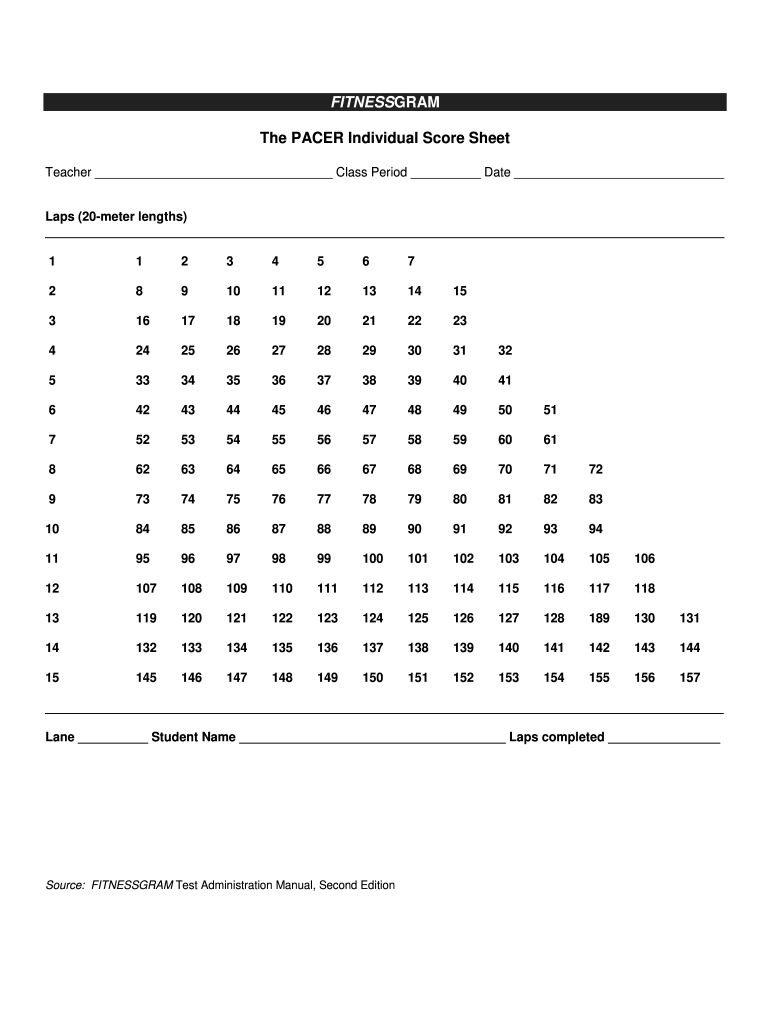
The pacer test worksheet serves as a vital tool for educators and fitness assessors in evaluating students' cardiovascular endurance through the FITNESSGRAM program. The acronym PACER stands for "Progressive Aerobic Cardiovascular Endurance Run." The worksheet records students' scores, detailing the number of laps completed during the test, which is fundamental for assessing fitness levels according to age-related norms.
This document typically includes sections for vital information such as student names, class periods, dates, and their corresponding scores in a structured format. By standardizing the reporting of test results, the worksheet aids in tracking individual student progress, ensuring accurate results for progressive fitness assessments and facilitating informed decisions regarding physical education programming.
Key Components of the Pacer Test Worksheet
- Student Information: Name, ID, and class period.
- Test Details: Test date and instructor.
- Score Recording: Laps completed and corresponding score based on established FITNESSGRAM criteria.
- Comments Section: Space for observations regarding performance or health considerations.
How to Use the Pacer Test Worksheet
Utilizing the pacer test worksheet effectively encourages comprehensive tracking of student fitness progress. To begin, a teacher should ensure all necessary supplies are on hand, including a whistle or timer for conducting the test, along with a suitable space for running laps.
- Preparation: Collect the completed worksheets before the test begins. Familiarize students with the rules of the Pacer test.
- Conducting the Test: Administer the 20-meter or 15-meter PACER test according to established protocols, ensuring students understand how the scoring works.
- Score Collection: As students complete their laps, record their performance directly on the worksheet. It is vital that scores are entered accurately to reflect true performance.
- Post-Test Analysis: After testing, review the scores with students to provide feedback and set future fitness goals. Incorporate the results into ongoing fitness assessments to measure improvement over time.
Importance of Accurate Data Entry
Accurate data entry in the worksheet can assist educators in identifying trends, areas for improvement, and students needing additional support or resources, thereby promoting a healthier and more active lifestyle.
Key Elements of the Pacer Test Worksheet
The effectiveness of the pacer test worksheet lies in its structured and organized format, designed to capture essential details about the testing process. Key elements include:
-
Student Information Section:
- This section captures basic yet crucial details about the student participating in the test.
-
Performance Metrics:
- The worksheet allows for an easy tally of laps completed, vital for determining student fitness levels.
-
Assessment Criteria:
- Guidelines for determining how many laps equate to varying levels of fitness, often broken down by age and gender.
-
Analysis and Review:
- An area dedicated to teacher reflections about individual student performance and suggestions for future improvement.
Including these elements ensures a comprehensive assessment of student fitness, enabling educators to make informed decisions about student health initiatives based on collected data.
Steps to Complete the Pacer Test Worksheet
Completing the pacer test worksheet involves a systematic approach to ensure accurate scoring and meaningful feedback. Here are the essential steps for educators to follow:
-
Set Up the Testing Environment: Ensure a safe and appropriate space is designated for the test. Measure the distance for each lap clearly, marking start and finish lines.
-
Distribute Worksheets: Hand out the pacer test worksheets to each participating student before the test begins to familiarize them with the format.
-
Conduct the Test: Simultaneously time the intervals and track when students reach specific laps to maintain an organized testing process.
-
Record Results: Immediately fill out each student’s score on the worksheet as they finish the test, noting any variations in pace or performance.
-
Review and Reflect: After the test, analyze the results for each student and discuss their performances to support their fitness journey and identify any areas for improvement.
Follow-Up Review
Periodic reviews of the collected data on the worksheet can highlight student progress, allowing educators to adapt physical education strategies to boost overall class fitness outcomes.
Examples of Using the Pacer Test Worksheet
The pacer test worksheet has various applications within educational settings, making it a versatile tool. Here are some practical scenarios illustrating its utility:
-
Curriculum Planning: By analyzing the collected data, instructors can design targeted fitness programs that cater to the identified needs of their students, enhancing physical education outcomes.
-
Parent-Teacher Conferences: Educators can leverage the worksheet during conferences to discuss individual student fitness levels, share progress over time, and encourage parental involvement in their child's fitness journey.
-
Track and Field Preparation: For students interested in sports, the worksheet facilitates preparation for tryouts by offering a clear record of their endurance training progress.
-
After-School Fitness Programs: Organizers can use the worksheet to monitor participation and progress in after-school fitness initiatives, creating customized training based on individual performance data.
Broader Impact
Using the pacer test worksheet not only aids in individual assessment but also fosters a culture of fitness and health awareness in schools, positively influencing student engagement in physical activities.
Who Typically Uses the Pacer Test Worksheet
The primary users of the pacer test worksheet include:
-
Physical Education Instructors: They use the worksheet to assess student fitness levels, track improvements, and adjust teaching strategies accordingly.
-
School Administrators: Administrators may review aggregate data gathered from worksheets to promote health initiatives within their institutions, enhancing student wellness programs.
-
Parents and Guardians: Many parents use the results reported on the worksheet to better understand their child’s fitness level and to encourage healthier lifestyles at home.
-
Coaches and Sports Directors: Coaches utilize the data from the worksheet to tailor training regimens that support student athletes' development, focusing on endurance and cardiovascular fitness.


Advantages for Each User
This broad user base underscores the worksheet's role as a foundational document in promoting and tracking physical fitness in educational settings, thereby supporting lifelong fitness habits among students.




