
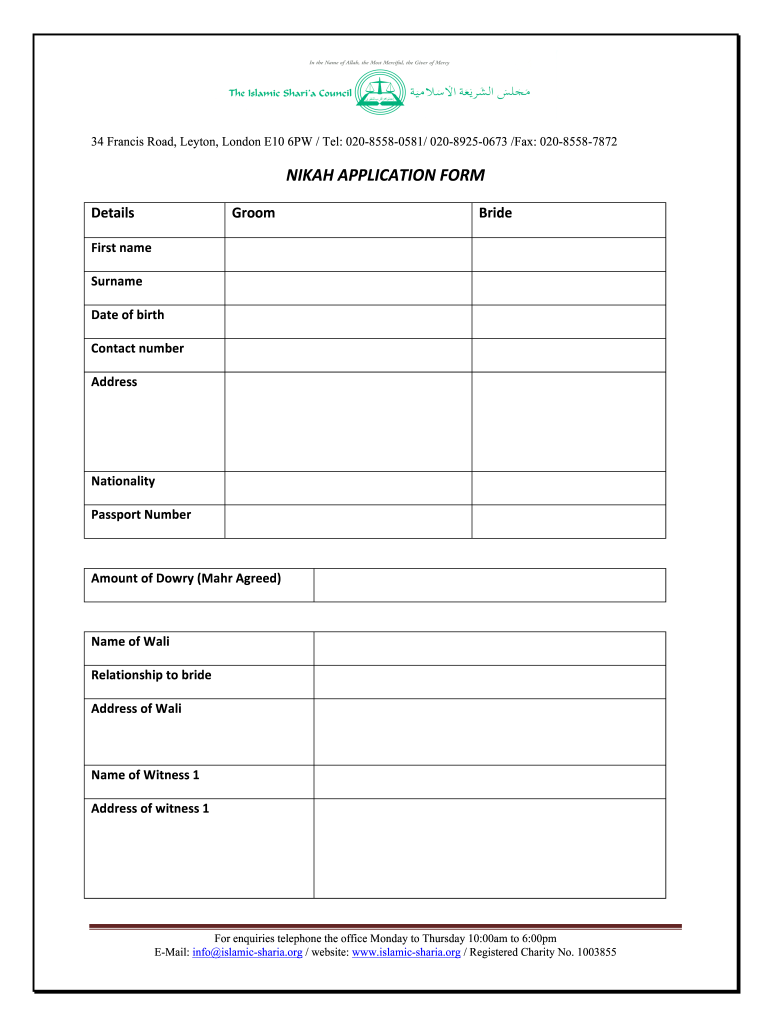







Definition and Meaning of Nikkah Papers
Nikkah papers refer to the official document required to formalize a marriage ceremony under Islamic law. These papers serve multiple essential purposes, detailing the agreement between the bride and groom and ensuring the partnership's legitimacy in the eyes of religious and legal authorities. The nikkah document typically includes the name of the couple, their personal details, dowry amount, and witness information, which are crucial for validating the marriage.
The nikkah papers also act as a legal record, affirming the couple's intention to enter into a matrimony that aligns with Islamic teachings. In many cases, a nikkah application form or nikkah nama paper will be required to be submitted, often accompanied by necessary supporting documents, ensuring compliance with local laws and religious requirements.
How to Obtain the Nikkah Papers
Obtaining nikkah papers involves a clear and structured process. The steps below highlight how you can acquire these essential documents:
-
Preparation of Required Documents: Collect all necessary documents, such as identification (passports or driver's licenses), proof of residence, and any previous marriage dissolution papers if applicable.
-
Contact Local Islamic Authority: Reach out to your local mosque or Islamic center, as they often handle the issuance of nikkah papers. Inquire about the specific requirements and procedures they follow.
-
Complete the Nikkah Application Form: Fill out the nikkah application form, ensuring all details are accurate.
- Typical information required includes:
- Full names of both parties
- Dates of birth
- Contact information
- Details of witnesses
- Typical information required includes:
-
Schedule a Meeting with an Imam or Wali: This meeting may serve to discuss the couple's readiness for marriage and provide guidance regarding the nikkah ceremony.
-
Submit the Application: Submit the completed application along with copies of your supporting documents. Note if there are any fees associated with this process.
-
Receive the Nikkah Papers: After processing, the nikkah papers will be issued, usually on the day of the ceremony, and must be signed by the bride, groom, and witnesses.
Steps to Complete the Nikkah Papers
Completing nikkah papers entails several key steps that must be followed to ensure they are valid. Below are the sequential steps involved:
-
Gather All Required Information: Make sure to have all necessary personal information of both the bride and groom ready, including their full names, dates of birth, and addresses.
-
Specify the Dowry: Clearly state the amount of dowry (Mahr) that has been agreed upon, as this is a mandatory element of the nikkah contract.
-
Select Witnesses: Choose at least two witnesses who can attest to the marriage. Their details will need to be included in the nikkah papers.
-
Incorporate Terms of Agreement: Include any additional terms or agreements that pertain to the marriage, ensuring both parties understand and agree to the terms.
-
Signature and Date: Finally, both the bride and groom must sign the document, along with the witnesses, to validate the nikkah papers. It’s pivotal that this is done in the presence of the officiant.
-
Official Seal or Stamp: Some jurisdictions require the nikkah papers to have an official seal or stamp to be considered legally binding.
Important Terms Related to Nikkah Papers
Understanding the terminology associated with nikkah papers is crucial for both the bride and groom. Below are key terms often referenced:
-
Mahr (Dowry): This is the obligatory payment given by the groom to the bride, which symbolizes respect and commitment.
-
Wali (Guardian): A male guardian, usually a close relative of the bride, who oversees the marriage proceedings.
-
Imam: The officiant who conducts the nikkah ceremony and is responsible for ensuring that all Islamic laws are upheld during the event.
-
Nikkah Nama: This is the actual marriage contract that details the terms of the marriage and is typically signed during the ceremony.
Understanding these terms can help both parties feel more secure and informed throughout the marriage process.
Legal Use of Nikkah Papers
Nikkah papers are not only religious documents but also hold legal significance in the United States. Their proper use can affect various legal aspects, including:
-
Recognition of Marriage: Nikkah papers can serve as official proof of marriage when dealing with legal matters, such as property division, insurance benefits, and tax filing purposes.
-
Visa and Immigration: Couples may need to present nikkah papers for immigration applications to prove their marital status.
-
Child Custody and Support: In legal situations involving children, these documents can be pivotal in establishing a legal marriage, aiding in custodial rights and responsibilities.
-
Eligibility for Benefits: Being legally married can often qualify couples for certain benefits, such as health insurance.
It is vital to ensure that nikkah papers are filed correctly and kept safe as they are necessary for legitimizing the marriage in both religious and civic realms.
Required Documents for Nikkah Papers
To complete the process of acquiring nikkah papers, several documents are often required. These can differ based on local regulations, but generally include:
-
Identification: Valid photo IDs from both the bride and groom (passport, driver’s license).
-
Proof of Residence: Documents such as utility bills or lease agreements that validate residency.
-
Birth Certificates: Copies of birth certificates for both parties may be requested to confirm personal details.
-
Previous Marriage Dissolution Documents: If either party has been previously married, official divorce decrees or death certificates must be presented.
-
Witness Information: Full names and identification details of the witnesses who will be present during the signing of the nikkah papers.
Having all required documents prepared can help streamline the application process for nikkah papers.




