




01. Edit your doc form online
Type text, add images, blackout confidential details, add comments, highlights and more.

Type text, add images, blackout confidential details, add comments, highlights and more.

Draw your signature, type it, upload its image, or use your mobile device as a signature pad.

Send it via email, link, or fax. You can also download it, export it or print it out.
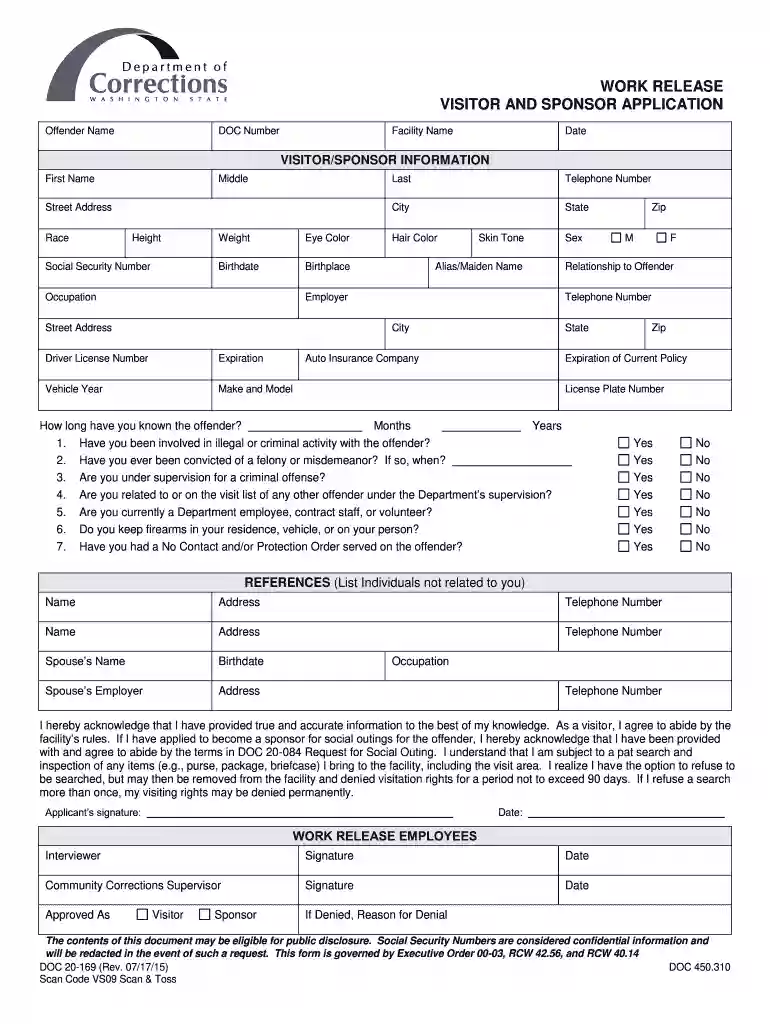
DOC Form 20-169, formally known as the Work Release Visitor and Sponsor Application, is essential for individuals seeking to visit or sponsor offenders within the Washington State correctional system. This form facilitates the approval process for visitors and sponsors by gathering critical information about their backgrounds and their relationships with the offenders they wish to visit or support.
The primary aim of this form is to ensure that individuals who wish to visit or sponsor offenders meet certain criteria and adhere to facility regulations. By collecting personal data, including the visitor or sponsor's relationship to the offender and any relevant criminal history, the form helps safeguard the correctional environment while enabling meaningful connections for inmates.
When completing DOC Form 20-169, applicants must provide comprehensive details, including:
Each of these components plays a critical role in evaluating the suitability of the applicant for visiting or sponsoring an offender.
DOC Form 20-169 incorporates sections that inform applicants of facility rules and search policies they must acknowledge. Understanding the expectations of the correctional environment is vital as it ensures that applicants are aware of the conduct required during visits. This includes protocols for search procedures, communication restrictions, and behavior while on the premises.
The form concludes with sections requiring signatures from both the applicant and facility employees, establishing a formal agreement to the stated terms. This collaborative confirmation is essential as it documents the understanding and acceptance of the rules governing visits and sponsorships. The acknowledgment not only protects the facility but also emphasizes the responsibilities of the applicant moving forward.
Once fully completed, DOC Form 20-169 can be submitted using several methods, including:
Knowing the appropriate submission method is crucial for ensuring timely processing of the application.
After submission, applicants should be aware of the approval process and expected timelines:
Several factors may influence the approval of a DOC Form 20-169 application:
Thoroughly understanding these variables can help applicants prepare for a successful application process.
DOC Form 20-169 serves as a gateway for individuals wishing to connect with offenders through visits or sponsorships. The essential information it gathers, combined with acknowledgments of facility rules, ensures that both the applicant and the correctional environment are protected. Navigating the form and its submission is a vital step for those involved in supporting offenders reintegrating into society.
We've got more versions of the doc form form. Select the right doc form version from the list and start editing it straight away!
| Versions | Form popularity | Fillable & printable |
|---|---|---|
| 2015 | 4.9 Satisfied (57 Votes) |
At DocHub, your data security is our priority. We follow HIPAA, SOC2, GDPR, and other standards, so you can work on your documents with confidence.


