




01. Edit your asset disposal form online
Type text, add images, blackout confidential details, add comments, highlights and more.

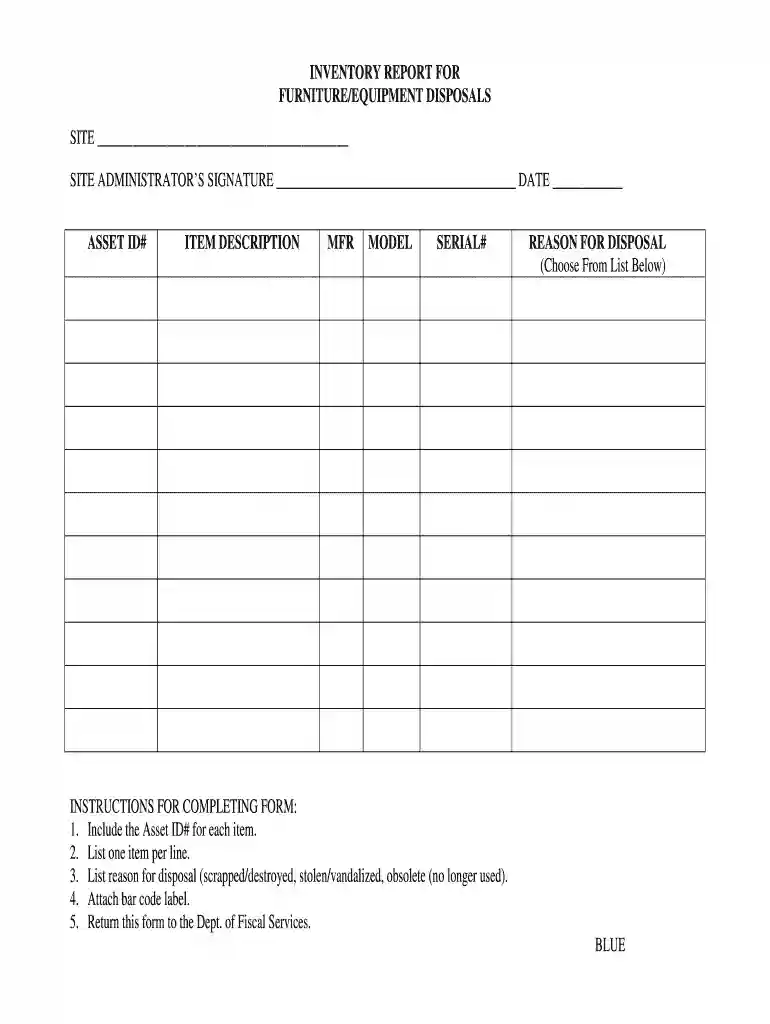
Type text, add images, blackout confidential details, add comments, highlights and more.

Draw your signature, type it, upload its image, or use your mobile device as a signature pad.

Send fixed asset disposal form example via email, link, or fax. You can also download it, export it or print it out.
The scrap disposal format in Excel is a structured template designed to facilitate the documentation of various scrap items slated for disposal. This format is essential for organizations seeking to maintain compliance with financial auditing, inventory management, and regulatory requirements. It typically captures critical information such as:
This format allows businesses to systematically record and manage their scrap disposal activities, ensuring that all necessary data is easily accessible for audits and internal reviews.
Completing the scrap disposal format in Excel involves several methodical steps. Follow these instructions to ensure accuracy and completeness:
By following these steps, users can effectively complete their scrap disposal format, making the disposal process streamlined and organized.
Understanding pertinent terminology related to the scrap disposal format is vital for accurate completion and compliance. Below are key terms often associated with the form:
Familiarity with these terms helps ensure that the user understands the broader context in which the scrap disposal format is utilized, leading to more informed decisions during the disposal process.
Utilizing the scrap disposal format can be applicable in various scenarios. Here are a few practical examples where the format benefits the disposal process:
These examples illustrate how diverse sectors can benefit from employing the scrap disposal format in clear and organized ways, ensuring compliance and streamlined processes.
The legal use of the scrap disposal format is essential for maintaining compliance with various federal and state regulations. Organizations must adhere to laws regarding asset disposal, particularly if the items are classified as hazardous materials. Some key legal considerations include:
By maintaining a legally compliant scrap disposal format, organizations can avert penalties, safeguard their reputation, and ensure responsible waste management practices.
We've got more versions of the asset disposal form form. Select the right asset disposal form version from the list and start editing it straight away!
| Versions | Form popularity | Fillable & printable |
|---|---|---|
| 2012 | 4 Satisfied (54 Votes) |
Managing your forms with DocHub this way is very easy after you have downloaded its extension for Google Chrome. Go to the Chrome Web Store and set up DocHub - Sign PDF from Gmail to obtain it. Give our tool access to your Google account, and then open an email containing fixed asset disposal form as an attachment and point to the file with your cursor - the DocHub extension button will automatically appear there. Click on it to open your form in our editor. Make any required modifications, complete the blanks, and click Sign to create your legally-binding electronic signature.
You may find and modify your asset disposal template online by using DocHub. Its straightforward but feature-rich design enables you to begin productive work immediately after you register your account. Create your account and add your file, and then our interface will guide you via our stress-free form completion experience.
At DocHub, your data security is our priority. We follow HIPAA, SOC2, GDPR, and other standards, so you can work on your documents with confidence.
I, J, K, L. 1, Summary. 2, Annual Waste Generation, Annual Waste Disposal. 3, Total, 0, lbs, Total, 0, lbs. 4. 5. 6. 7. 8. 9. 10. 11. 12. 13. 14. 15. 16. 17. 18.Read more
Disposal/Transfer: Manages the sale, scrap, or transfer (relocation) of assets. For Example, The Company purchased machinery for ₹5,00,000. ERP records itRead more


