




01. Edit your free nexus letters for veterans online
Type text, add images, blackout confidential details, add comments, highlights and more.

Type text, add images, blackout confidential details, add comments, highlights and more.

Draw your signature, type it, upload its image, or use your mobile device as a signature pad.

Send nexus letter sample pdf via email, link, or fax. You can also download it, export it or print it out.
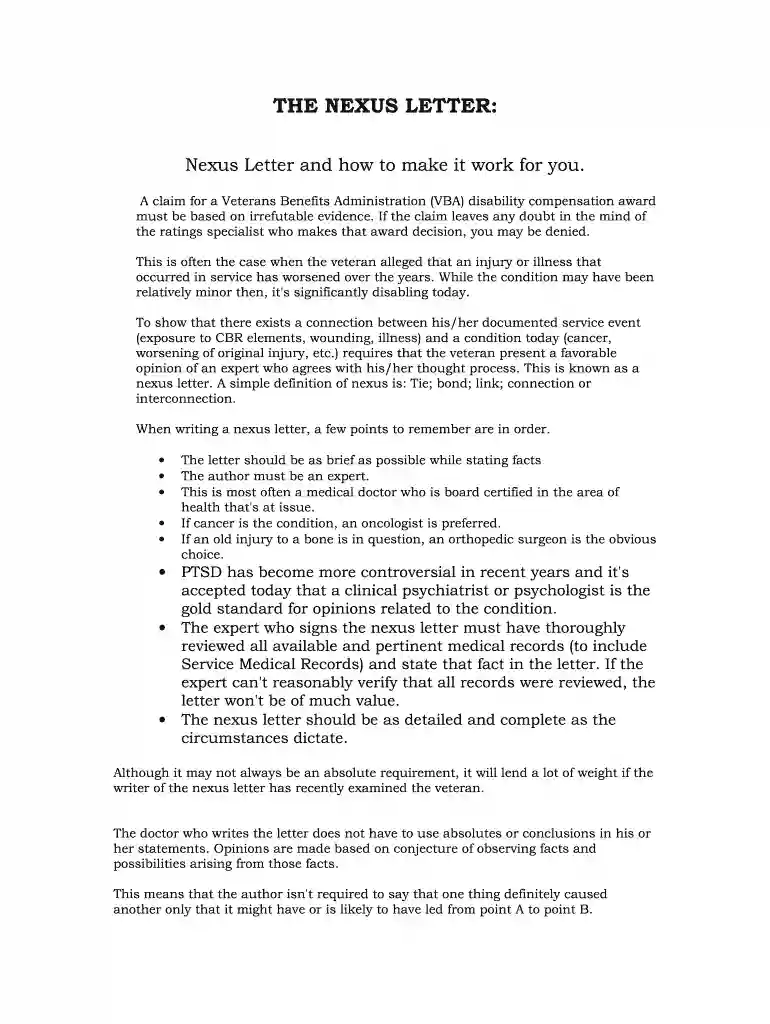
Nexus letters play a critical role for veterans seeking disability compensation from the Veterans Benefits Administration (VBA). These documents establish a vital link between the veteran's military service and their current health conditions. Physicians or qualified medical professionals typically draft these letters, reinforcing the causal relationship required for claims.
A well-structured nexus letter should include the following essential components:
When drafting a nexus letter, certain guidelines can significantly boost its effectiveness:
Nexus letters must withstand scrutiny from the VBA, so ensuring that these documents are thorough and convincing is key. Some strategies to enhance their strength include:
Nexus letters can vary significantly based on the nature of the claims they support. Here are some practical scenarios:
PTSD Nexus Letter Example: A letter addressing post-traumatic stress disorder must establish how stressful events during service have led to the current condition, highlighting any psychotherapy or medication received as treatment.
Migraine Nexus Letter Example: For veterans claiming migraines as a secondary condition, the letter must connect how service-related duties exacerbated pre-existing migraine issues, ideally backed with medical assessments.
Nexus Letter for Sleep Apnea: A nexus letter may need to connect sleep apnea symptoms that developed during or after service, discussing potential environmental factors encountered during deployment.
Obtaining a nexus letter may incur costs, which can vary based on the provider. Factors affecting the cost include:
Veterans can often find resources online, including templates and examples, to assist in drafting or requesting nexus letters. Some organizations may even provide free nexus letters through qualified professionals.
Veterans should prepare adequately when seeking a nexus letter. Key steps include:
By understanding the intricacies of creating a nexus letter, veterans can enhance their chances of securing the benefits they deserve.
At DocHub, your data security is our priority. We follow HIPAA, SOC2, GDPR, and other standards, so you can work on your documents with confidence.
The required medical opinion is called a Nexus letter. The letter must be written specifically for the individual and explicit to that individuals claim. It isRead more
A nexus is a document that a doctor, other medical professional or qualified party prepares for a veteran and in it explains how, in their opinion,Read more


