






Definition & Meaning
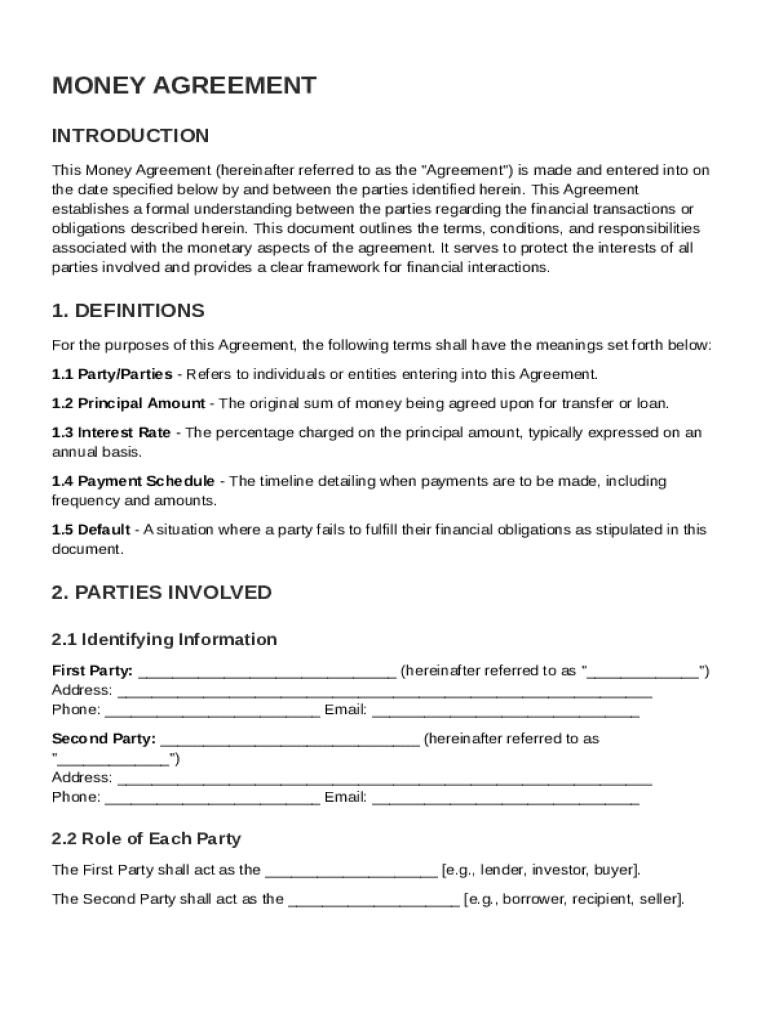
The Money Agreement Template is a structured document outlining the terms and conditions for a financial transaction between parties. It provides clarity on crucial aspects such as key terms, roles, principal amounts, and interest rates. This template formalizes the financial relationship, safeguarding the interests of all parties involved. By clearly defining obligations and default conditions, it helps mitigate potential disputes. Additionally, confidentiality provisions and legal governance ensure that sensitive information is protected and that the agreement aligns with relevant laws.
Key Elements of the Money Agreement Template
The Money Agreement Template comprises several critical elements that ensure thoroughness and clarity. These elements include:
- Principal Amount and Interest Rate: Clearly defining the borrowed amount and applicable interest rate, which determines the overall cost of borrowing.
- Payment Schedule: Outlines when and how payments are to be made, providing a detailed schedule of due dates and amounts.
- Obligations of Each Party: Specifies the responsibilities and duties of both the lender and borrower.
- Default Conditions and Remedies: Defines what constitutes a default and the steps that can be taken to rectify it.
- Confidentiality Provisions: Ensures that sensitive information remains protected from unauthorized disclosure.
- Legal Governance: Specifies the jurisdiction whose laws will govern the agreement, providing a clear legal framework.
How to Use the Money Agreement Template
Using the Money Agreement Template involves several steps to ensure all aspects are addressed properly:
- Review the Template: Begin by carefully reading through the entire template to understand its structure and content.
- Customize Key Details: Modify sections such as the parties involved, the principal amount, interest rate, and payment terms to fit the specific transaction.
- Add Specific Terms: Include any additional terms that may be relevant to the agreement, such as collateral requirements or specific payment conditions.
- Seek Legal Advice: It is advisable to consult a legal professional to ensure the agreement complies with state laws and adequately protects your interests.
- Finalize and Sign: Once finalized, all parties should sign the document to acknowledge their acceptance of its terms.
Legal Use of the Money Agreement Template
The legal use of a Money Agreement Template is pivotal to maintaining the enforceability of the agreement. Before implementing the template, parties should verify that:
- State Laws: The template is compliant with state-specific regulations related to financial agreements.
- Legally Binding Provisions: All essential clauses are in place to ensure the agreement can be legally enforced.
- Electronically Signed Compliance: If signed electronically, the signatures should comply with the ESIGN Act to ensure they are legally binding.
Important Terms Related to Money Agreement Template
To effectively navigate a Money Agreement Template, understanding key terms is crucial. These may include:
- Principal Amount: The original sum of money that is borrowed or loaned.
- Interest Rate: The percentage charged on the principal for the use of the money.
- Maturity Date: The date by which the full repayment of the loan is due.
- Collateral: An asset pledged against the loan that the lender can seize if the borrower defaults.
- Default: Failure to fulfill the financial obligations as outlined in the agreement.
Examples of Using the Money Agreement Template
The Money Agreement Template finds application across various scenarios:
- Personal Loans: Used when lending money between family or friends to formalize terms without misunderstandings.
- Business Financing: Businesses may employ this template to secure financing for operational or expansion needs.
- Real Estate Transactions: Parties use these agreements to outline terms on larger sums involved in property deals.
- Vendor Agreements: When extending credit terms with vendors, businesses may use a money agreement to ensure clarity and enforceability.
State-Specific Rules for the Money Agreement Template
Different states may have unique rules concerning money agreements, affecting how templates should be drafted and executed. Points to consider include:
- Interest Rate Caps: Some states impose limits on the maximum interest rate that can be charged.
- Notarization Requirements: Certain jurisdictions may require the agreement to be notarized to be enforceable.
- Usury Laws: Regulations limiting the interest rates that can be applied to certain loans.
Understanding state-specific rules ensures compliance and enhances the agreement's validity.
State-by-State Differences
The application and acceptance of a Money Agreement Template can vary significantly across states due to differences in:
- Contract Law: Variations in state contract laws can affect the interpretation and enforcement of agreements.
- Financial Regulations: Different financial regulations influence the terms that must be included or excluded.
- Legal Precedents: Varying legal precedents can impact how disputes over agreements are resolved.
Awareness of these differences ensures that the template is tailored appropriately to the applicable legal environment.