




01. Edit your vcu doctors note online
Type text, add images, blackout confidential details, add comments, highlights and more.

Type text, add images, blackout confidential details, add comments, highlights and more.

Draw your signature, type it, upload its image, or use your mobile device as a signature pad.

Send referral to pain management via email, link, or fax. You can also download it, export it or print it out.
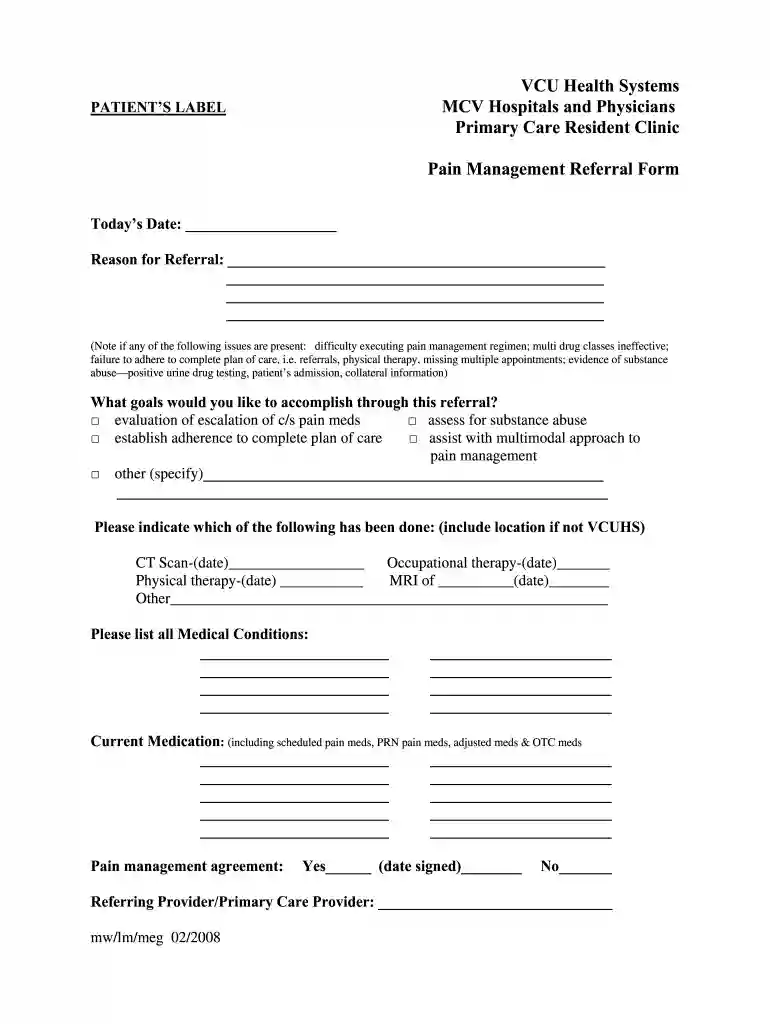
The VCU referral form is a critical document used in the healthcare system, particularly within VCU Health Systems. It serves as a formal request for patients to receive specialized care, primarily in pain management at the VCU pain management clinic. The form captures essential information about patients experiencing pain management challenges and facilitates their transition from general to specialized care.
Filling out the VCU referral form accurately is crucial for effective patient referral. Here’s a structured approach to complete it:
Understanding the terminology used on the VCU referral form is essential for both healthcare providers and patients. Here’s a breakdown of key terms commonly encountered:
The VCU referral form has specific legal considerations to ensure compliance with healthcare regulations in the United States.
Real-world scenarios demonstrate the practical use of the VCU referral form in a healthcare context.
Patient with Chronic Back Pain: A patient experiencing chronic back pain could be referred to the VCU pain management clinic. The referral would include details about prior treatments such as physical therapy and medications tried, establishing a comprehensive background to inform the specialist's approach.
Post-Surgical Pain Management: Another common scenario includes referrals for pain management following surgery. A provider might indicate the surgical procedure performed and expected recovery challenges, aiding the specialists in adjusting the patient's pain management plan effectively.
These examples illustrate the importance of providing a thorough context within the VCU referral form, allowing specialists to make informed decisions about care strategies.
We've got more versions of the vcu doctors note form. Select the right vcu doctors note version from the list and start editing it straight away!
| Versions | Form popularity | Fillable & printable |
|---|---|---|
| 2008 | 4.8 Satisfied (169 Votes) |
At DocHub, your data security is our priority. We follow HIPAA, SOC2, GDPR, and other standards, so you can work on your documents with confidence.


