





Definition and Purpose of the Patient Enrollment Form Multiple Sclerosis
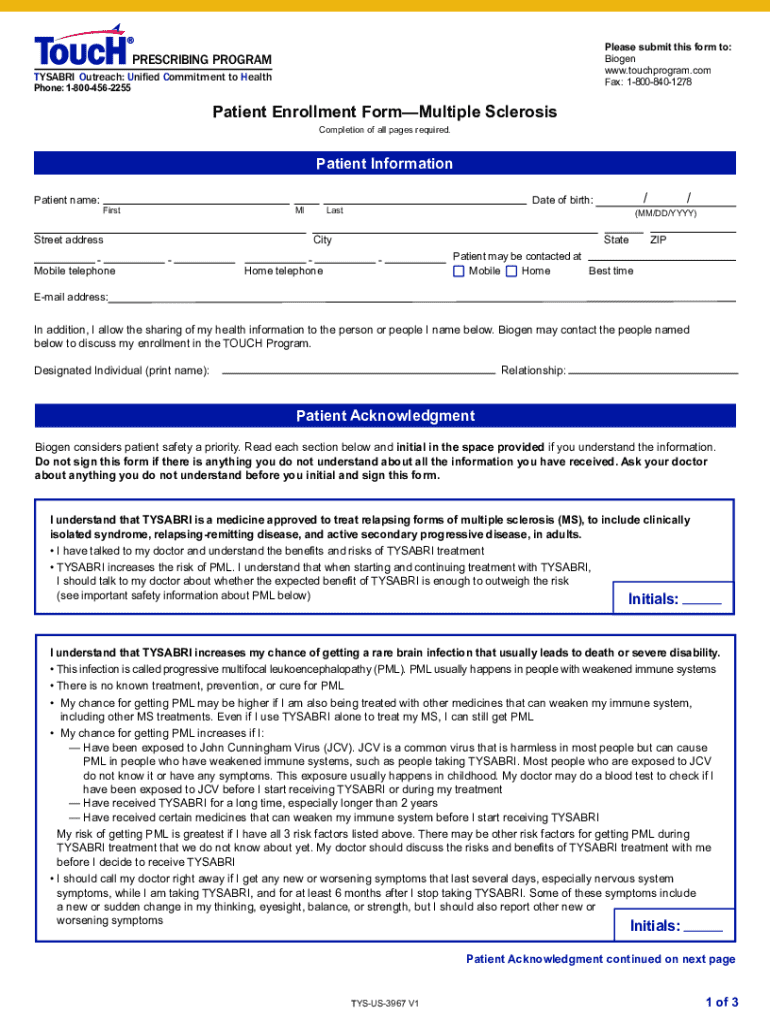
The Patient Enrollment Form for Multiple Sclerosis is a specialized document used for registering individuals diagnosed with multiple sclerosis in various health programs or clinical trials. This form is integral for organizing patient data necessary for treatment plans, research studies, or medication delivery programs. It ensures that the healthcare providers or research teams have access to essential patient information, helping them tailor interventions and track progress.
Key Components of the Definition
- Patient Information: Basic personal details, such as name, contact information, and demographic data.
- Medical History: Critical insights into the patient's medical background, pertinent to multiple sclerosis.
- Program or Study Details: Information on the specific program or initiative the patient is enrolling in.
- Consent and Authorization: Sections dedicated to obtaining the patient's permission to share medical records with relevant parties.
Practical Applications
The form's practical purpose is twofold: enhancing personalized patient care and supporting data collection for advancing multiple sclerosis research.
Important Steps to Complete the Patient Enrollment Form Multiple Sclerosis
Completing the Patient Enrollment Form for Multiple Sclerosis requires a systematic approach to ensure accuracy and completeness.
-
Gather Necessary Information: Before filling out the form, collect all required documents, such as medical records, insurance details, and personal identification.
-
Filling Out Personal Information: Enter the patient's name, date of birth, and current address accurately. Double-check for any typos or mismatches.
-
Detailing Medical History: Include comprehensive details regarding the patient's diagnosis, past treatments, and any ongoing medication regimens. Accurate medical history is crucial for informed patient management.
-
Program Information: Specify the program or trial the patient is enrolling in. This may include details about the research study, treatment type, or healthcare provider involved.
-
Consent Sections: Ensure the patient correctly signs these sections, granting permission for data use and sharing. Clarify any questions they may have before signing.
-
Review and Submit: Carefully review the form for any errors or missing information. Submit the form as per the specified method (online, mail, or in-person).
How to Obtain the Patient Enrollment Form Multiple Sclerosis
Obtaining the Patient Enrollment Form Multiple Sclerosis involves several simple steps, making the process straightforward and accessible.
- Healthcare Provider: Often, neurologists or specialists providing care for multiple sclerosis patients can directly provide this form.
- Clinical Trials: If enrolling in a research study, the study coordinators typically furnish the required documentation.
- Online Platforms: Some health organizations and research groups offer downloadable versions of the form on their websites. Verify the source's credibility before downloading.
Considerations for Form Procurement
- Authentication: Ensure the form's authenticity by obtaining it directly from healthcare providers or official study sites.
- Updated Versions: Check that the latest version of the form is used as requirements may change over time.
Key Elements of the Patient Enrollment Form Multiple Sclerosis
Understanding the critical components of the form helps ensure its accurate completion and processing.
Patient Information
- Personal Details: Name, age, gender, and social security number.
- Contact Details: Address, phone number, and email address.
Medical Background
- Diagnosis Confirmation: Date and details of multiple sclerosis diagnosis.
- Treatment History: Record of previous treatments and responses.
Consent and Authorization
- Data Usage Agreement: Specifies how patient data will be used and shared.
- Signature Section: Legal acknowledgment by the patient or guardian.
Program Enrollment
- Study or Program Details: Information about the specific initiative the patient is entering.
Legal Use and Compliance of the Patient Enrollment Form Multiple Sclerosis
The form serves a legal purpose by ensuring compliance with medical data regulations.
- HIPAA Compliance: Maintains patient privacy and data security through compliance with the Health Insurance Portability and Accountability Act.
- Informed Consent: Legally binding document where the patient agrees to the terms of their participation in the program or trial.
Legal Implications
Failure to comply with these legal requirements can result in delays in enrollment or eligibility issues for certain health programs or trials.
Benefits of Using the Patient Enrollment Form Multiple Sclerosis
This form provides essential advantages for patients, healthcare providers, and researchers.
- Streamlined Data Collection: Efficiently gathers essential patient information for care planning and research purposes.
- Enhanced Patient Care: Facilitates personalized treatment plans tailored to the specific needs of multiple sclerosis patients.
- Research Advancements: Supports the development of new treatments through structured data collection in clinical trials.
Real-World Applications
Utilizing this form optimizes the coordination between healthcare providers and researchers, ultimately benefiting patient outcomes.
State-Specific Rules for the Patient Enrollment Form Multiple Sclerosis
Since healthcare regulations can vary by state, understanding regional differences is essential.
Regional Variations
- Consent Requirements: Some states may have additional consent requirements, depending on local laws.
- Form Variations: Minor adjustments in form layout or required information based on state-specific healthcare mandates.
Navigating State Differences
Consult with healthcare providers familiar with state laws to ensure the enrollment form meets all regional legal standards.
Form Submission Methods for the Patient Enrollment Form Multiple Sclerosis
Different submission methods accommodate varying patient and organizational needs.
- Online Submission: Secure online platforms provide a convenient submission method.
- Mail Submission: Traditional mailing options remain available for those without reliable internet access.
- In-Person Submission: Allows for direct submission and potential on-the-spot assistance from medical staff.
Choosing the Right Submission Method
Evaluate the most appropriate submission method based on your circumstances, ensuring the form is submitted securely and efficiently.