






Definition & Meaning
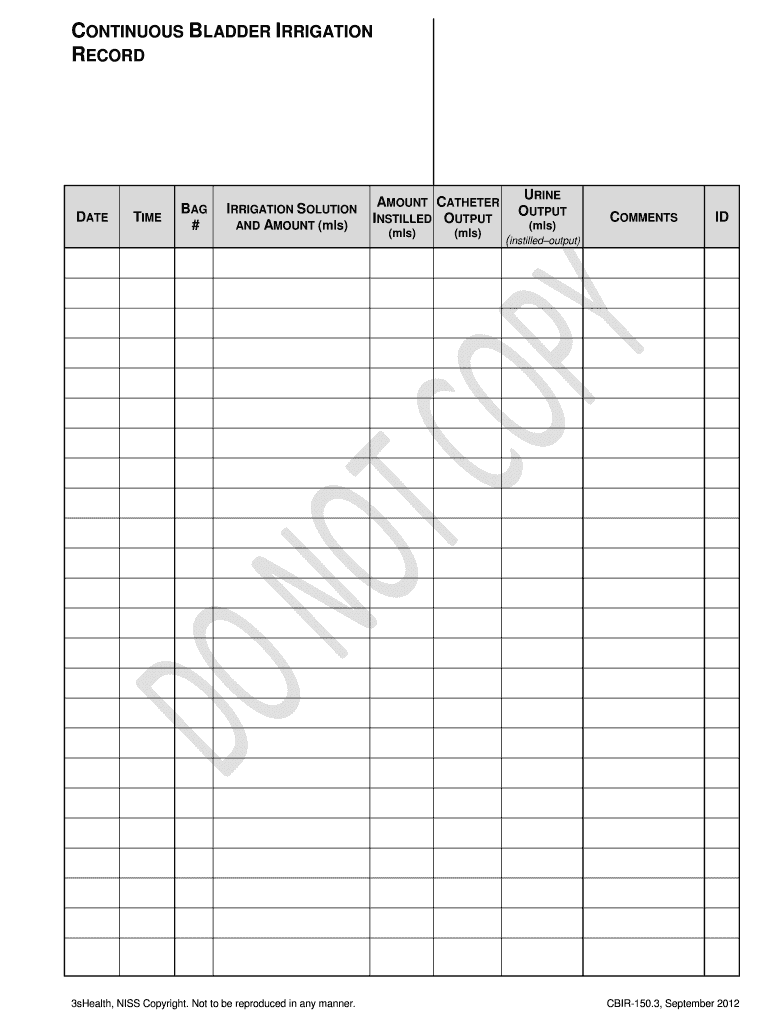
The Continuous Bladder Irrigation Record is a medical documentation tool used to monitor and record the details of continuous bladder irrigation procedures. This form is critical for accurately tracking various parameters such as the volume of irrigation solution instilled, the amount of urinary output, and any relevant comments regarding patient response or procedural anomalies. It serves as an essential record for healthcare providers to ensure patient safety and monitor therapeutic outcomes effectively.
Continuous bladder irrigation is a medical procedure often used post-surgery or during treatments that require the prevention of blood clots in the bladder. The record helps track the procedure's progress and ensures that accurate medical data is maintained for patient care.
How to Use the Continuous Bladder Irrigation Record
Using the Continuous Bladder Irrigation Record involves several critical steps to ensure accurate data collection:
-
Date and Time Entry: Begin by entering the precise date and time the procedure started. This ensures a chronological record of the irrigation process.
-
Irrigation Solution Details: Specify the type and volume of irrigating solution used (in milliliters). This information aids in monitoring the fluid balance during the procedure.
-
Output Measurement: Record the output volume of the drained solution and urine. This is crucial in assessing the effectiveness of the irrigation and the patient's renal function.
-
Catheter Details: Include any specifics about the catheter type and size used during the process. This allows medical personnel to track equipment and its functioning accurately.
-
Comments: Add observations or relevant notes regarding the patient's condition, responses to the procedure, or any complications that arise.
An accurate and thorough completion of each section ensures effective communication among healthcare team members and supports clinical decision-making.
Steps to Complete the Continuous Bladder Irrigation Record
Completing the Continuous Bladder Irrigation Record accurately is critical for ensuring patient safety and effective procedural oversight. Here's how:
-
Initial Setup: Before beginning the irrigation, ensure all required materials and documentation tools are prepared.
-
Recording Data: As the procedure progresses, promptly enter data for each parameter, including time intervals, solution used, and output volume.
-
Update Regularly: Keep updating the record throughout the procedure. Regular entries help in maintaining accurate and up-to-date information.
-
Final Check and Signature: Once the procedure concludes, double-check all entered data for completeness and accuracy. Conclude the record with a signature from the healthcare professional responsible.
These steps are instrumental in maintaining a comprehensive and precise record of the procedure, aiding both immediate and future medical care.
Key Elements of the Continuous Bladder Irrigation Record
Certain elements are fundamental to the Continuous Bladder Irrigation Record, each serving its specific purpose:
-
Date and Time Columns: Ensure accurate tracking of the procedure timeline for documentation and review purposes.
-
Solution and Output Volumes: Record the exact amounts for precise fluid balance monitoring, crucial in assessing kidney function and procedural outcomes.
-
Observation Comments: This section allows healthcare providers to add qualitative data, covering areas unquantifiable by mere numbers, such as patient discomfort or equipment malfunction.
These components are essential for compiling a complete and usable record that reflects the intricacies of the procedure.
Who Typically Uses the Continuous Bladder Irrigation Record
A range of healthcare professionals typically uses the Continuous Bladder Irrigation Record:
-
Nurses: Often responsible for administering the procedure and maintaining the record. They ensure the continuity of care by documenting the details accurately.
-
Urologists: Use the record to assess patient progress and evaluate the necessity for adjustments during treatment.
-
Hospital Administrators: Utilize these documents for compliance and medical auditing purposes.
These professionals rely on the accuracy of these records to guide treatment decisions and ensure optimal outcomes for patients.


Important Terms Related to the Continuous Bladder Irrigation Record
Understanding specific terms related to this form is crucial for effective usage:
-
Irrigation Solution: A saline or medicated liquid used to flush out the bladder, preventing complications like clot formation.
-
Instilled Volume: The quantity of irrigation fluid introduced into the bladder, significant for tracking fluid balance.
-
Urine Output: The measured fluid volume evacuated from the bladder, which helps in assessing kidney functions and irrigation impact.
These terms are essential for accurate communication and documentation throughout the procedure.
Legal Use of the Continuous Bladder Irrigation Record
In a clinical context, using the Continuous Bladder Irrigation Record is governed by specific regulations to ensure patient safety and data protection:
-
Confidentiality: Sensitive patient information logged must comply with HIPAA regulations to maintain privacy.
-
Accuracy and Audit Trails: Records must be thoroughly completed for clinical audits and legal documentation, ensuring all data entries are verifiable and precise.
These legal considerations are vital in ensuring compliance with healthcare standards and legal obligations.
Examples of Using the Continuous Bladder Irrigation Record
Several scenarios showcase the critical use of the Continuous Bladder Irrigation Record:
-
Post-Surgical Care: After prostate surgery, this form helps monitor and manage bleeding risks by tracking fluid volumes.
-
Post-Radiation Treatment: To prevent clot formation due to cellular debris in the bladder, irrigation and record-keeping ensure patient safety and effective recovery.
In each scenario, the detailed documentation of irrigation allows healthcare teams to provide tailored, responsive care based on real-time procedural insights.