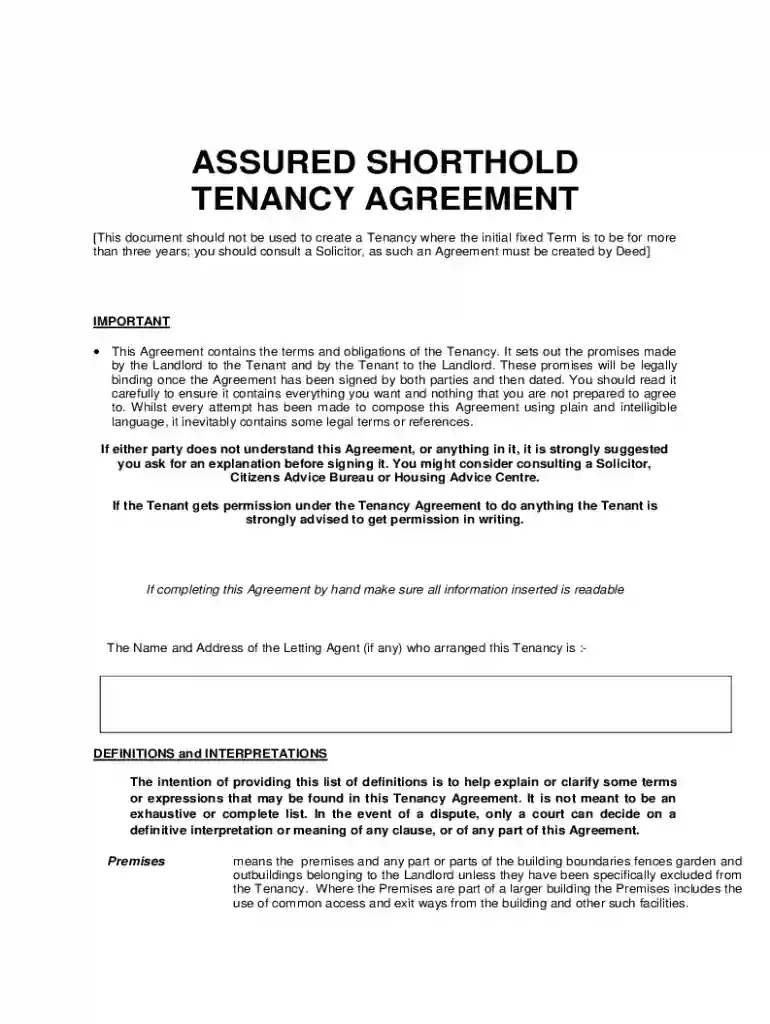
Definition and Meaning
An Assured Shorthold Tenancy Agreement (AST) is a legal arrangement commonly used in the residential rental sector in the United States. This agreement establishes a tenant's right to live in a rental property for a specified period, usually six months to one year, with the possibility of renewal. The AST outlines both the tenant's and landlord's obligations, ensuring clear communication and understanding between both parties. It is critical for ensuring tenant security while allowing landlords to maintain control over their property rights.
Key Characteristics of an AST
- Duration: Typically ranges from six months to one year, with potential renewals.
- Termination: Can be terminated by either party under certain conditions, usually with prior notice.
- Security Deposits: Often includes stipulations regarding the collection and return of security deposits.
Tenant and Landlord Obligations
Both parties have distinct responsibilities outlined in the AST:
- Tenant Responsibilities: Paying rent on time, maintaining the property, and adhering to the lease terms.
- Landlord Responsibilities: Ensuring property maintenance and providing a habitable living environment.
How to Use the Assured Shorthold Tenancy Agreement
The AST is a practical tool used by both tenants and landlords to define relationship terms clearly and legally.
Steps for Tenants
- Review the Terms and Conditions: Carefully read the AST to ensure all terms are agreeable.
- Clarify Ambiguities: Discuss any unclear terms with the landlord before signing.
- Sign the Agreement: Execute the document once satisfied with its conditions.
Steps for Landlords
- Draft the Agreement: Ensure all essential elements, such as rent amount and duration, are included.
- Consult Legal Advice: Obtain professional legal advice to avoid potential disputes.
- Provide Copies: Supply the tenant with a signed copy of the AST for their records.
Steps to Complete the Assured Shorthold Tenancy Agreement
Completing an AST requires attention to detail to ensure compliance with legal requirements.
- Collect Necessary Information: Include tenant and landlord details, property address, and rent amount.
- Outline Terms and Conditions: Incorporate clauses for maintenance, termination, and pets if applicable.
- Signatures and Dates: Both parties must sign and date the agreement to validate it legally.
- Retain a Copy: Both parties should keep a copy of the signed document for future reference.
Key Elements of the Assured Shorthold Tenancy Agreement
An AST includes several vital components essential for its enforceability and effectiveness.
Primary Components
- Parties Involved: Names and contact details of the tenant(s) and landlord.
- Property Details: Explicit description and address of the rental property.
- Rent Specifications: Amount, due dates, and payment methods.
- Tenancy Duration: Start date and end date of the lease period.
Additional Clauses
- Deposit Terms: Amount, purpose, and conditions for return.
- Repairs and Maintenance: Responsibilities for property upkeep.
- Termination Conditions: Required notice periods and acceptable methods for ending the tenancy.
Legal Use of the Assured Shorthold Tenancy Agreement
The AST must comply with state-specific landlord-tenant laws to be valid.
Compliance Requirements
- Conformity to Laws: Ensure the agreement aligns with local and state regulations.
- Fair Housing Rules: Must adhere to anti-discrimination laws.
Legal Protections
- Tenant Protections: Safeguards against unlawful eviction and ensures rights to a habitable property.
- Landlord Protections: Provides legal grounds to reclaim property under specified conditions.
Important Terms Related to the Assured Shorthold Tenancy Agreement
Understanding specific terms within the AST helps clarify its application and scope.
Terms to Know
- Breach of Contract: Any failure to fulfill terms stated in the AST.
- Covenant: Conditions or agreements included in the tenancy terms.
- Subletting: Allowing another party to rent the property during the AST term.
State-Specific Rules for the Assured Shorthold Tenancy Agreement
AST regulations can vary significantly across different U.S. states.
Variability Among States
- Security Deposit Laws: Different caps and requirements for deposit handling.
- Termination Notices: Varying notice periods required for ending a tenancy.
- Repair Mandates: States may have different requirements for maintenance and repairs.