






Definition & Meaning
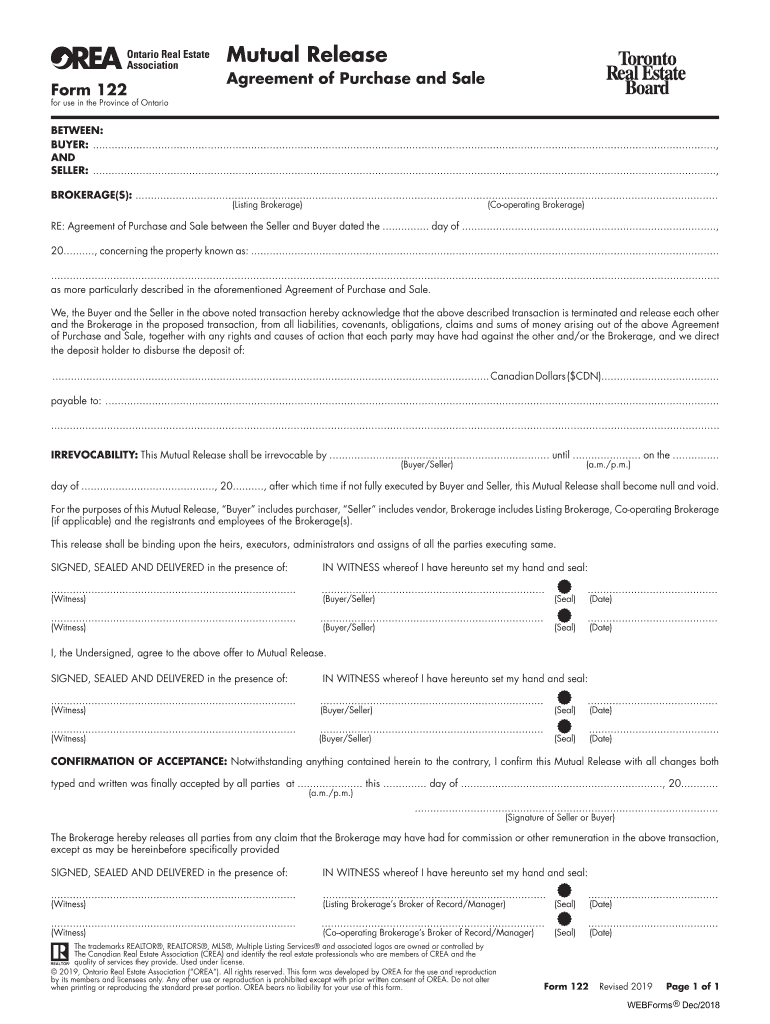
The Mutual Release Agreement of Purchase and Sale Form 122 is a legal document used to release parties from their obligations under a purchase and sale agreement. Commonly utilized in real estate transactions, this form serves as a mutual consent between the buyer and seller, agreeing to terminate their existing contract without further liabilities. The primary purpose is to ensure both parties are legally free from the contractual commitments they initially entered into, preventing any future disputes or claims regarding the terminated agreement.
How to Use the Mutual Release Agreement of Purchase and Sale Form 122
To effectively use the Mutual Release Agreement of Purchase and Sale Form 122, follow these steps:
- Identify Parties Involved: Clearly state the names of the buyer and seller as they appear in the original purchase and sale agreement.
- Outline Contract Details: Mention the original contract date and any specific details that identify the agreement being released.
- Agree on Terms: Ensure both parties have negotiated terms on which they mutually agree to release each other from the contract.
- Signature Requirement: Obtain signatures from both parties to finalize the release. Consider additional signatures from witnesses or notaries if required by local laws.
Steps to Complete the Mutual Release Agreement of Purchase and Sale Form 122
Completing Form 122 involves several key steps to ensure all legal requirements are met:
- Fill Out Basic Information: This includes the names of both parties, the property address, and the date of the original agreement.
- Describe Mutual Consent: Articulate the mutual desire to end the agreement and outline any conditions agreed upon for the release, such as financial settlements or return of deposits.
- Review Legal Terms: Ensure all legal terms are properly stated, such as indemnification clauses or confidentiality agreements.
- Finalize with Signatures: Both parties should read the document thoroughly before signing. Secure any necessary notarization as per jurisdictional requirements.
Who Typically Uses the Mutual Release Agreement of Purchase and Sale Form 122
This form is commonly used by:
- Real Estate Agents and Brokers: To formalize the end of a property transaction.
- Home Buyers and Sellers: When both parties mutually decide not to proceed with the sale.
- Legal Representatives: Acting on behalf of clients in transactional disputes or negotiations.
These users rely on Form 122 to ensure clarity and legal protection when dissolving an agreement.


Key Elements of the Mutual Release Agreement of Purchase and Sale Form 122
Several key elements should be included to ensure completeness:
- Identification of Parties: Names and roles of parties involved (buyer and seller).
- Property Details: Information about the property subject to the original agreement.
- Termination Clause: Specific wording that releases both parties from further obligations.
- Financial Terms: Any settlements regarding earnest money or deposits.
- Legal Terms and Conditions: Include language on indemnification, confidentiality, and jurisdiction.
Legal Use of the Mutual Release Agreement of Purchase and Sale Form 122
Understanding the legal use of Form 122 is critical:
- Dispute Resolution: Used to amicably resolve situations where the original agreement can no longer be fulfilled.
- Prevent Future Claims: By signing the mutual release, both parties agree not to pursue legal claims against each other relevant to the terminated agreement.
- Documentation: Serves as an official record that the contracted obligations are terminated by mutual consent.
State-Specific Rules for the Mutual Release Agreement of Purchase and Sale Form 122
In the United States, state-specific rules may apply:
- Notarization Requirements: Some states may require the form to be notarized to be legally binding.
- Specific Language: Certain jurisdictions might mandate inclusion of particular legal phrases or clauses.
- Regulatory Compliance: Ensure familiarity with local real estate laws that might affecting the drafting or execution of this form.
Examples of Using the Mutual Release Agreement of Purchase and Sale Form 122
Several scenarios illustrate the practical use of Form 122:
- Unmet Conditions: If a sale is contingent upon inspection and the property fails, both parties may choose to use Form 122 to exit the contract without penalty.
- Change in Financial Status: Should a buyer's financial situation change unexpectedly, both parties may mutually agree to terminate the agreement.
- Market Fluctuations: Participants may exit a deal due to adverse market changes affecting property value or investment potential.
Important Terms Related to the Mutual Release Agreement of Purchase and Sale Form 122
Understanding these terms is vital for comprehension:
- Indemnity Clause: A provision that protects parties from liabilities post-termination.
- Confidentiality Agreement: A mutual promise not to disclose transaction details.
- Earnest Money: A deposit made to demonstrate a buyer's commitment to the transaction, often subject to release terms in mutual agreements.
These terms ensure clarity and protection for both parties using the release form.