




Definition and Purpose of the Tennessee Hazardous Waste Generation Fee Determination
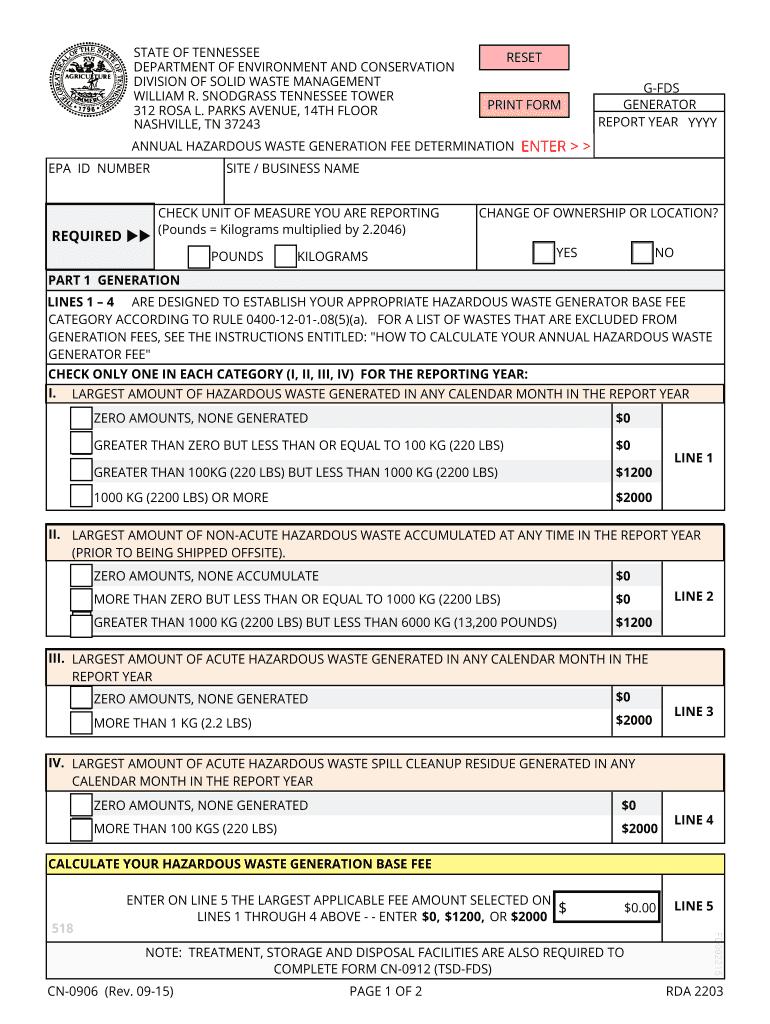
The Tennessee Hazardous Waste Generation Fee Determination form is designed for entities involved in the generation of hazardous waste within the state of Tennessee. Its primary purpose is to ascertain the fee owed by waste generators based on the quantity and type of hazardous waste they produce. This form is crucial for ensuring that waste management practices comply with state regulations and for supporting environmental protection efforts.
Specific Requirements
- Hazardous Waste Classification: Entities must identify the type of hazardous waste generated. This involves complying with the Environmental Protection Agency's classification system, which categorizes waste types based on their potential harm to human health and the environment.
- Annual Reporting: The form requires an annual tally of hazardous waste production, which ensures continuous monitoring and accountability for waste-generating operations.
Real-World Scenarios
Companies involved in manufacturing processes frequently generate residual materials classified as hazardous waste. Completing this form is a necessary component of their environmental compliance strategy, helping to calculate appropriate state-mandated fees.
Steps to Complete the Tennessee Hazardous Waste Generation Fee Determination
Completing the Tennessee Hazardous Waste Generation Fee Determination involves a series of steps to ensure accurate calculation and submission:
- Gather Essential Data: Compile detailed records of all hazardous waste generated over the reporting year, specifying types and quantities.
- Calculation of Fees: Use the state's fee schedule to compute the total fee based on the waste volume and classification.
- Complete Form CN-0912 (TSD-FDS): Enter the necessary data into each field, ensuring accuracy to avoid penalties.
- Submission: Submit the completed form and applicable fee to the designated state agency by the deadline.
Edge Cases
Companies undergoing a significant production change may need additional guidance from state agencies to accurately project their hazardous waste generation.
How to Obtain the Tennessee Hazardous Waste Generation Fee Determination Form
The Tennessee Hazardous Waste Generation Fee Determination form can be obtained through several methods:
- Online Access: Visit the official Tennessee Department of Environment and Conservation website to download the form in digital format.
- Direct Request: Contact the department’s office to request a mailed copy if online retrieval is not viable.
Variation in Access
Some small businesses without reliable internet access may need to rely on traditional mail or in-person visits to acquire necessary forms.
Important Terms Related to the Tennessee Hazardous Waste Generation Fee Determination
Understanding specific terms related to hazardous waste management is crucial for completing the fee determination form:
- Generator: The entity responsible for producing hazardous waste during its operations.
- Fee Schedule: A structured list issued by the state outlining the cost per unit of hazardous waste.
- Annual Reporting: The yearly requirement for detailing the quantity and classification of hazardous waste produced.
Detailed Explanations
The “fee schedule” often includes tiered rates that can vary based on factors such as waste type, volume, and potential environmental impact.
Key Elements of the Tennessee Hazardous Waste Generation Fee Determination
The form includes various critical sections that participants must address:
- Identification Information: Details about the generator, including organization name and contact information.
- Waste Details: Specifics on types of waste generated and their disposal method.
- Fee Calculation Details: A detailed breakdown reflecting the total fee.
Practical Examples
A chemical manufacturing firm might list multiple waste types, such as solvents and heavy metals, which require distinct fee calculations per waste category.
State-Specific Rules for the Tennessee Hazardous Waste Generation Fee Determination
Tennessee imposes specific regulations that must be adhered to when completing the fee determination:
- State Compliance Statutes: Compliance with local environmental laws is obligatory, covering aspects such as waste storage and transportation.
- Verification Procedures: There might be audits or verification checks to confirm data accuracy on the submitted forms.
Examples of Compliance Procedures
Routine inspections by state officials might be conducted to verify actual waste production, aligning reported data with physical waste presence.
Penalties for Non-Compliance
Failure to properly complete and submit the Tennessee Hazardous Waste Generation Fee Determination form can result in several penalties:
- Monetary Fines: Financial penalties for late submissions or inaccuracies.
- Legal Implications: Possible legal action for repeated non-compliance, affecting the company’s operational status.
Variations and Exemptions
Some exemptions might apply for certain small-scale waste generators, though these cases are exceptional and require separate verification.
Who Typically Uses the Tennessee Hazardous Waste Generation Fee Determination
Entities that frequently engage with the Tennessee Hazardous Waste Generation Fee Determination form include:
- Manufacturers: Particularly those involved in chemical production, electronics, and textiles.
- Laboratories: Including research facilities that generate chemical waste.
- Healthcare Providers: Facilities handling medical waste containing hazardous materials.


Business Entity Types Benefiting
Corporations and limited liability companies (LLCs) involved in sectors with rigorous waste management duties find this form essential for maintaining regulatory compliance while optimizing environmental responsibility.