Definition & Meaning
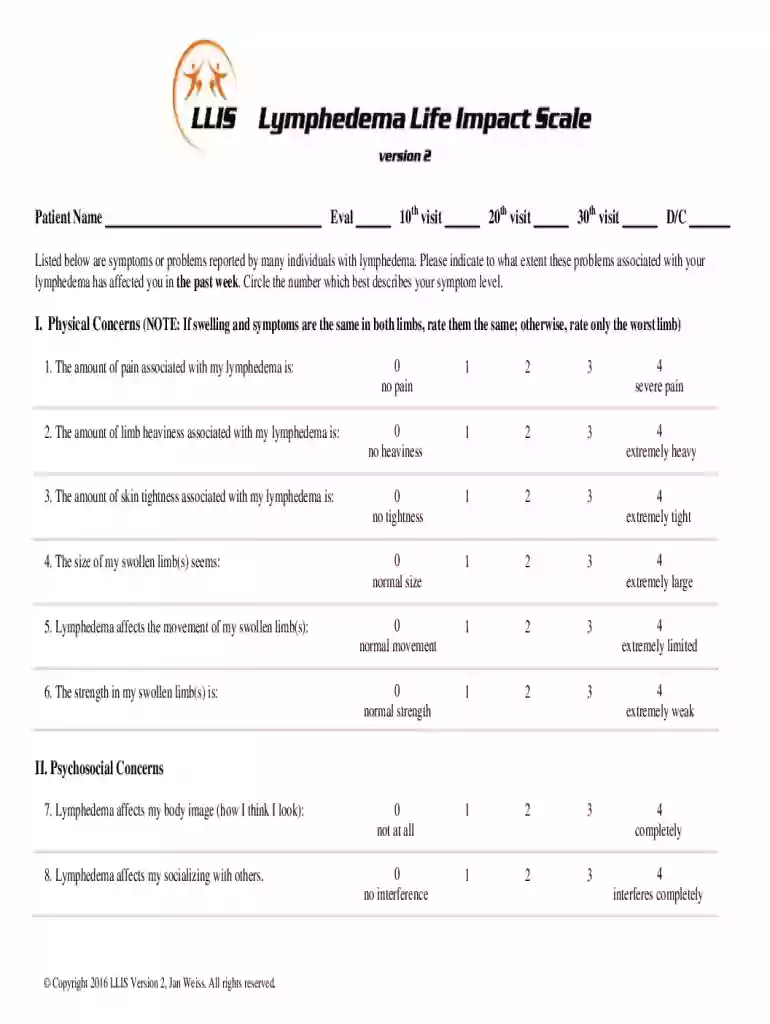
The Lymphedema Life Impact Scale Form is a specialized questionnaire used to assess how lymphedema affects a patient's physical, psychosocial, and functional well-being over a recent period, typically the past two weeks. This form allows healthcare providers to understand the severity and impact of the condition on a patient's day-to-day life, helping tailor treatment and support strategies.
- Physical Well-Being: Includes questions regarding mobility, pain levels, and daily activity limitations.
- Psychosocial Well-Being: Addresses emotional aspects, such as anxiety or depression related to living with lymphedema.
- Functional Well-Being: Evaluates the impact on a person's ability to perform routine tasks and engage in social activities.
How to Obtain the Lymphedema Life Impact Scale Form
The form is readily accessible through several pathways, catering to both healthcare professionals and patients:
- Healthcare Facilities: Many hospitals and clinics provide this form during consultations for individuals diagnosed with or suspected of having lymphedema.
- Online Resources: Often available for download on medical websites and platforms, ensuring easy access for patients who prefer digital copies.
- Direct Contact with Healthcare Providers: Patients can request the form directly from their healthcare provider, who may provide a physical or digital copy.
Steps to Complete the Lymphedema Life Impact Scale Form
Completing the form accurately is crucial for meaningful assessment. Here's a guide on how to approach it:
- Review Each Section: Ensure you understand the questions. They cover distinct areas such as physical discomfort, emotional wellbeing, and social interaction disturbances.
- Reflect on the Past Two Weeks: The form focuses on recent experiences, so concentrate on your symptoms and experiences over this period.
- Answer Honestly: Provide truthful responses to ensure healthcare providers can offer the best possible care.
- Seek Clarification: If a question seems unclear, consult with your healthcare provider to avoid misinterpretation.
Key Elements of the Lymphedema Life Impact Scale Form
The form is composed of multiple key sections that collectively evaluate the condition's impact:
- Symptom Severity: Rates the intensity and frequency of symptoms such as swelling and pain.
- Emotional Impact: Assesses how lymphedema affects mental health, including stress and self-esteem.
- Daily Activities: Questions target the ability to perform everyday functions, like dressing or exercising.
- Social Interaction: Evaluates the condition’s impact on social life and relationships.
Who Typically Uses the Lymphedema Life Impact Scale Form
This form is primarily targeted at:
- Patients Diagnosed with Lymphedema: To monitor and track the progression or improvement of their condition.
- Healthcare Providers: Physiotherapists, occupational therapists, and general practitioners use the form to assess and adjust treatment plans.
- Researchers: Utilized in studies to gather data on lymphedema's impact across different demographics.
Important Terms Related to Lymphedema Life Impact Scale Form
Understanding specific terminologies ensures accurate completion and interpretation:
- Lymphedema: A chronic condition characterized by swelling due to lymphatic system blockages.
- PSYCHOSOCIAL: Pertains to the interrelation of social factors and individual thought and behavior.
- Functional Well-being: Involves the ability to perform activities of daily living efficiently.
Legal Use of the Lymphedema Life Impact Scale Form
The form is considered a medical document and must be handled with confidentiality:
- Patient Consent: Providers should obtain explicit consent before sharing information derived from the form.
- Confidentiality Protocols: Adhering to HIPAA regulations ensures that patient data remains protected.
- Data Usage: Used to inform healthcare plans and not for discriminatory practices or exploitation.
Examples of Using the Lymphedema Life Impact Scale Form
Understanding practical applications of the form can provide insight into its utility:
- Case Study A: A patient reporting severe discomfort was identified through high scores in physical discomfort sections, leading to an adjusted therapeutic approach.
- Case Study B: Indications of emotional distress prompted a referral to counseling services, demonstrating the form's multifaceted assessment capability.
- Research Utilization: Aggregated data from multiple completed forms contributed to a study highlighting the psychological impact of lymphedema on various age groups.