Definition & Meaning
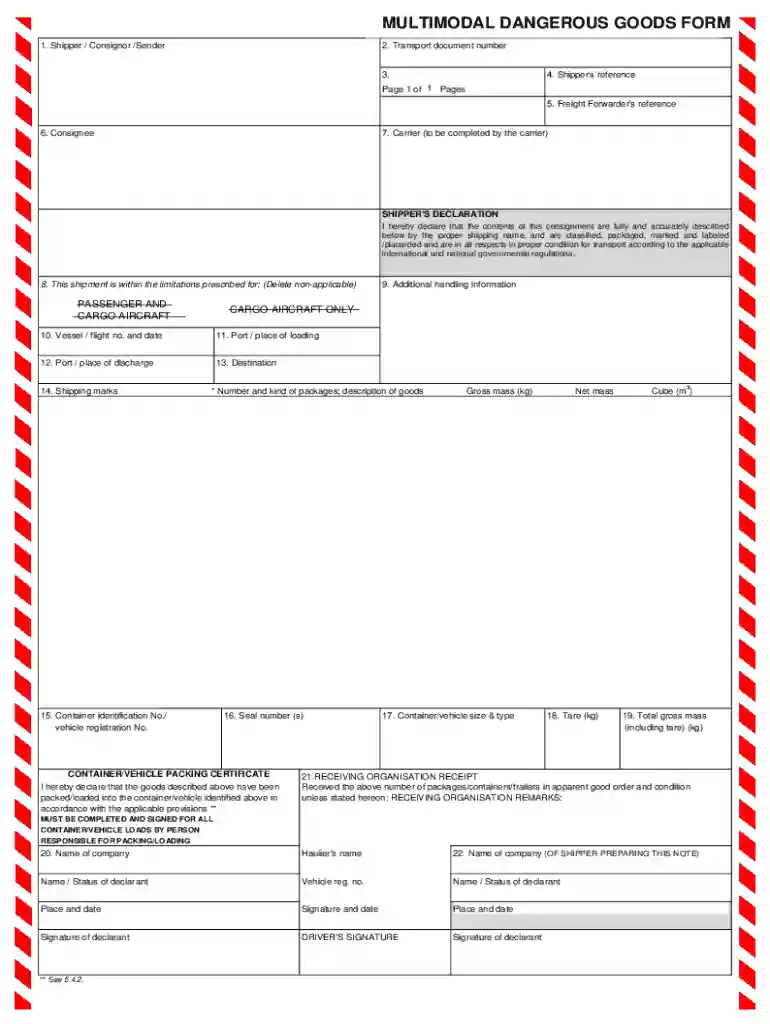
The Multimodal Dangerous Goods Form is a standardized document used to declare and handle dangerous goods during transportation, ensuring compliance with international and local regulations. This form serves as a crucial part of the logistics and supply chain management for materials that pose a risk to health, safety, property, or the environment during transit. It details the nature of the goods, the classification of the hazardous material, and the compliance measures that need to be adhered to.
Importance of Standardization
- Ensures uniformity in how dangerous goods are documented across different transport modes such as air, sea, rail, and road.
- Facilitates communication among freight forwarders, carriers, and regulators.
- Reduces the risk of misinterpretation or mishandling of hazardous materials.
Regulatory Compliance
To adhere to stringent safety regulations, the form must be filled accurately, reflecting compliance with international standards like those set by the International Air Transport Association (IATA) and the International Maritime Dangerous Goods Code (IMDG).
How to Use the Multimodal Dangerous Goods Form
Using the Multimodal Dangerous Goods Form correctly is essential for maintaining safety and compliance in the transportation of hazardous materials.
Steps for Completion
- Identify the Hazardous Material: Begin by identifying the UN number, proper shipping name, class or division, and packaging group of the hazardous material.
- Fill in the Shipper Information: Provide complete details of the shipper, including name, address, and contact details.
- Detail the Consignee Information: Similarly, add the consignee’s information for clarity and legal compliance.
- Describe the Shipment: Include details such as quantity, type of packaging, and any additional handling instructions.
Common Mistakes
- Incorrect classification of materials, which can lead to regulatory fines.
- Missing information, such as emergency contact details or specific handling instructions.
- Inaccurate packaging descriptions that do not align with the stated class or division of the hazardous goods.
Key Elements of the Multimodal Dangerous Goods Form
The form encapsulates several key components that are vital for the safe and regulatory-compliant transportation of dangerous goods.
Shipper and Consignee Information
- Shipper Details: Must include the shipper’s full name, address, and contact number.
- Consignee Details: Complements shipper details with consignee’s name and contact information.
Description of Goods
- Proper Shipping Name: Official name as per international conventions.
- UN Number: A unique identifier for the hazardous substance.
- Class and Division: Indicate the risk level.
- Packing Group: Highlight the severity of the hazard.
Handling and Transport Information
- Packaging and Quantity: Specify the type and count of the packaging used.
- Emergency Contact: Provide numbers for use in case of incidents during transport.
Legal Use of the Multimodal Dangerous Goods Form
This form is not just a procedural necessity but also a legal requirement for transportation involving hazardous goods.
Legal Implications
- Ensures that parties involved are accountable and informed of potential risks.
- Serves as a legal document in the event of an incident or dispute.
- Non-compliance with accurate form completion can result in legal penalties.
Documentation for Various Transport Modes
- Air: Compliance with ICAO Technical Instructions and IATA regulations.
- Sea: Adherence to the IMDG Code.
- Land: Must meet road and rail carriage regulations specific to the country.
Why Use the Multimodal Dangerous Goods Form
Despite its detailed nature, the form plays a critical role in ensuring safety and compliance during transport.
Benefits of Using the Form
- Provides a single document for compliance across multiple transport modes.
- Enhances safety by ensuring that all parties are informed about the nature of the goods and necessary precautions.
- Streamlines the documentation process in multimodal logistics operations.
Important Terms Related to the Form
Understanding key terms associated with the Multimodal Dangerous Goods Form is crucial for accurate completion and compliance.
Terminology
- UN Number: A four-digit number identifying hazardous substances.
- Proper Shipping Name: The name recognized under international transport regulations.
- Packing Group: Risk level assigned based on the substance's hazard.
Related Acronyms
- IATA: International Air Transport Association.
- IMDG: International Maritime Dangerous Goods Code.
- ICAO: International Civil Aviation Organization.
Key Users
- Freight Forwarders: Manage logistics and document compliance.
- Carriers: Responsible for the safe transport of the goods.
- Regulatory Authorities: Ensure adherence to international safety standards.
Industry Applications
Industries ranging from chemicals and pharmaceuticals to electronics and automotive rely on this form to manage the transportation of potentially dangerous goods.
Steps to Complete the Multimodal Dangerous Goods Form
Completing the form requires attention to detail and awareness of regulatory requirements.
Step-by-Step Instructions
- Gather Necessary Information: Collect data on the hazardous material, including UN number, packing group, and quantities.
- Accurate Data Entry: Ensure all fields, from shipper to emergency contacts, are filled with precision.
- Review and Verify: Double-check entries for errors or omissions to prevent compliance issues.
- Submit the Form: Provide copies to appropriate parties, such as carriers and regulatory authorities.
Verification Process
- Consistently check against external regulatory documents for accuracy.
- Use electronic tools to match data entries against standards for seamless compliance.
By understanding these different components, users of the Multimodal Dangerous Goods Form can ensure the efficient and safe transport of hazardous materials, complying with all necessary legal and regulatory obligations.