Definition and Purpose of the ABA Therapy Services Request Form
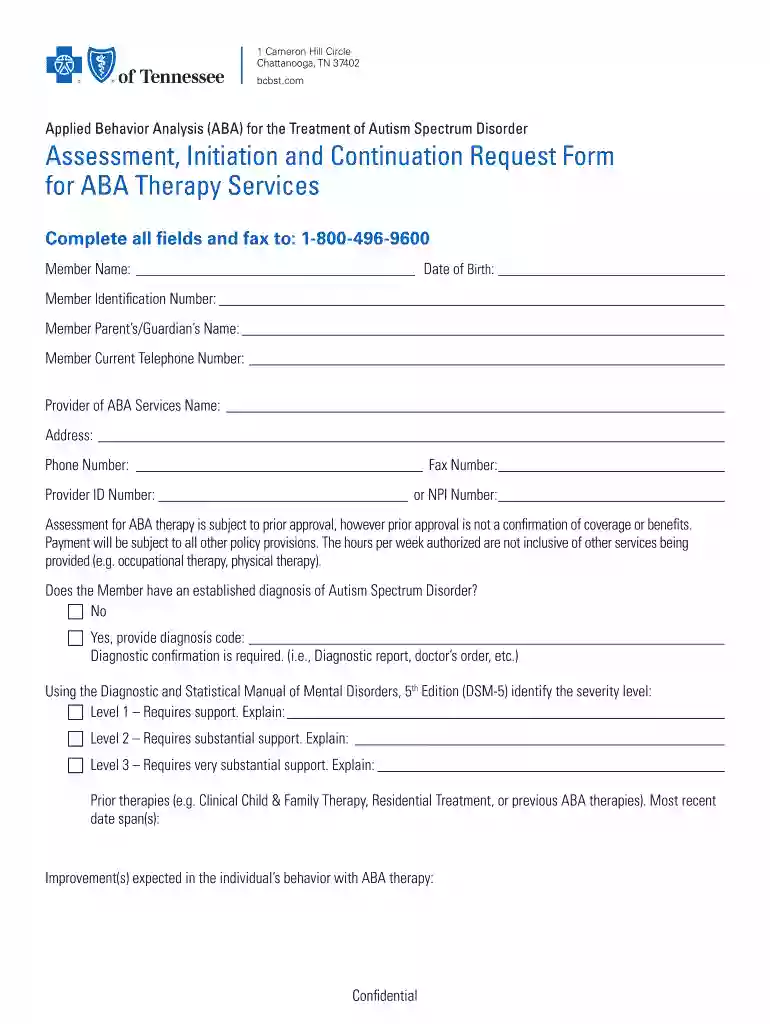
The ABA Therapy Services Request Form serves as a formal tool designed to streamline the intake and management process for accessing Applied Behavior Analysis (ABA) therapy. ABA therapy is commonly used to assist individuals, particularly those with Autism Spectrum Disorder (ASD), in enhancing their social, communication, and learning skills. This form is crucial for healthcare providers and families seeking to initiate or continue these therapeutic services, ensuring all necessary information is compiled accurately to facilitate the treatment process.
Key Objectives of the Form
- Information Gathering: Collects essential details like personal information, diagnostic criteria, and specific therapy needs.
- Service Coordination: Aligns treatment goals between service providers and clients to ensure tailored therapy that meets the client's needs.
- Authorization Process: Helps in securing necessary approvals from insurance companies or funding bodies to cover therapy costs.
- Documentation: Provides a record for both legal and administrative purposes, ensuring compliance with health service regulations.
Steps to Complete the ABA Therapy Services Request Form
Completing the ABA Therapy Services Request Form involves a structured process to ensure all relevant details are captured:
- Personal Information: Enter the individual's full name, date of birth, and contact information.
- Diagnosis Details: Include official diagnoses related to ASD or other behavioral concerns verified by a qualified professional.
- Provider Information: Provide details about the ABA provider or therapist, including their qualifications and contact details.
- Therapy Goals: Specify the therapy outcomes intended, such as improvement in communication or reduction in specific behaviors.
- Insurance Information: If applicable, enter insurance details including provider name, policy number, and authorization requirements.
- Consent and Signatures: Obtain necessary signatures from guardians or responsible parties to authorize the provision of therapy and its associated assessments.
Common Challenges and Solutions
- Incomplete Information: Ensure all sections are filled; double-check before submission.
- Lack of Access to Diagnostic Information: Coordinate with healthcare practitioners early to gather necessary diagnostic documentation.
- Insurance Details: Clarify details with insurance providers to prevent delays in service authorization.
Required Documents for Submission
To accompany the ABA Therapy Services Request Form, several documents may be necessary to complete the submission process:
- Diagnostic Reports: Official evaluations or assessments conducted by psychologists or medical professionals diagnosing ASD or related conditions.
- Insurance Authorization: Pre-approval documentation from insurance providers if therapy costs are covered.
- Consent Forms: Written consents from guardians authorizing data sharing and therapy initiation.
Document Preparation Tips
- Organize Documentation: Compile all related documents together for easy reference and submission.
- Verification: Ensure all documents are recent and authenticated to prevent delays in processing.
Legal Use and Compliance
Maintaining legal compliance is crucial when utilizing the ABA Therapy Services Request Form:
Key Compliance Areas
- Privacy Laws: Adhere to HIPAA regulations, ensuring that patient data remains confidential and is handled securely.
- Consent Requirements: Written consents are mandatory, protecting client rights and ensuring informed decisions are made around therapy services.
- Accurate Representation: The information entered should accurately represent the individual's needs and conditions, avoiding misdiagnosis or false representation.
Guidance for Practitioners
- Regular Training: Stay updated on changes to healthcare regulations concerning ABA therapy.
- Consistent Review: Frequently review ethical guidelines to ensure all legal standards are met in practice and documentation.
State-Specific Regulations and Variations
ABA therapy regulations can vary across states, affecting the requirements for completing and submitting the request form:
- Licensing Requirements: Some states may have different licensing requirements for practitioners administering ABA therapy.
- Insurance Policies: State-specific insurance mandates can affect coverage and authorization processes.
- Educational Ties: Variations might occur based on state education rules, especially if ABA therapy is part of school support services.
Coping with State Differences
- Consultation with Local Experts: Engage with local service providers who understand state laws and insurance nuances.
- State Resources: Utilize state health department resources to keep informed about any regulation shifts.
Important Terms Related to ABA Therapy Services
Understanding key terms related to the ABA Therapy Services Request Form can help in navigating the process efficiently:
- FBA (Functional Behavior Assessment): A critical assessment identifying causes of behavior issues, forming the basis of therapy plans.
- BCBA (Board Certified Behavior Analyst): A qualified individual who designs and oversees ABA therapy programs.
- ATE (Applied Therapeutic Educator): Professionals who may work alongside BCBAs to deliver everyday therapy sessions.
Contextual Application of Terms
- Collaboration with Specialists: Engage both BCBAs and ATES for a comprehensive approach to therapy planning and implementation.
- Usage of Assessments: Incorporate FBAs for continual monitoring and adjustment of therapy strategies.
Digital vs. Paper Versions
The ABA Therapy Services Request Form may be available in both digital and paper formats:
Digital Form Benefits
- Efficiency: Faster processing and submission times, enhanced with automatic saving and editing features.
- Accessibility: Easy access from multiple devices, promoting flexibility in form completion.
- Security: Secured sharing options with encryption ensuring data protection.
Paper Form Considerations
- Physical Signatures: Some entities may require wet signatures for official purposes.
- Storage: Paper copies may be needed for physical records or archives.
Regardless of the format, the goal remains to ensure the form is filled out accurately and submitted in a manner that adheres to recipient preferences or requirements.