




Definition & Meaning
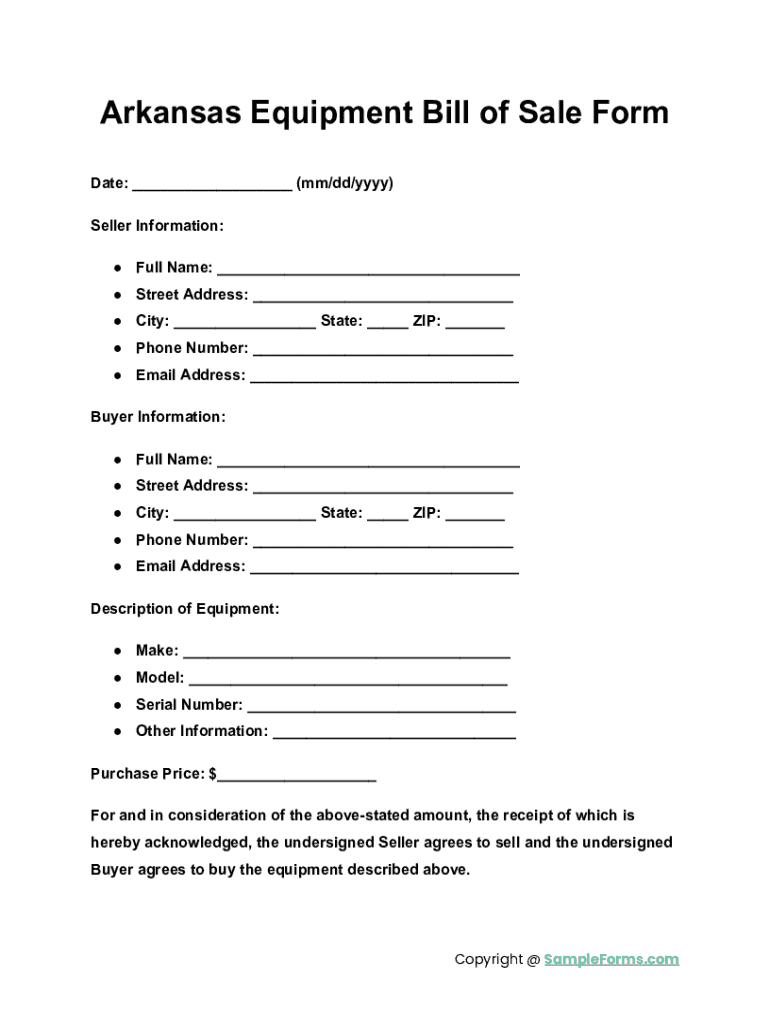
The Arkansas Equipment Bill of Sale Form is a legally binding document used to record the sale of equipment between a seller and a buyer within the state of Arkansas. This form serves as proof of ownership transfer, detailing the transaction's specifics such as the equipment description, sale date, purchase price, and both parties' information. It is crucial for maintaining legal records and protecting the interests of both buyer and seller in case of future disputes.
Key Elements of the Arkansas Equipment Bill of Sale Form
The form typically includes several vital components to ensure clarity and legal effectiveness. These elements often encompass the full names and contact details of both the seller and buyer, a thorough description of the equipment being sold, the total sale price, the date of sale, and any conditions of the sale such as warranties or "as is" clauses. Additionally, both parties' signatures are required to confirm agreement and authenticity.
Buyer and Seller Information
- Full Name: Essential for identifying the legal entities involved in the transaction.
- Address and Contact Details: Necessary for future communications or legal correspondence.
Equipment Description
- Model and Serial Numbers: Provide precise identification of the equipment.
- Condition: Specifies any existing defects or states if the item is sold "as is."
Steps to Complete the Arkansas Equipment Bill of Sale Form
-
Gather Information: Collect detailed information about the equipment, including make, model, and serial number. Ensure both buyer and seller's personal and contact information is accurate.
-
Agreement Between Parties: Confirm all terms, including price and any conditions of the sale, are agreed upon and documented.
-
Fill Out the Form: Carefully enter all gathered information into the form, ensuring each section is completed accurately.
-
Review the Document: Both parties should review the form for accuracy and completeness before signing.
-
Signatures: Make sure both the buyer and seller sign and date the document to validate the transaction legally.
Why You Should Use the Arkansas Equipment Bill of Sale Form
Using this form is vital for several reasons. It provides legal evidence of the transaction, offering protection against potential disputes. By detailing the equipment and terms explicitly, it minimizes misunderstandings. It also serves as a necessary document for tax purposes, allowing the buyer to register the equipment under their name.
Protection Against Disputes
- Legal Evidence: Establishes proof of transfer of ownership.
- Clarifies Terms: Prevents future disagreements regarding the equipment's condition and terms of sale.
State-Specific Rules for the Arkansas Equipment Bill of Sale Form
In Arkansas, the Bill of Sale must comply with state-specific regulations. It typically needs to include both seller's and buyer's signatures and may require notarization, depending on the equipment type or transaction complexity. Compliance ensures that the document is legally enforceable and recognized within Arkansas.
Notarization
- Requirement: Depending on the nature of the transaction, notarization might be necessary to authenticate the document officially.
Compliance with Arkansas Law
- Legal Status: Ensures the sale adheres to state regulations, providing legal standing in Arkansas courts.
Legal Use of the Arkansas Equipment Bill of Sale Form
The form is legally recognized to document the transfer of equipment ownership. It must be completed accurately and thoroughly to be used as valid evidence in legal proceedings. Ensuring both parties understand and consent to the terms protects against legal liability and enforcement issues.
Importance in Legal Proceedings
- Proof of Ownership: Demonstrates the legitimate transfer of ownership and rights.
- Resolution of Disputes: Acts as a foundational document in legal conflicts over the sale.
Who Typically Uses the Arkansas Equipment Bill of Sale Form
The form is utilized by individuals and businesses involved in selling and purchasing equipment in Arkansas. This can include private sellers, equipment dealers, construction companies, and other entities requiring formal documentation of equipment sales.


Common Users
- Private Sellers and Buyers: Individuals engaging in personal equipment sales.
- Businesses: Companies selling or acquiring equipment for operational purposes.

Examples of Using the Arkansas Equipment Bill of Sale Form
Consider a scenario where a construction company purchases a set of tools from another firm. Both parties use the Arkansas Equipment Bill of Sale Form to detail the equipment specifics, sale price, and agreed-upon terms. This form serves as legal documentation to ensure a smooth transaction and provides proof of purchase for tax and insurance purposes.