




01. Edit your form online
Type text, add images, blackout confidential details, add comments, highlights and more.

Type text, add images, blackout confidential details, add comments, highlights and more.

Draw your signature, type it, upload its image, or use your mobile device as a signature pad.

Send it via email, link, or fax. You can also download it, export it or print it out.
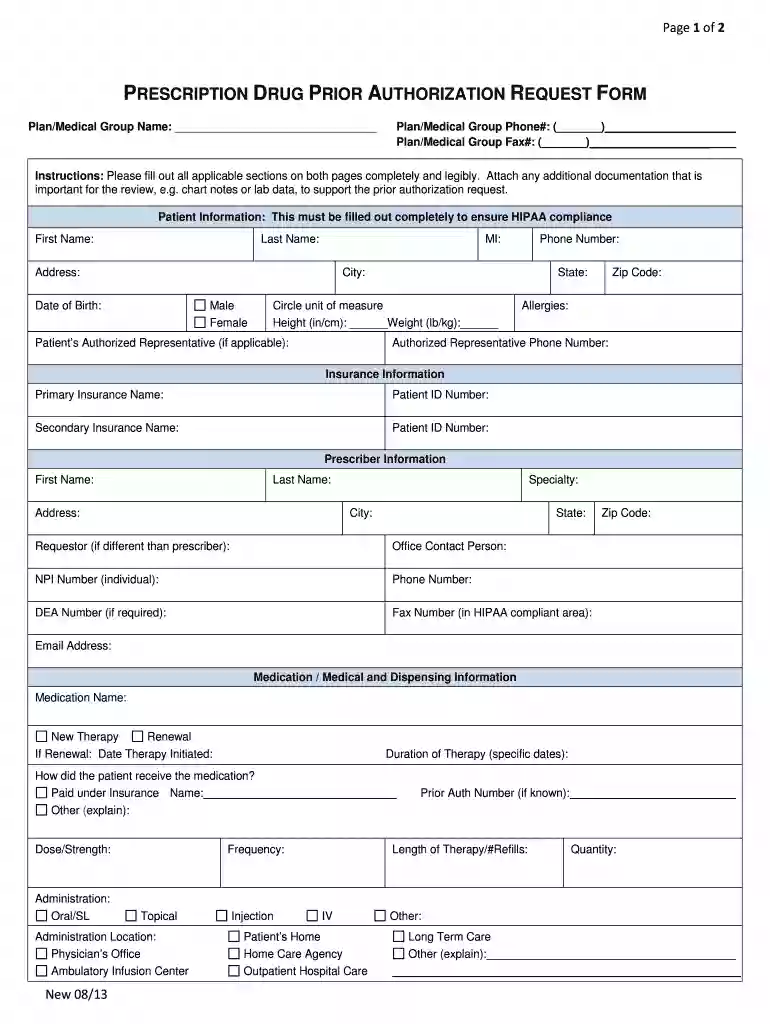
The California Prescription Drug Prior Authorization Form is a document used by healthcare providers to request approval from insurance companies for specific prescription medications. These medications often require special authorization because they are expensive, not typically covered, or have alternatives. By completing this form, providers request permission to prescribe a particular drug, ensuring that it's medically necessary for the patient's treatment.
To use the form, healthcare providers must fill out all required fields accurately. This includes patient information, current diagnosis, and medical history. Providers also need to specify the medication being requested, its dosage, and the treatment plan. Once completed, the form is submitted to the patient's insurance company for review. Approval or denial is communicated back to the provider, who will then inform the patient.
Patient Information: Start by accurately filling in the patient's personal details, including name, date of birth, and insurance information.
Diagnosis Details: Provide the patient's current diagnosis and relevant medical background that necessitates the prescribed medication.
Medication Information: Specify the drug name, dosage, and frequency. Include any past prescription results related to this medication or its alternatives.
Supporting Information: Add any tests, lab results, or other documentation that support the case for needing this medication.
Provider Details: Complete the section with the prescribing healthcare provider's name, contact information, and signature.
Submission: Send the form and any accompanying documents to the insurance company using the preferred method—mail, fax, or online submission portal.
Healthcare Providers: Physicians, nurse practitioners, and specialists use this form to justify the use of particular medications for their patients.
Insurance Companies: Insurers review the form to approve or deny coverage based on medical necessity and policy guidelines.
Patients: Although patients don’t fill out the form, it directly affects their ability to access certain medications through their insurance plan.


Prior Authorization: An approval process by insurance companies to ensure a medication or service is medically necessary.
Formulary: A list of medications covered by an insurance plan. Medications not on the formulary often need prior authorization.
Medically Necessary: Healthcare services or products needed to diagnose or treat an illness, injury, condition, disease, or its symptoms.
Using this form appropriately ensures compliance with healthcare regulations and insurance policies. Failure to obtain prior authorization could result in denied claims, additional costs, and treatment delays for patients. Providers must ensure that details are accurate and comprehensive to meet legal and policy requirements.
Patient and Insurance Information: Essential for identifying the individual and verifying coverage.
Medication Details: Clear identification and justification for the requested drug.
Provider Signature: Confirms the request is sanctioned by a licensed healthcare professional.
Supporting Documentation: Evidence and history that support the necessity of the prescription.
California has specific regulations regarding prescription drug coverage, particularly for Medi-Cal, the state's Medicaid program. Healthcare providers need to be aware of state guidelines that may impact the approval process. Compliance with these rules is crucial to ensure a smooth authorization process for patients receiving state-funded healthcare support.
We've got more versions of the California Prescription Drug Prior Authorization Form form. Select the right California Prescription Drug Prior Authorization Form version from the list and start editing it straight away!
| Versions | Form popularity | Fillable & printable |
|---|---|---|
| 2013 | 4.8 Satisfied (112 Votes) |
At DocHub, your data security is our priority. We follow HIPAA, SOC2, GDPR, and other standards, so you can work on your documents with confidence.


