
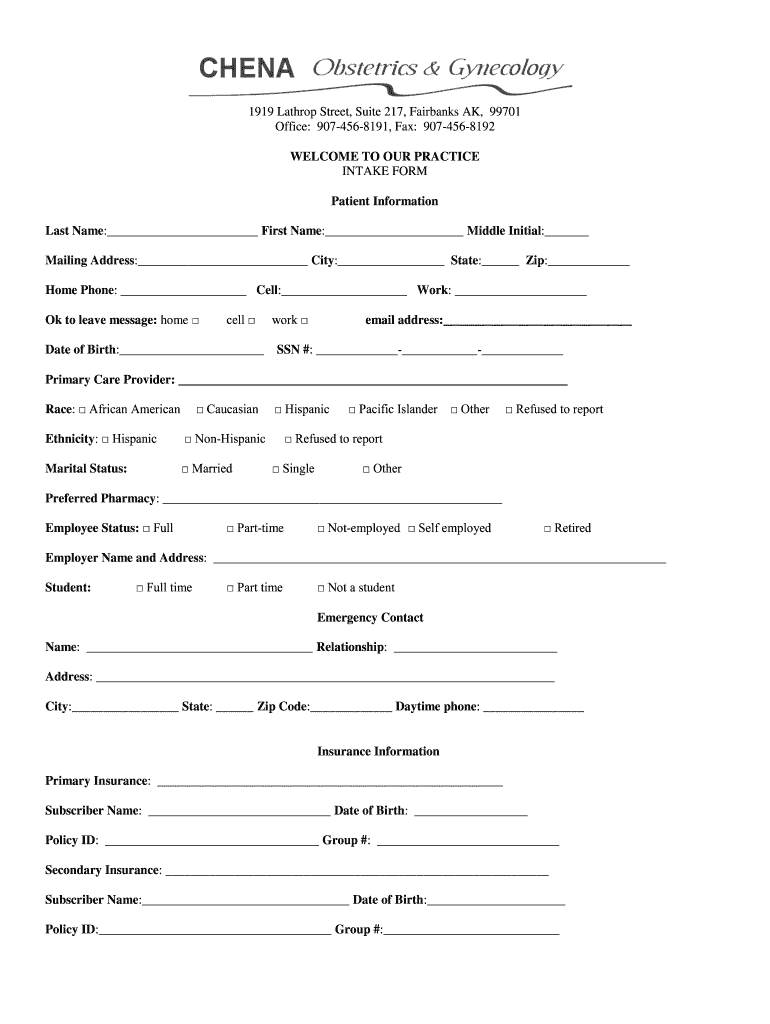







Overview of the Gyn Patient Intake Form
The gyn patient intake form serves as a fundamental document for medical practices specializing in obstetrics and gynecology. It is critical for collecting various types of information from patients that allows healthcare providers to offer tailored care. This section outlines the essential components and purposes of the form.
Personal Information Collection
One of the primary sections of a gyn patient intake form focuses on collecting personal data, which is vital for establishing a patient's identity and medical background. This includes:
- Full Name: First, last, and middle name to ensure correct identification.
- Date of Birth: Important for age-based medical recommendations and screenings.
- Contact Information: Current address, phone number, and email address are necessary for reaching out regarding appointments or follow-ups.
- Emergency Contacts: Details of individuals to notify in case of an emergency. This can include names, relationship to the patient, and contact information.
These data points help practices maintain accurate records and provide continuity in care.
Medical History Section
This portion of the form is critical for understanding patients' past medical conditions, treatments, and family health history. It usually covers:
- Previous Gynecological Issues: Any history of menstrual irregularities, surgeries, or conditions such as endometriosis.
- Chronic Illnesses: Information on longstanding health conditions like diabetes, hypertension, or thyroid disorders.
- Medications: A complete list of over-the-counter and prescription medications being taken, including dosages and frequency.
- Allergies: Identification of allergies to medications or environmental factors to prevent adverse reactions during treatment.
The collected medical history allows healthcare providers to tailor their approach and make informed decisions regarding care.
Insurance Information Validation
Insurance details are critical for processing payments and understanding what services are covered under a patient's policy. The typical sections include:
- Primary Insurance Provider: Name of the insurance company and the policy number.
- Secondary Insurance: If applicable, details regarding any additional coverage.
- Policy Holder Information: This may vary if the patient is not the policy holder, such as spouse or parent details.
Accurate insurance information helps streamline billing processes and ensures patients receive relevant benefits.
Consent and Acknowledgment
The consent section is essential for legal compliance and patient comfort. It typically includes:
- Authorization for Treatment: Patients give permission for medical staff to conduct examinations, tests, and treatments.
- HIPAA Compliance: Patients acknowledge their privacy rights regarding the handling of personal health information.
- Financial Policy Agreement: Clear communication of financial responsibilities, including co-pays, deductibles, and payment expectations for self-pay patients.
An informed consent section establishes trust and transparency in the patient-provider relationship.
Communication Preferences
This section addresses how patients prefer to receive information regarding their health care, which may include:
- Preferred Contact Method: Options might include phone calls, text messages, or email.
- Consent for Marketing Communications: Permission to receive health-related information, newsletters, or promotional offers.
- Appointment Reminders: Scheduling reminders sent through their chosen communication method.
Understanding patient preferences enhances engagement and improves the overall experience, ensuring that patients stay informed about their health care.
Rights and Responsibilities
Understanding patient rights and responsibilities cultivates a respectful patient-provider interaction. Typically, this includes:
- Patient Rights: Right to receive information about their health conditions, treatment options, and to participate in decisions regarding their care.
- Patient Responsibilities: Importance of providing accurate information, adhering to appointments, and understanding financial obligations.
This helps clarify what patients can expect from their healthcare provider while outlining their obligations in the care process.
Practice-Specific Information
To tailor the care experience, this form may include sections relevant to specific practices or procedures:
- Special Instructions: Additional information specific to the practice or types of services offered.
- Recent Tests or Referrals: Notable recent procedures or tests performed, along with referrals to specialists if applicable.
Capturing this information allows the practice to provide a comprehensive decision-making framework for care.
Summary of the Gyn Patient Intake Form
The gyn patient intake form is an integral part of patient management in obstetrics and gynecology services. It collects necessary personal and medical history, insurance details, consent for treatment, communication preferences, and acknowledges patient rights and responsibilities. Each section strives to facilitate a smoother experience for both patients and healthcare providers, enhancing care delivery and compliance with regulations.




