






Definition & Meaning
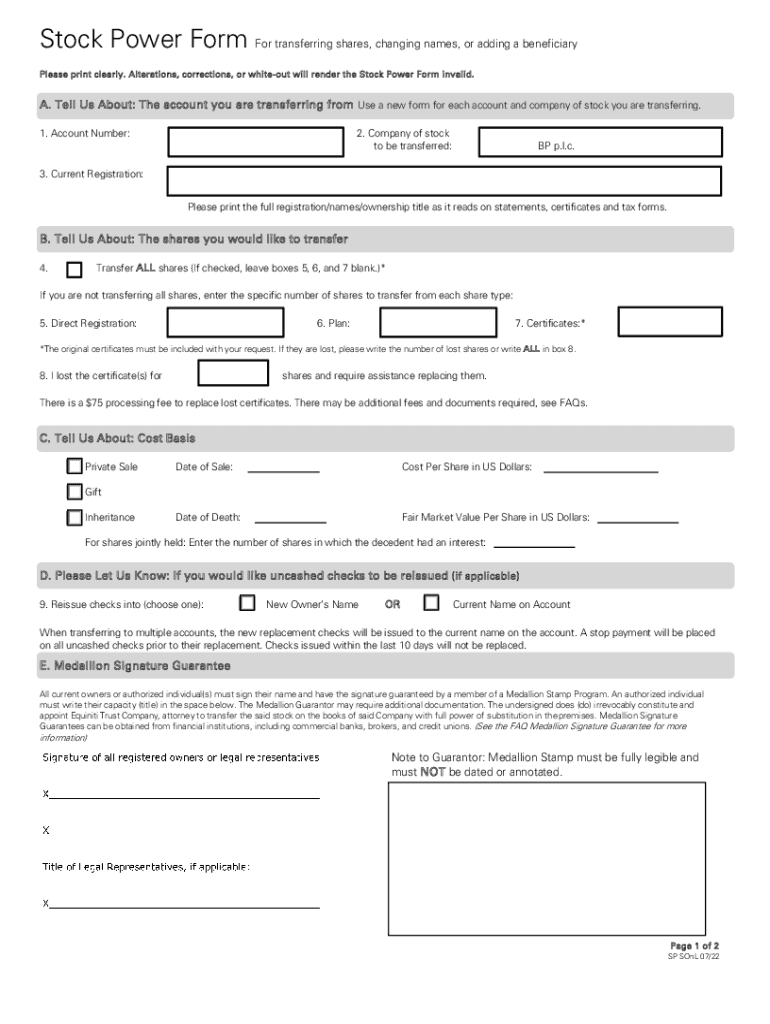
A Stock Power Form is a legal document utilized to transfer ownership of stock shares. It enables shareholders to authorize the transfer of shares to another party without requiring the issuance of a new stock certificate. This form is often used in situations where stock ownership needs to be reassigned due to transactions, gifts, name changes, or for estate planning purposes. The document serves as an instruction to the issuing corporation to update their records to reflect the transfer, ensuring the new owner is recognized in the company's stock registry.
Practical Example
Consider a situation where an individual wishes to gift stocks to a family member. By completing a Stock Power Form, the stock owner can legally transfer the shares without the recipient needing to obtain a new certificate. This streamlines the gifting process and keeps administrative efforts minimal. It is crucial that the form is filled accurately to avoid invalidation, as errors could lead to complications in the transfer.
Steps to Complete the Stock Power Form
-
Gather Required Information: Collect details such as the shareholder's name, contact information, the number of shares, stock description, and details of the new owner.
-
Fill Out the Form: Enter all required data into the Stock Power Form clearly. Ensure that you do not make corrections or use whiteout, as these can render the form invalid.
-
Include Signatures: Both the current shareholder and the new recipient must sign the form. Depending on the company’s policy, the signature may need to be witnessed or notarized.
-
Submit to the Issuing Corporation: Send the completed form to the corporation's transfer agent or designated department, following their submission guidelines.
Edge Cases and Variations
- Name Change: When a shareholder undergoes a legal name change, the Stock Power Form can be used to update the official records.
- Deceased Estates: Executors can use this form to transfer stocks from a deceased person to rightful inheritors, accompanied by necessary legal documentation, such as death certificates or court orders.
Important Terms Related to the Stock Power Form
- Transfer Agent: An entity, often an institution, that manages and tracks stock registration and ownership transfers on behalf of a company.
- Stock Certificate: A physical or electronic document representing ownership of shares in a corporation.
- Custodian: A financial institution or individual responsible for safeguarding and managing securities and financial assets.
Clarified Examples of Terminology
Suppose a corporation uses a transfer agent to handle its stock transactions. The shareholder negotiates the stock transfer through this agent, which helps ensure the transition is recorded accurately and legally.
Legal Use of the Stock Power Form
The Stock Power Form must adhere to specific legal criteria to be valid. It complies with U.S. securities laws and regulations, necessitating accurate completion and adherence to procedural requirements.
Key Considerations
- Authentication: Depending on the corporation’s rules, signatures might need to be authenticated through notarization.
- Transfer Protocols: Companies have different protocols, so it is essential for shareholders to understand their specific corporation’s process for stock transfers.
State-Specific Rules for the Stock Power Form
Differences in state regulations can affect how Stock Power Forms are processed. Some states might have additional notarization requirements or specific forms distinct from the ones utilized at a federal level. It's critical for users to verify state-specific rules to prevent form rejection or transfer delays.
Impact of Regulatory Variations
For instance, certain states have additional stipulations regarding inheritance transfers, requiring supplementary documentation to accompany the Stock Power Form. Individuals should contact their state securities division for detailed requirements.
Who Typically Uses the Stock Power Form
Stock Power Forms are typically used by individual shareholders, estate executors, and legal professionals. They are particularly useful for people involved in:
- Estate Settlements: Quickly transferring stocks from deceased estates with minimal legal hassle.
- Private Transactions: Simplifying the internal transfer processes in private settlements where investment firms or custodial arrangements are not involved.


Varied Uses
Business owners might use this form to reassign shares amongst partners or as part of a buyout process. Similarly, individuals changing their name after marriage or divorce might need to update their stock ownership records.
Key Elements of the Stock Power Form
The essential components of a Stock Power Form include:
- Identifying Information: Names and addresses of the original and new owners.
- Share Information: Number and class of shares being transferred.
- Signatures: Official endorsements by all parties involved, potentially notarized.
- Transfer Instructions: Details that explicitly direct the shares’ movement from the stock registry’s perspective.
Considerations for Form Completion
Each element must be completed with attention to detail, as missing or incorrect information can lead to form rejection or transfer delays.
Examples of Using the Stock Power Form
- Gifting Stock: A grandmother transferring stock as a gift to her grandchildren can use the Stock Power Form for an efficient transfer that respects tax implications and gifting laws.
- Business Transactions: Within a corporation, shareholders might use this form when negotiating share buybacks or adjusting partner ownership percentages post-negotiations.
Real-World Case Study
A small business owner facilitating an employee stock ownership plan (ESOP) used the Stock Power Form to manage the transaction logistics, ensuring the appointed trustee correctly received shares on behalf of participating employees while minimizing administrative burden.
By focusing on these components and examples, the content provides depth and clarity around the Stock Power Form, making the intricacies accessible to potential users.