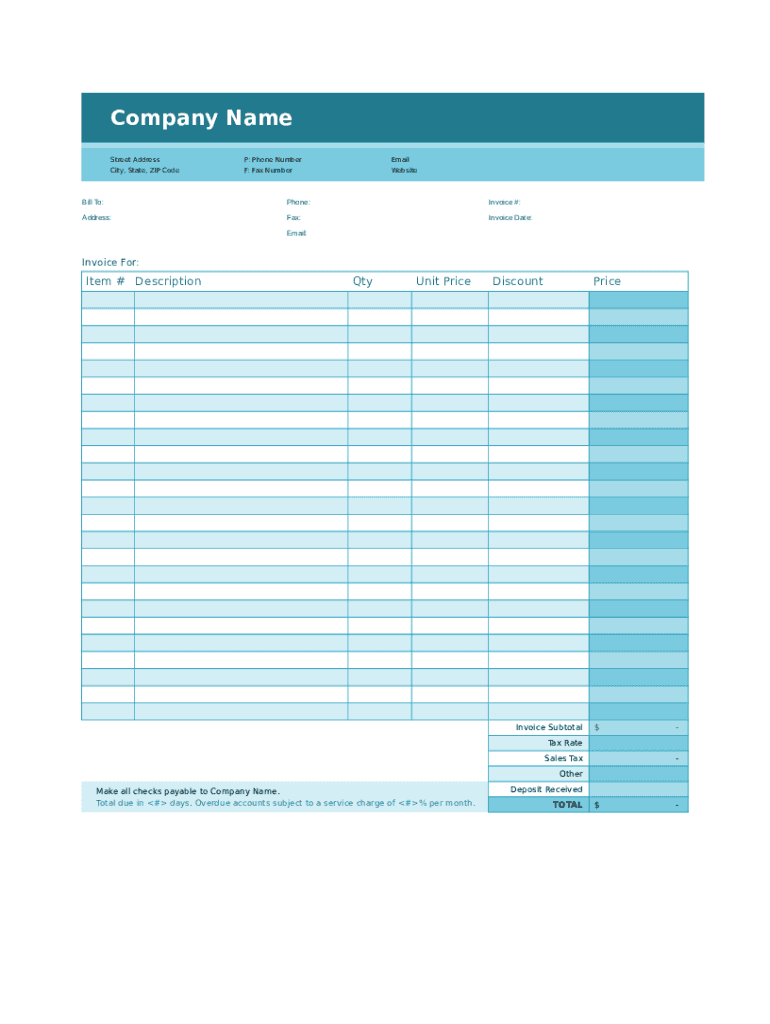







Definition & Meaning of Invoice Template
An invoice template is a pre-designed document that streamlines the process of billing clients by providing a structured format for detailing transactions, goods, or services provided. It typically includes essential components such as the seller's and buyer's information, a list of items or services, quantities, prices, taxes, and the total amount due. Using an invoice template ensures consistency, accuracy, and compliance with common business practices.
A well-constructed invoice template facilitates clear communication between parties, reducing discrepancies during payment processes. For businesses, especially those handling numerous transactions, these templates help maintain organized records, crucial for accounting and tax purposes.
How to Use the Invoice Template
-
Download or Select a Template: Choose a template that aligns with your business needs. Ensure it includes sections for all relevant details.
-
Input Business Information: Enter your company's name, address, contact information, and branding elements such as the logo.
-
Client Details: Fill in the client's name, address, and contact details to ensure targeted billing.
-
Transaction Information: List the provided goods or services with corresponding descriptions, quantities, and unit prices.
-
Calculate Totals: Add up the item amounts and apply any taxes or discounts to arrive at the final total.
-
Additional Instructions: Include payment terms, deadlines, and any late fee conditions as necessary.
-
Review and Send: Double-check details for accuracy before sending the invoice to your client via email or mail.
Steps to Complete the Invoice Template
-
Header Information: Enter your business details prominently at the top of the invoice form.
-
Invoice Number and Date: Ensure each invoice has a unique identifier and a date of issue for tracking purposes.
-
Service/Product Description: Provide clear descriptions for each line item to avoid confusion.
-
Quantity and Pricing: Ensure all numbers accurately reflect the services rendered or products sold.
-
Subtotal and Taxes: Calculate subtotals for each line and apply applicable taxes to ensure compliance.
-
Final Amount Due: Include the total payable amount at the bottom of the invoice.
-
Payment Details: Specify payment methods, such as bank transfers or checks, and attach deadlines.
-
Notes for Client: Add any additional information or instructions relevant to the transaction.
Key Elements of the Invoice Template
-
Business Name and Logo: Establishes brand identity and a professional appearance.
-
Client Information: Ensures correct billing and facilitates communication.
-
Line Item Details: Clearly lists items or services to detail and substantiate charges.
-
Quantities and Unit Prices: Provides clarity on what the client is being charged for and justifies total amounts.
-
Subtotal, Taxes, and Total: Clearly distinguish between the base price, taxes, and the complete payable amount.
-
Terms and Conditions: States the payment timeline and conditions to prevent delays or misunderstandings.
-
Contact Information for Inquiries: Facilitates resolving any possible discrepancies or questions.
Who Typically Uses the Invoice Template
-
Small and Medium Businesses: Ideal for organizations that need a structured system for billing clients regularly.
-
Freelancers and Consultants: Essential for individuals who deliver services independently and need to manage billing.
-
Large Corporations: Utilized in high volumes for managing numerous clients and transactions efficiently.
-
Non-profit Organizations: Implement to track donations in exchange for services or goods and ensure proper record-keeping.


State-Specific Rules for Invoice Templates
-
California: Requires additional sales tax line items for state-specific taxation.
-
New York: May demand itemization of services for specific industries like construction and hospitality.
-
Texas: Acceptance of electronic invoices should comply with state guidelines for e-commerce transactions.
Adhering to state-specific invoicing regulations ensures compliance with regional legal requirements, reducing the risk of disputes and audits.
Legal Use of the Invoice Template
Compliance with federal and state laws is crucial in using invoice templates effectively:
-
Tax Compliance: Ensures you're adequately collecting and reporting sales tax as required.
-
Record Keeping: Maintains thorough records that are often legally required for business audits.
-
Contractual Evidence: Serves as an enforceable agreement for the delivery of goods or services specified.
-
Dispute Resolution: Provides documented proof in cases of payment disputes or legal issues.
Digital vs. Paper Version of Invoice Template
-
Digital Invoice Templates: Offer ease of sharing and modification, plus integration with accounting tools for efficiency.
-
Paper Invoice Templates: May still be necessary for clients requiring physical copies or in locations where digital infrastructure is limited.
The choice between digital and paper versions depends on business needs, client preferences, and economic considerations such as paper and storage costs.