
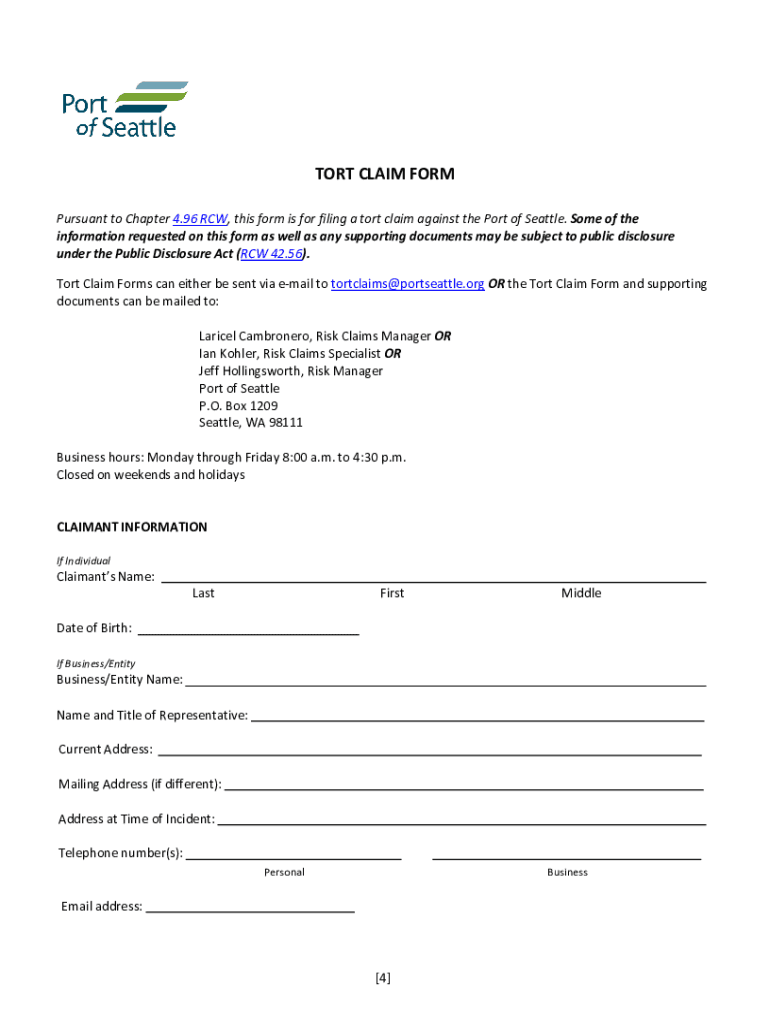







Definition & Purpose of the Tort Claim Form
The Tort Claim Form is a legal document used to initiate claims against governmental entities for damages due to wrongful acts. It allows individuals and organizations to seek compensation for personal injury or property damage caused by negligence or other wrongdoings attributed to a public agency or its employees. Understanding its purpose is crucial for ensuring proper compliance and maximizing the chances of a successful claim.
Key Features and Important Terminology
- Claimant: The individual or entity filing the Tort Claim Form.
- Respondent/Government Entity: The governmental body or employee the claim is filed against.
- Tort: A wrongful act leading to legal liability.
Analyzing these elements ensures claimants are appropriately rooted in the legal framework of civil rights litigation, which may include nuances under federal or state laws.
How to Use the Tort Claim Form
Using the Tort Claim Form correctly involves understanding the procedural requirements and ensuring all relevant information is accurately documented. This section guides users through the essential steps to complete the form effectively.
Steps to Complete the Tort Claim Form
- Identify the Correct Form: Ensure you are using the appropriate form for your jurisdiction. Variations exist across different states.
- Gather Necessary Information: Collect details of the incident, including dates, times, and descriptions of the event that led to the claim.
- Complete the Form Accurately: Fill in every section with precise information. Incomplete or incorrect forms can lead to delays or denials.
- Attach Supporting Documents: Include any evidence such as photos, medical records, witness statements, and police reports.
- Review and Sign: Carefully review all entries for accuracy before signing the form to confirm all information is true to the best of your knowledge.
Common Use Cases
Using practical examples, such as a pothole causing vehicle damage or a public employee's misconduct, helps illustrate how ordinary individuals might utilize the form.
How to Obtain the Tort Claim Form
Considering the importance of filing accurately and within a specific time frame, obtaining the form through the appropriate channels is crucial. Here, we explore several methods to secure the necessary documents.
Methods to Obtain the Form
- Online Platforms: Many jurisdictions provide downloadable versions on government websites.
- In-Person Requests: Visit government offices such as the City Clerk or County Office.
- Legal Assistance Services: Some attorneys or claim specialists offer services to acquire and complete the form.
These avenues cater to diverse preferences, ensuring accessibility whether through digital means or physical visits.
Legal Use and Implications of Filing a Tort Claim
Filing a Tort Claim carries significant legal consequences. It is important for claimants to comprehend the larger legal context associated with the form and its impact.
Potential Outcomes and Legal Framework
- Resolution and Compensation: Successful claims can result in settlements covering medical costs, repair expenses, and other damages.
- Litigation Pathways: If unresolved through the claim process, claimants can proceed to lawsuits.
- State-Specific Statutes: Varies considerably, referencing local governmental liability laws provides context.
Understanding these outcomes can help manage expectations and inform decisions regarding subsequent legal actions.
State-Specific Rules and Variations
Each state in the U.S. has distinct rules governing the filing of Tort Claims. Recognizing these variations helps ensure compliance and avoid potential rejections.
Examples of State-Specific Regulations
- Statute of Limitations: Time frame to file claims differs by state, often from six months to two years from the incident.
- Cap on Damages: Some states impose limits on the amount recoverable through such claims.
- Specific Forms and Processes: Unique reporting procedures are present in different jurisdictions.
A detailed understanding of your state's specific requirements ensures a smoother filing experience.
Documents Required for Filing a Tort Claim
Document preparation is vital in substantiating a claim. This section provides an overview of what is generally needed to support an effective case.
Checklist of Required Documents
- Proof of Incident: Photos, videos, or detailed diary entries.
- Financial Documentation: Receipts, bills, or estimates related to damages.
- Correspondence Records: Copies of communications relevant to the incident and subsequent interactions with involved parties.
Ensuring these components are thoroughly assembled before filing aids in building a cohesive case.
Filing Deadlines and Important Dates
Timeliness is essential when dealing with legal filings. This section covers critical timelines that claimants need to observe when filing the Tort Claim Form.
Understanding Important Deadlines
Adhering strictly to deadlines is vital as late submissions can render a claim invalid. While periods may differ by location, a common six-month filing window after the date of the incident should be recognized by potential claimants.
Form Submission Methods
The availability of different submission choices adds flexibility for claimants when dealing with documentation. Considering these options can optimize the process for efficiency and ease.
Ways to Submit Your Tort Claim Form
- Electronic Submission: Upload completed forms through authorized government websites.
- Mail: Send forms via certified mail to ensure receipt confirmation.
- In-Person Delivery: Direct handover to designated government offices for personal assurance.
Selecting the most suitable submission method ensures reliability and compliance with procedural norms.
Penalties for Non-Compliance
Failing to comply with submission guidelines and requirements leads to consequences that are vital to avoid. This section outlines the penalties associated with improper handling of the form.
Risks Associated with Non-Adherence
- Claim Rejection: Incomplete or incorrect forms can lead to automatic rejections.
- Forfeiture of Rights: Missing deadlines may result in the loss of the opportunity to pursue legal remedies.
- Potential Legal and Financial Consequences: Failing to file properly can lead to broader implications in related legal matters.
Understanding these consequences underlines the importance of careful preparation and adherence to guidelines when handling the Tort Claim Form.




