







Definition & Meaning
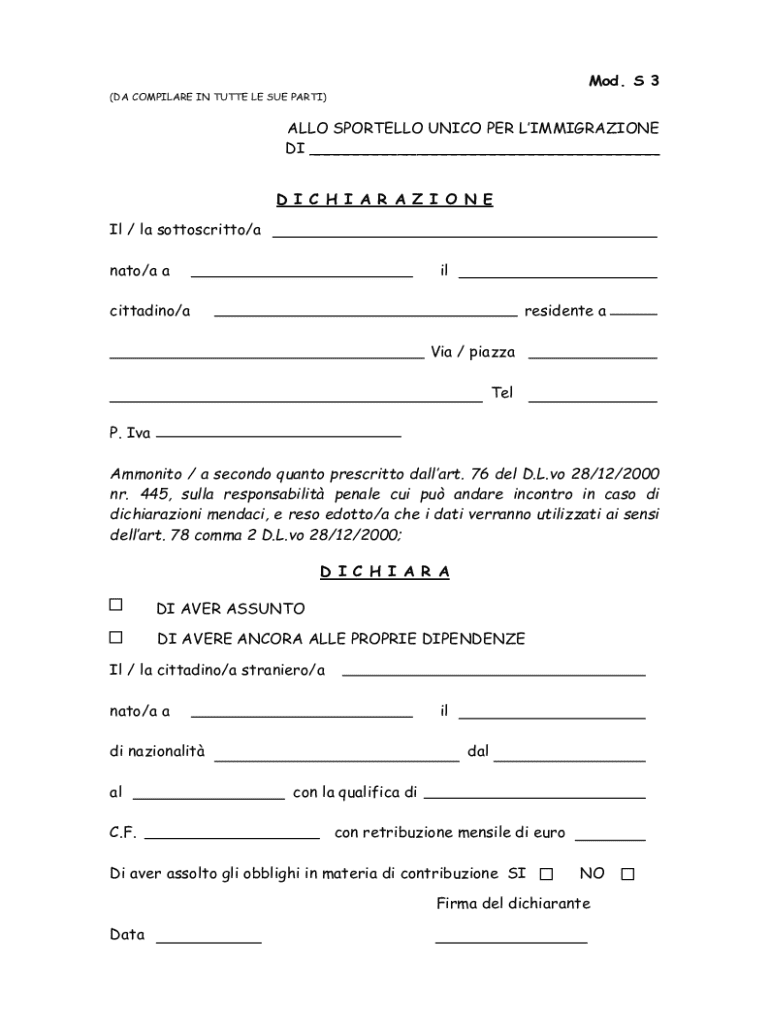
The Declaration of Employment of Foreign Worker is a crucial document used by employers who intend to hire foreign workers. This form serves as an official declaration, specifying the terms and conditions under which the foreign individual will be employed. It acts as a formal acknowledgment of the employment relationship and ensures compliance with applicable regulations regarding foreign labor. This document is instrumental in facilitating the legal employment of non-citizens and ensuring that all statutory obligations are met by both the employer and the employee.
Significance and Purpose
- The main purpose is to ensure the employment arrangement is in accordance with national and state labor laws.
- It verifies that the foreign worker's employment is legitimate and sanctioned by relevant authorities.
- Serves as documentation evidence in case of audits or legal inquiries.
Legal Implications
Employers must comprehend the legal obligations tied to the hiring of foreign workers. This declaration not only aids in aligning with labor laws but also protects against potential litigation by confirming that all processes are executed legally and ethically.
How to Use the Declaration of Employment of Foreign Worker
Employers should meticulously follow standardized procedures when utilizing this form to ensure accuracy and compliance.
Step-by-Step Utilization
-
Acquire the Form: Obtain the latest version of the declaration from the appropriate governmental agency or immigration authority.
-
Information Compilation: Gather all necessary information regarding both the employer and the intended employee. This includes personal credentials, job details, salary information, and other relevant employment conditions.
-
Complete the Declaration: Fill out the form carefully, ensuring all sections are accurately addressed. Include any additional disclosures as required by law.
-
Review for Compliance: Double-check the completed form to ensure adherence to legal requirements and rectify any inaccuracies to prevent legal issues.
-
Submission: Follow the submission protocols—often specified by local regulations—which may include mailing, online submission, or in-person handover.
-
Secure Acknowledgment: Upon successful submission, obtain a confirmation to acknowledge receipt of the declaration, which may be required for your records or future inspections.
Supporting Tools
Employers may use document management tools like DocHub to streamline the form-filling process, enabling editing, signing, and secure sharing of digital documents.
Steps to Complete the Declaration of Employment of Foreign Worker
This guide outlines each step required to complete the form thoroughly and accurately.
1. Identifying the Parties Involved
- Specify the employer's details, including legal business name, address, and contact information.
- Note the foreign worker’s personal details, such as full name, nationality, and visa status.
2. Job Description and Duration
- Clearly articulate the job title, key responsibilities, and employment duration.
- Mention whether the job is full-time or part-time.
3. Compensation Details
- Outline the wage or salary offered, inclusive of any benefits.
- Ensure compliance with minimum wage standards and fair labor practices.
4. Legal Authority and Verification
- Confirm that the employer has the legal authority to hire foreign workers.
- Cross-check that the prospective employee has the appropriate work authorization or visa.
Important Terms Related to Declaration of Employment of Foreign Worker
Understanding specific terminology is crucial for completing the declaration accurately.
Key Terms and Definitions
- Work Authorization: A document granting permission for a foreign national to work in the host country.
- Visa Status: The specific standing of a foreign individual regarding their right to reside and work in the country.
- Labor Certification: A process ensuring that hiring a foreign worker does not negatively impact the domestic workforce.
Business Context
Employers should be familiar with how these terms apply within contractual agreements and relevant employment laws to reduce the risk of non-compliance and enhance understanding of employee rights and obligations.
Legal Use of the Declaration of Employment of Foreign Worker
Compliance with legal frameworks is imperative in the employment of foreign nationals.
Regulatory Compliance
- Adheres to federal laws such as the Immigration and Nationality Act (INA).
- May be subjected to specific state regulations which dictate distinct reporting and procedural guidelines.
Enforcement and Scope
The declaration provides evidence in legal examinations or audits and must be preserved according to regulatory retention periods to validate proper hiring practices.
Key Elements of the Declaration of Employment of Foreign Worker
Elements to Include
-
Employment Terms: Consistent clarity regarding job duties and employment terms.
-
Identification Information: Accurate information for both employer and foreign employee.
-
Visa and Compliance Certification: Details confirming the legality of the employment conditions and adherence to visa requirements.
State-Specific Rules for the Declaration of Employment of Foreign Worker
Regulations may vary significantly by state, affecting how forms are completed, submitted, and processed.
State-Specific Nuances
- Certain states may have additional criteria or supporting documentation requirements.
- Employers may need to consult with local labor boards or immigration attorneys to navigate state-specific mandates effectively.
Examples
California might require additional disclosures related to labor rights, while Texas may necessitate specific wage standards in the declaration.
By understanding the Declaration of Employment of Foreign Worker in depth, employers can ensure compliance, avoid legal pitfalls, and effectively manage international hires.




