







Definition and Purpose of the Oral Sedation Monitoring Form
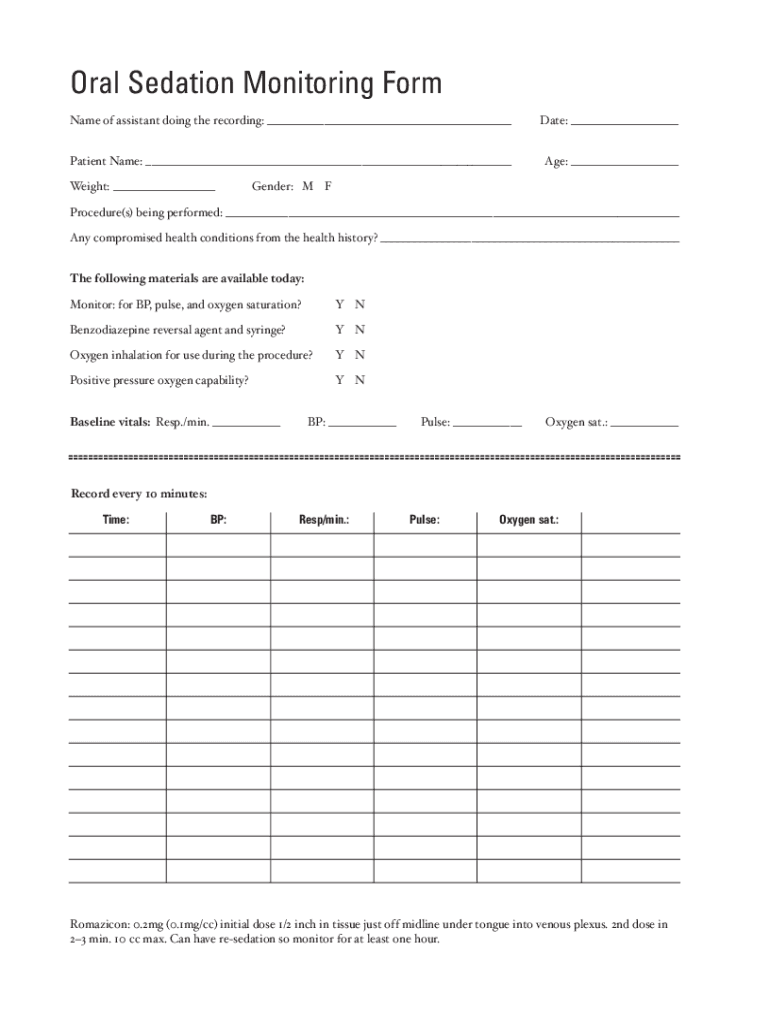
The Oral Sedation Monitoring Form is a critical document used within dental and medical practices to ensure the safe administration and monitoring of patients undergoing oral sedation. This form serves several purposes, primarily focusing on patient safety, compliance with healthcare regulations, and detailed documentation of the sedation process. By meticulously recording patient data before, during, and after the procedure, healthcare providers can track the sedation's effectiveness and any potential complications that arise.
- Patient Safety: Monitoring patient vitals such as heart rate, blood pressure, and oxygen levels during sedation.
- Regulatory Compliance: Adhering to local and federal guidelines regarding sedation procedures.
- Documentation: Providing a comprehensive record that can be referenced in case of audits or future medical needs.
Steps to Complete the Oral Sedation Monitoring Form
Correctly completing the Oral Sedation Monitoring Form is paramount for ensuring compliance and patient safety. Follow these steps:
-
Pre-Sedation Assessment: Record patient information, including name, age, weight, and any known health conditions. Ensure all pre-sedation checks are noted.
-
Vital Signs Monitoring: During sedation, document all vital signs at established intervals to track patient stability.
-
Medication Details: Clearly note any medications administered, including dosage and time of administration.
-
Post-Procedure Observations: After sedation, monitor the patient until full recovery is noted, and document observations on the form.
-
Signatures: Ensure that both the administering clinician and the assistant record their signatures confirming the documentation's accuracy.
How to Obtain the Oral Sedation Monitoring Form
Obtaining this form is a straightforward process, typically managed through healthcare administration protocols:
- Dental or Medical Office: Most practices will have standard forms readily available for procedures requiring oral sedation.
- Online Resources: Some healthcare compliance organizations offer downloadable versions tailored to local and national requirements.
- Software Platforms: Digital alternatives are often available through specialized healthcare software, providing real-time updates and storage.
Key Elements of the Oral Sedation Monitoring Form
The Oral Sedation Monitoring Form is designed to capture essential information about the patient's sedation experience:
- Patient Demographics: Includes name, age, gender, and weight.
- Health Status: Addresses any compromised health conditions that may affect sedation.
- Procedure Details: Lists the procedures being performed while sedation is in place.
- Monitoring Timelines: Specifies when patient vitals are checked during sedation.
- Staff Involvement: Documents the names and roles of staff members involved in the procedure.
Legal Use of the Oral Sedation Monitoring Form
Using the Oral Sedation Monitoring Form legally necessitates compliance with several frameworks and mandates:
- HIPAA Compliance: Ensure patient details are secured and shared only with authorized personnel.
- State Regulations: Different states may impose specific requirements for sedation forms.
- Audit Trails: Maintain accessibility for records in the event of an audit or legal inquiry.
Who Typically Uses the Oral Sedation Monitoring Form
The Oral Sedation Monitoring Form is primarily utilized by:
- Dentists: For procedures that require deep relaxation, such as extractions or lengthy restorations.
- Oral Surgeons: During more complex surgical procedures under local anesthesia.
- Medical Staff: In settings where oral sedation is administered for minor surgeries or diagnostic procedures.


Important Terms Related to the Oral Sedation Monitoring Form
Familiarity with pertinent terminology is essential for accurately completing the form:
- Sedatives: Medications used to induce sedation.
- Baseline Vitals: Initial health indicators recorded prior to sedation.
- Sedation Scale: A system used to evaluate the sedation level of the patient.
- Recovery Time: The period necessary for a patient to regain full consciousness and functionality post-sedation.
Digital vs. Paper Version of the Oral Sedation Monitoring Form
Both digital and paper versions of the Oral Sedation Monitoring Form offer distinct advantages:
- Digital Forms: Allow for easy storage, sharing, and integration with patient management software.
- Paper Forms: Provide simplicity and are sometimes preferred in less technologically inclined practices.
Choosing between these formats often depends on practice preferences and existing infrastructure in use.
Examples of Using the Oral Sedation Monitoring Form
Practical application examples highlight the form's utility:
- Routine Dental Procedures: Like wisdom teeth extraction where patients may experience significant anxiety.
- Minor Surgeries in Clinics: Such as the removal of skin lesions where minimal sedation is beneficial.
- Children’s Dental Care: For apprehensive pediatric patients requiring prolonged dental treatment.




