




01. Edit your new jersey racing commission online
Type text, add images, blackout confidential details, add comments, highlights and more.

Type text, add images, blackout confidential details, add comments, highlights and more.

Draw your signature, type it, upload its image, or use your mobile device as a signature pad.

Send new jersey horse racing license via email, link, or fax. You can also download it, export it or print it out.
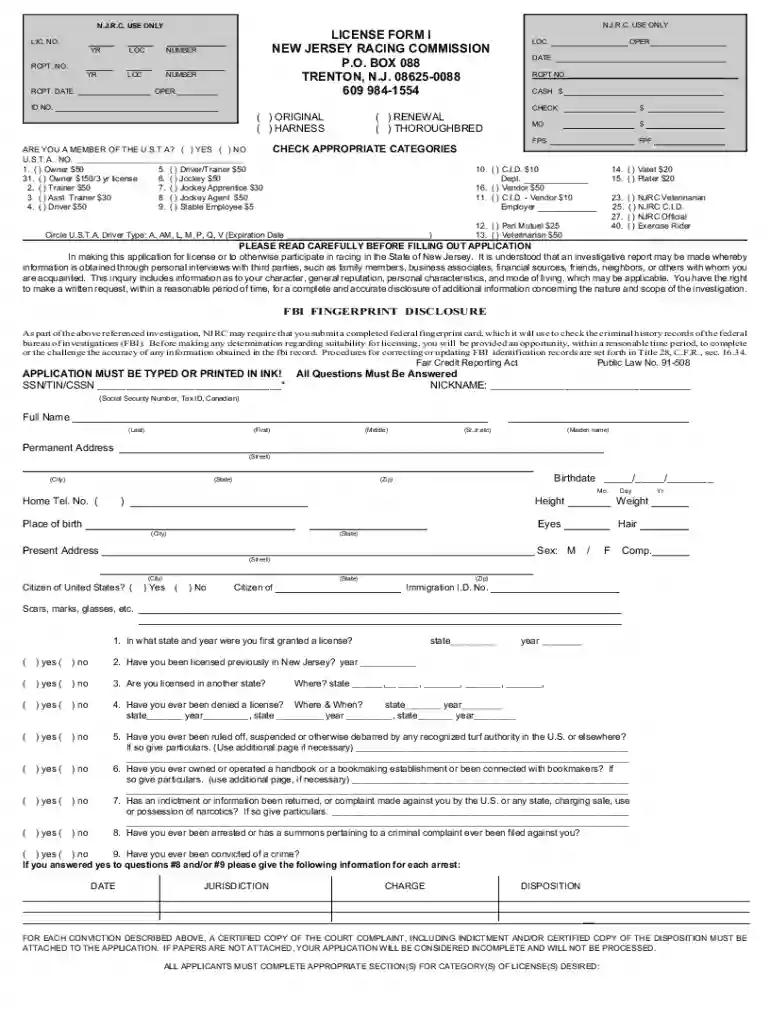
The New Jersey racing license refers to the official permit required for individuals and entities to participate in horse racing activities within the state. This license is issued by the New Jersey Racing Commission and varies depending on the specific roles involved in the racing industry, such as trainers, jockeys, veterinarians, and stable employees. Each category represents a distinct area within the horse racing ecosystem, emphasizing the necessity of regulated participation to maintain the integrity and safety of the sport.
The primary purpose of obtaining a New Jersey racing license is to ensure that individuals meet specified qualifications and adhere to standardized rules set forth by the New Jersey Racing Commission. This regulatory body oversees all horse racing activities in the state, ensuring compliance with both state and federal laws governing the sport. Having the appropriate racing license is essential not only for legal participation but also to uphold industry standards and public trust in horse racing.
Obtaining a New Jersey racing license involves several steps that must be carefully followed for successful approval. The process generally includes the following:
Determine License Type: Identify the specific type of license needed based on your role in the racing industry—whether as a trainer, jockey, veterinarian, or other positions.
Complete the Application Form: Download the relevant application form from the New Jersey Racing Commission's website. Ensure all sections are filled out accurately, including personal information, employment history, and any required disclosures.
Background Checks: Applicants are usually required to undergo comprehensive background checks. This may include criminal history checks and review of any previous racing licenses held in other jurisdictions.
Provide Supporting Documents: Gather all necessary documents which may include identification, proof of employment with a licensed stable or racing organization, and relevant educational or training certificates.
Submission of Application: Submit the completed application along with all supporting documents and fees to the New Jersey Racing Commission. Applications can often be processed online or submitted via physical mail.
Wait for Approval: After submission, there will be a waiting period during which the commission reviews the application and conducts necessary verifications. This can take several weeks.
Receive Your License: Once approved, applicants will receive their racing license which must be carried at all times during participation in any horse racing activities.
Familiarity with specific terminology associated with New Jersey racing licenses can enhance understanding of the entire process. Some key terms include:
New Jersey Racing Commission: The regulatory body that oversees the issuance of racing licenses and governs horse racing in the state.
Racing License Categories: Different types of licenses based on roles, including Stable Employee License, Trainer License, Jockey License, and Veterinarian License.
Background Check: A process that evaluates an applicant's personal history, important for ensuring safety and integrity in the racing industry.
Disapproval or Denial: The potential outcome if an applicant fails to meet the required standards or if discrepancies arise during the application review process.
Temporary License: In some cases, the commission may issue a temporary license that allows participation in racing events while the full application is being processed.
Completing the application for a New Jersey racing license requires attention to detail. The following steps outline the typical process:
Access the Application: Visit the New Jersey Racing Commission's website to obtain the appropriate application form. Ensure you are using the most updated version.
Fill Out Personal Information: Include your full name, address, contact information, and any affiliations with racing organizations.
Detail Employment History: Provide accurate information regarding past employment in the racing industry, including positions held and durations of employment.
Comply with Health and Safety Regulations: Indicate compliance with any required health assessments, especially for roles involving handling or the care of horses.
Review and Double-Check Information: Before submitting, thoroughly review the entire application for accuracy and completeness to avoid delays or rejection.
Submit Payment: Remit the application fee as specified, which can often be done online.
Follow Up: After submission, keep track of your application status either through online portals provided by the commission or by contacting their office directly.
Engagement in horse racing in New Jersey is subject to specific state regulations that vary based on type of license. Key aspects include:
Age Requirements: Applicants must meet minimum age requirements, often set at 18 years for most license categories, with additional restrictions for jockeys.
Continuing Education: Certain roles may require continual education or training certifications, especially for trainers and veterinarians, ensuring that they stay updated on best practices.
Compliance with Animal Welfare Standards: All licensed individuals must adhere to strict animal welfare guidelines set by both the New Jersey Racing Commission and National organizations, emphasizing the humane treatment of racing animals.
Periodic Renewals: Racing licenses typically require renewal at set intervals, where licensees must verify continued compliance with all regulatory requirements.
Disciplinary Actions: The New Jersey Racing Commission has the authority to impose penalties or revoke licenses for rule violations, reinforcing accountability within the industry.
We've got more versions of the new jersey racing commission form. Select the right new jersey racing commission version from the list and start editing it straight away!
| Versions | Form popularity | Fillable & printable |
|---|---|---|
| 2013 | 4.9 Satisfied (28 Votes) |
At DocHub, your data security is our priority. We follow HIPAA, SOC2, GDPR, and other standards, so you can work on your documents with confidence.


