






Definition and Significance of Health Informatics: Practical Guide
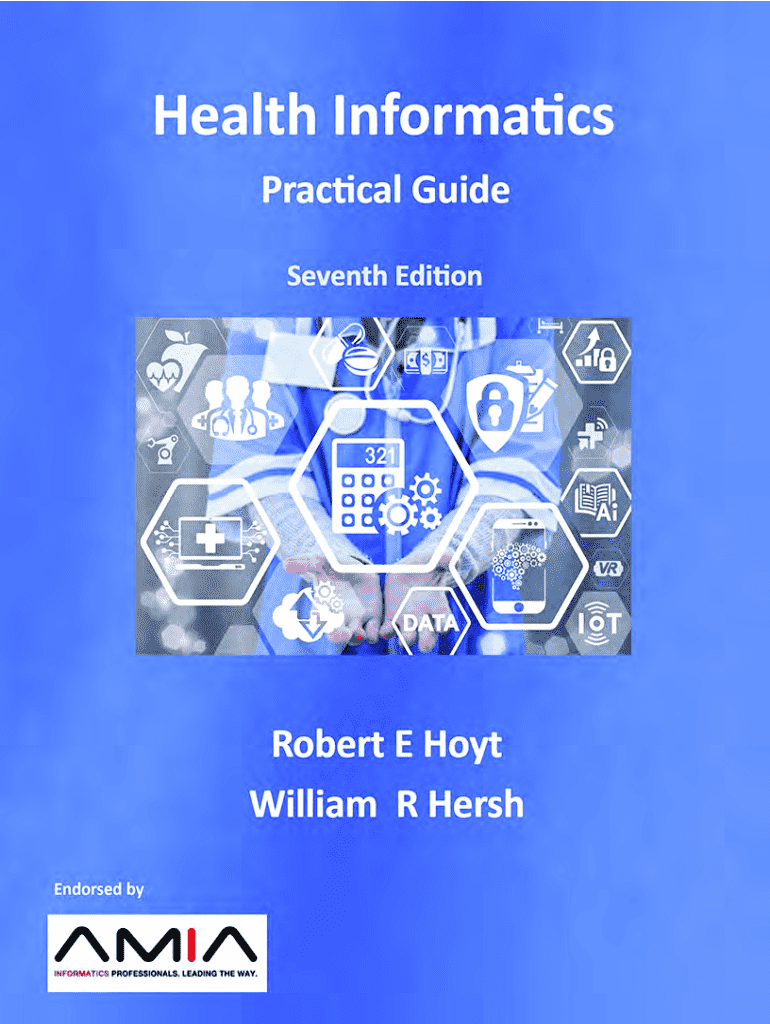
Health Informatics: Practical Guide Seventh Edition - Lulu, authored by Robert E. Hoyt and William R. Hersh, is an essential resource in the field of health informatics. It provides a detailed exploration of various components such as the history of health informatics, data management, electronic health records (EHR), privacy, and security regulations like the Health Insurance Portability and Accountability Act (HIPAA). The book emphasizes safeguarding patient data and highlights the importance of various stakeholders in ensuring data security within healthcare settings. This guide serves as a pivotal reference for professionals and students in health informatics, offering insights into emerging technologies and trends.
How to Use the Health Informatics: Practical Guide
Utilizing the Health Informatics: Practical Guide efficiently requires a structured approach:
- Read and Understand the Basics: Begin with chapters that offer foundational knowledge in health informatics, focusing on its history and key terminologies.
- Focus on Specific Areas of Interest: Depending on your role—whether in data analysis, EHR management, or security—target chapters that are most relevant to your work.
- Apply the Knowledge: Integrate the principles and methods into real-world scenarios by aligning them with your organization's practices.
- Utilize the Examples Provided: The guide includes numerous examples that can help in understanding complex concepts; apply these to practical situations in your work environment.
Professionals across various sectors can use this book to enhance their understanding and application of informatics in healthcare.
Key Elements Covered in the Guide
The guide comprehensively covers several key elements:
- Data Management: Various strategies for efficient data capturing, storage, and retrieval are discussed.
- Electronic Health Records (EHR): Importance of EHR systems, their components, and how they improve patient care and streamline workflows.
- Privacy and Security Regulations: Detailed exploration of HIPAA and other important regulations to protect patient data.
- Emerging Technologies: Insight into the impact of artificial intelligence, machine learning, and other technologies shaping health informatics.
Each section provides multiple examples and case studies, demonstrating the practical applications of theoretical knowledge.
Legal Use and Compliance
Compliance with privacy laws and regulations is paramount in health informatics:
- HIPAA Compliance: Understanding HIPAA and aligning with its mandates is essential for anyone working in health informatics.
- Data Protection Protocols: The guide provides methodologies to ensure patient data is safeguarded throughout its lifecycle, adhering to legal requirements.
- Role of Audits: Regular audits are necessary to check compliance with regulations and the proper implementation of data security measures.
These legal aspects ensure that health informatics practices not only meet regulatory standards but also maintain patient trust.
How to Obtain the Health Informatics: Practical Guide
Acquiring the Health Informatics: Practical Guide Seventh Edition - Lulu can be done through multiple channels:
- Purchase Online: Available on platforms like Amazon and directly through Lulu's bookstore.
- Institutional Access: Libraries in educational institutions frequently offer access to this guide, both in digital and physical formats.
- Professional Associations: Some healthcare and informatics associations might provide discounts or access to this resource.
Understanding where and how to access this guide ensures that each stakeholder in health informatics can utilize its contents effectively.
Important Terms Explained
The guide includes several key terms crucial to understanding health informatics:
- Health Informatics: The intersection of information science, computer science, and healthcare.
- Interoperability: The ability of different information systems and software applications to communicate and exchange data accurately and effectively.
These terms are fundamental to mastering the subject and applying its concepts accurately in practice.
Who Typically Uses This Guide
This guide serves a diverse audience:
- Healthcare Professionals: Physicians, nurses, and healthcare administrators looking to enhance their understanding of informatics.
- IT Specialists in Healthcare: Professionals involved in the development and management of health IT systems.
- Students and Educators: Those studying health informatics or incorporating it into educational curricula.
- Policy Makers: Individuals involved in crafting healthcare policies that incorporate technological advancements.
This wide range of users reflects the guide's comprehensive nature and its applicability across various sectors.
Steps to Complete Specific Tasks Using the Guide
For specific tasks, such as implementing an EHR system:
- Initial Assessment: Identify the need and scope for an EHR system.
- Vendor Selection: Use the guide to understand criteria for choosing the right vendor.
- Implementation Strategy: Develop a strategy based on best practices outlined in the guide.
- Training and Support: Focus on the training sections to ensure effective user adoption.
These steps help streamline processes, ensuring that the technology serves its intended purpose effectively.