






Understanding the Motion for Contempt Form in Indiana
A Motion for Contempt form in Indiana is a legal document used when an individual believes another party has violated a court order. This often occurs in family law cases, such as disputes involving custody, child support, or spousal maintenance. By filing this motion, the petitioner requests the court to enforce the order and impose penalties on the non-compliant party.
How to Obtain the Motion for Contempt Form in Indiana
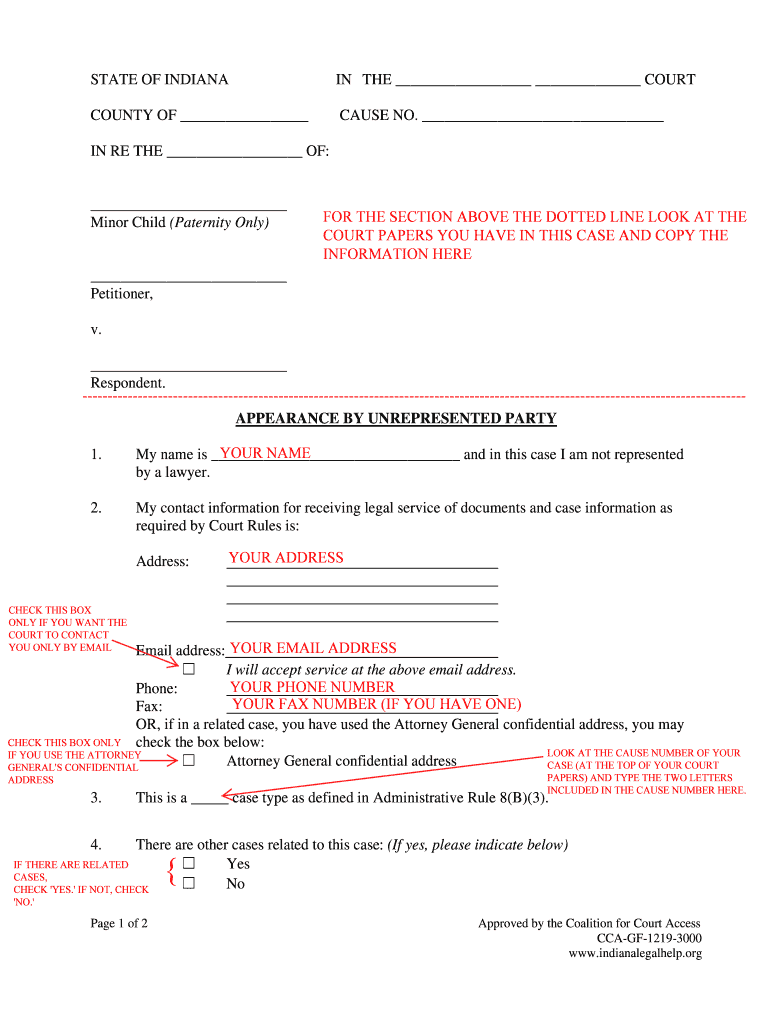
To obtain the Motion for Contempt form in Indiana, you can visit the website of the Indiana judicial system or contact the court where your case is being heard. Many Indiana courts provide downloadable forms on their official sites for easy access. Additionally, you may visit the courthouse in person to pick up a physical copy.
Steps to Complete the Motion for Contempt Form in Indiana
- Identify the Court: Write the name of the court where your case is filed.
- Input Case Information: Include the case number and names of both parties involved.
- Specify the Order: Clearly state the original court order you believe has been violated.
- Detail the Alleged Violation: Provide specific details of how the order was not followed.
- State the Relief Sought: Indicate what actions you want the court to take, such as enforcement or penalties.
- Sign the Form: Make sure to sign the form in the presence of a notary if required.
- File the Form: Submit the completed form to the appropriate court office.
Key Elements of the Motion for Contempt Form in Indiana
- Court and Case Information: The form begins with identification of the court and includes case number, petitioner, and respondent details.
- Order Specification: Clearly states which court order was allegedly violated.
- Violation Details: Offers a narrative of how the order was breached, including dates and actions.
- Requested Court Action: Enumerates the specific outcomes the petitioner wants from the court, such as enforcement or punitive measures.
- Signature and Notarization: Requires the petitioner's signature, possibly in front of a notary for validation.
Legal Use of the Motion for Contempt Form in Indiana
The legal use of the Motion for Contempt form is to compel adherence to existing court orders. It acts as a mechanism for individuals to seek judicial intervention and ensure compliance, providing the court with intricate details of the breach and requesting specific actions to rectify the situation.
Important Terms Related to the Motion for Contempt Form in Indiana
- Contempt of Court: A legal finding that an individual has disobeyed a court order, warranting corrective action.
- Petitioner: The person who initiates the motion by claiming the other party has not complied with an order.
- Respondent: The individual accused of non-compliance with the court order.
State-Specific Rules for the Motion for Contempt Form in Indiana
Indiana has specific rules governing the filing and adjudication of contempt motions. These regulations outline the process of serving the motion to the respondent, the required response time, and the potential penalties for contempt. It is crucial to be aware of these rules to ensure the motion is processed correctly and efficiently.
Who Typically Uses the Motion for Contempt Form in Indiana
This form is predominantly used by individuals involved in family law cases, such as those concerning divorce, child custody, or support payments. However, it can also be utilized in other civil matters where court orders are not being followed. Attorneys often file these motions on behalf of their clients, though individuals can file pro se — that is, without legal representation.


Examples of Using the Motion for Contempt Form in Indiana
- Custody Violations: If a parent does not return a child according to the scheduled custody agreement, the other parent might file a motion for contempt.
- Failure to Pay Alimony: An individual may use this form if the ex-spouse stops making court-ordered alimony payments.
- Non-Compliance with Property Division: If a party fails to transfer property as mandated by a divorce decree, a motion for contempt can help enforce compliance.