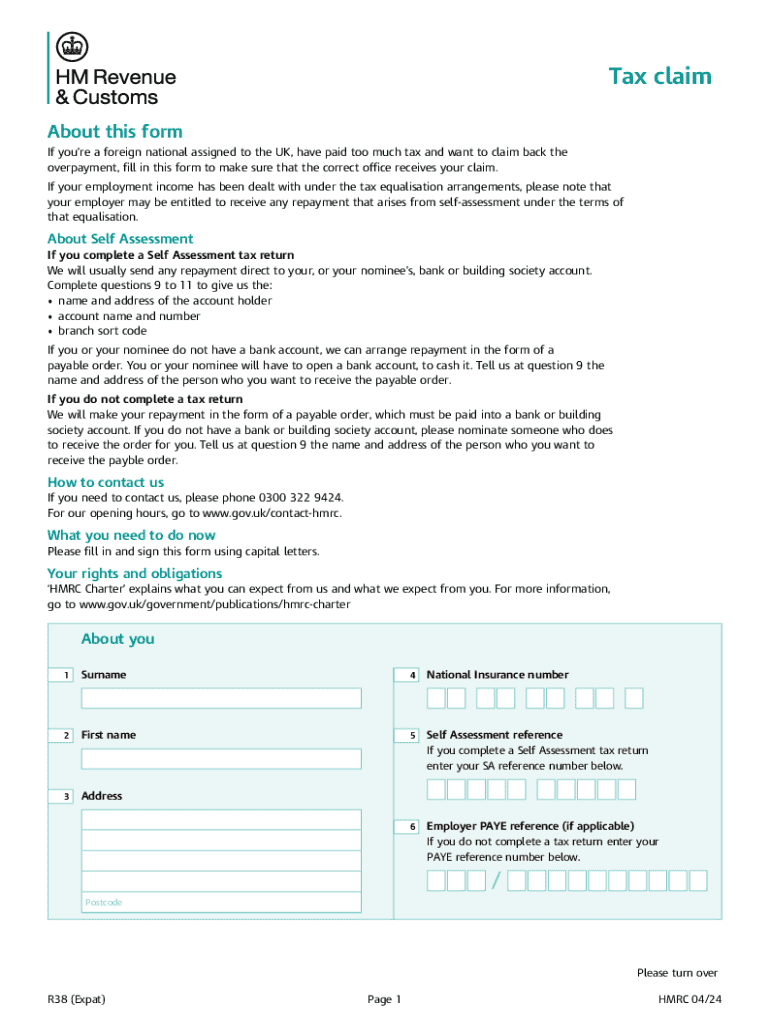







Definition and Purpose of the R38 (Expat) Form
The R38 form, commonly referred to as "R38 (Expat)," is designed for foreign nationals who are assigned to the United Kingdom and have overpaid taxes during their stay. This document facilitates the process of reclaiming excess taxes paid to ensure that individuals are not financially burdened beyond their obligations. Proper understanding and completion of this form are crucial for those seeking tax relief under these specific circumstances.
How to Use the R38 (Expat) Form Effectively
To effectively use the R38 (Expat) form, individuals must ensure that they accurately fill out all sections to reflect their tax situations. Important details include personal identification information, the period of assignment in the UK, and pertinent financial data related to earnings and taxes paid. It is vital to follow the instructions provided with the form meticulously, as errors can delay the refund process.
Steps to Complete the R38 (Expat) Form
- Collect Personal and Financial Information: Gather necessary documents such as tax statements, employment contracts, and identification.
- Fill Out Personal Details: Enter your name, contact information, and national insurance number.
- Provide Tax Details: Document your tax payment information, including amounts overpaid.
- Sign and Date the Form: Ensure that the form is signed accurately to validate the submission.
- Submit the Form: Send the completed form to the designated HM Revenue and Customs office.
Eligibility Criteria for the R38 (Expat) Form
Eligibility for using the R38 (Expat) form hinges on specific conditions:
- You must be a foreign national assigned to work in the UK.
- There should be evidence of overpayment in your taxation during the period of assignment.
- The individual should not have claimed the tax refund through any other process or form.


Common Mistakes to Avoid When Filling the Form
- Incomplete Information: Omitting essential details can lead to processing delays.
- Incorrect Financial Data: Ensure accurate depiction of financial transactions and overpayments.
- Failure to Sign: Unsigned forms will be returned unprocessed.
Important Terms Related to the R38 (Expat) Form
- Overpayment: Amount paid beyond what is legally required as tax.
- Expatriate Assignment: Temporary relocation of personnel to the UK for work purposes.
- National Insurance Number: A unique identifier for tax purposes in the UK.
Legal Considerations When Using the Form
Understanding legal ramifications is essential:
- Ensure compliance with all tax regulations as stipulated by UK laws.
- Incorrect form submission could result in legal penalties or missed refunds.
Submission Methods for the R38 (Expat) Form
The form can be submitted via:
- Postal Services: Mailed directly to HM Revenue and Customs.
- In-Person Delivery: Taken to a local tax office.
- Digital Formats: Submissions may be accepted electronically if supported.
Required Supporting Documents
Supporting documents are critical to successful form submission:
- Copies of tax payment receipts.
- Employment contract evidence.
- Any previous correspondence with HMRC regarding taxes.
IRS Guidelines on Handling Overpayment
While the IRS operates in the US, understanding international tax agreements is helpful when claiming foreign tax credit. Familiarize yourself with cross-border tax policies to ensure compliance.
Implications of Non-Compliance
Failure to properly complete or submit the form may result in:
- Delayed tax refunds.
- Legal consequences for tax non-compliance.
- Potential issues in future tax dealings with HM Revenue and Customs.