






Definition and Meaning of Tenant Complaint Form
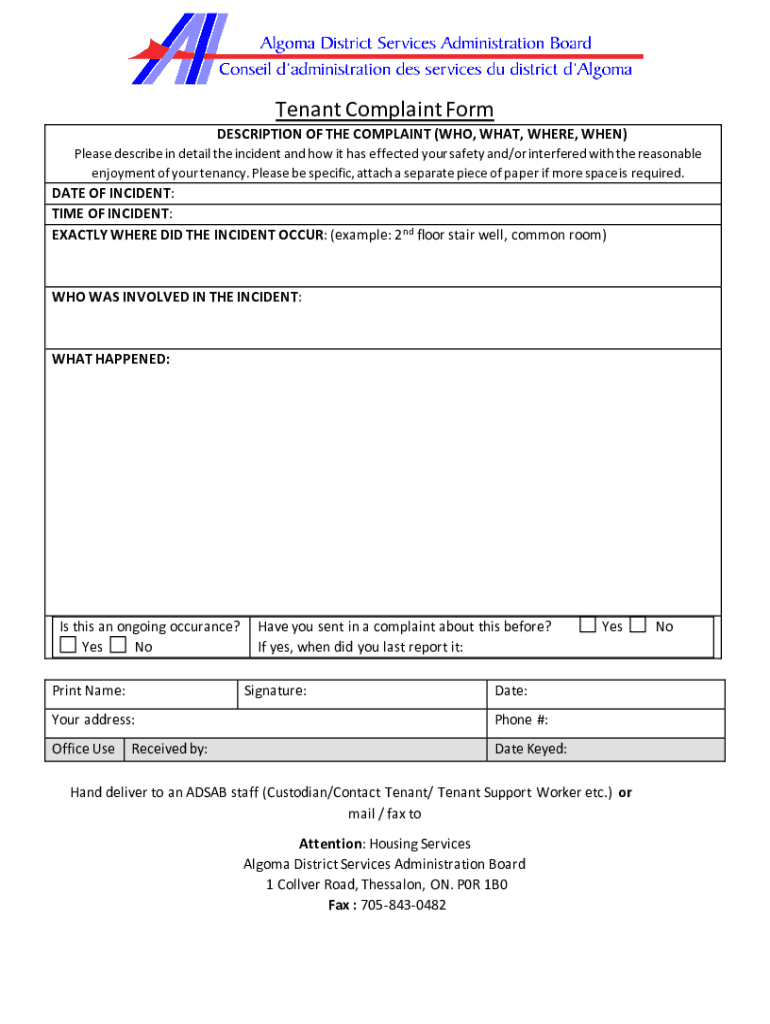
A Tenant Complaint Form is a document used by tenants to formally communicate grievances or issues they are experiencing within their rental property. This form is often used to document concerns regarding maintenance issues, breaches of lease agreements, or disturbances affecting the tenant’s quality of living. It serves as an official record that can be presented to landlords or property management to request resolution.
Elements Included in the Form
- Description of the Complaint: Detailed information about the nature of the complaint, including what happened, who was involved, when it occurred, and where it took place.
- Impact on Tenant: Explanation of how the issue affects the tenant's safety or enjoyment of the property.
- Tenant Information: The tenant's full name, contact details, and apartment number.
- Landlord or Property Manager Information: Details of the landlord or property manager to whom the form is addressed.
- Desired Resolution: What the tenant hopes to achieve in terms of resolving the issue.
How to Use the Tenant Complaint Form
Step-by-Step Guide
- Download or Obtain the Form: Access the Tenant Complaint Form through your landlord, property management company, or an online platform like DocHub that offers form templates.
- Provide Personal Details: Fill in your personal contact information accurately, including your full name, address, and phone number.
- Detail the Complaint: Clearly and concisely describe the issue, including relevant dates, times, and any previous efforts made to resolve the problem.
- Propose a Solution: State what you believe would be an acceptable resolution to the problem.
- Submit the Form: Submit the completed form through the prescribed channels, whether online, in-person, or via mail.
Tips for Effective Use
- Ensure all information is accurate and up-to-date.
- Attach any supporting documents, such as photos or correspondence.
- Keep a copy of the completed form for your records.
How to Obtain the Tenant Complaint Form
Sources for the Form
- Property Management Office: Many property managers provide these forms directly at their offices or through their websites.
- Online Platforms: Websites like DocHub offer downloadable templates and form-building tools to create customized versions.
- Local Tenants’ Associations: Some associations provide members with access to complaint forms and guidance on filling them out.
Process for Acquisition
- Direct Download: Visit the relevant website or portal, search for the Tenant Complaint Form, and download it.
- Request by Email or Phone: Contact your property management office and request the form to be sent via email or physical mail.
- In-Person Collection: Visit your landlord's office to pick up a paper copy, if digital access is not available.
Steps to Complete the Tenant Complaint Form
Completing the Tenant Complaint Form accurately is crucial to ensure it effectively communicates your concerns.
Fill Out Personal Details
- Start with entering your full name, current address, and contact information to identify yourself as the tenant filing the complaint.
Describe the Complaint
- Use clear and concise language to detail the issue, making sure to cover who, what, when, where, and how the incident has impacted you. Include factual information and avoid emotional language.
List Previous Actions Taken
- Document any prior attempts to communicate the issue, such as prior emails or verbal conversations, and include outcomes or responses received, if any.
Propose a Resolution
- Clearly articulate what resolution you are seeking, whether it be repairs, compensation, or other actions. This helps guide the landlord towards a suitable solution.
Why Use a Tenant Complaint Form
Importance of Formal Documentation
Using a formal complaint form is crucial for clearly documenting issues and ensuring they are taken seriously. This can protect tenants by:
- Providing a written record of the complaint, which is important if the issue escalates.
- Helping to ensure that housing issues do not go unresolved due to misunderstandings or oral complaints being forgotten.
- Offering a formal channel of communication that can facilitate more productive dialogue between tenants and landlords.
Benefits of Written Complaints
- Creates an official record: Facilitates legal proceedings if necessary.
- Encourages prompt action: Formal complaints often prompt faster responses from property managers concerned with maintaining good tenant relations and legal compliance.
Who Typically Uses the Tenant Complaint Form


Primary Users
- Tenants: Residents who are experiencing issues within their rental property that need addressing by property management or the landlord.
- Tenant Representatives: Individuals or entities acting on behalf of tenants, such as lawyers or tenant associations.
Scenarios for Use
- Maintenance Issues: When urgent repairs are needed and previously reported issues remain unaddressed.
- Lease Violations: Instances of the landlord not fulfilling obligations outlined in the rental agreement.
- Neighbor Disputes: Situations involving disturbances from neighboring tenants that impact quality of living.
Legal Use of the Tenant Complaint Form
Legal Aspects
- Documentation: The Tenant Complaint Form can be used as evidence in court to support claims related to unresolved issues.
- Tenant Rights: It can aid in asserting the tenant's rights concerning habitability and quiet enjoyment, foundational aspects of all rental agreements.
Compliance and Protections
- Landlord Responses: Regulations often require landlords to respond to written complaints within a specified timeframe.
- Fair Housing Laws: Ensures tenants are treated fairly and can lodge complaints without fear of retaliation.
Key Elements of the Tenant Complaint Form
Essential Components
- Contact Information: Complete contact details of both tenant and property management.
- Complaint Description: A section detailing the nature and specifics of the complaint.
- Documentation Evidence: Space to attach supporting documents such as photographs or past communications.
Supporting Sections
- Resolution Section: Allows tenants to suggest how they would like the issue to be resolved.
- Date and Signature: Space for the tenant’s signature and date, certifying the accuracy of the form contents.
Examples of Using the Tenant Complaint Form
Practical Scenarios
-
Unaddressed Repairs: A tenant submits a complaint form after repeated requests to fix a leaking ceiling have gone unheeded by maintenance staff.
-
Noise Complaints: A tenant completes a complaint form detailing excessive noise from a neighboring apartment, including specific times and dates, after initial verbal complaints are ignored.
-
Lease Violations: A tenant provides a completed form indicating unauthorized entry by the landlord, citing specific instances to substantiate the breach.
In all scenarios, the Tenant Complaint Form serves as a crucial tool for documenting grievances, facilitating communication, and potentially influencing the swift resolution of issues to ensure tenants' rights and livability standards are upheld.