






Definition & Meaning
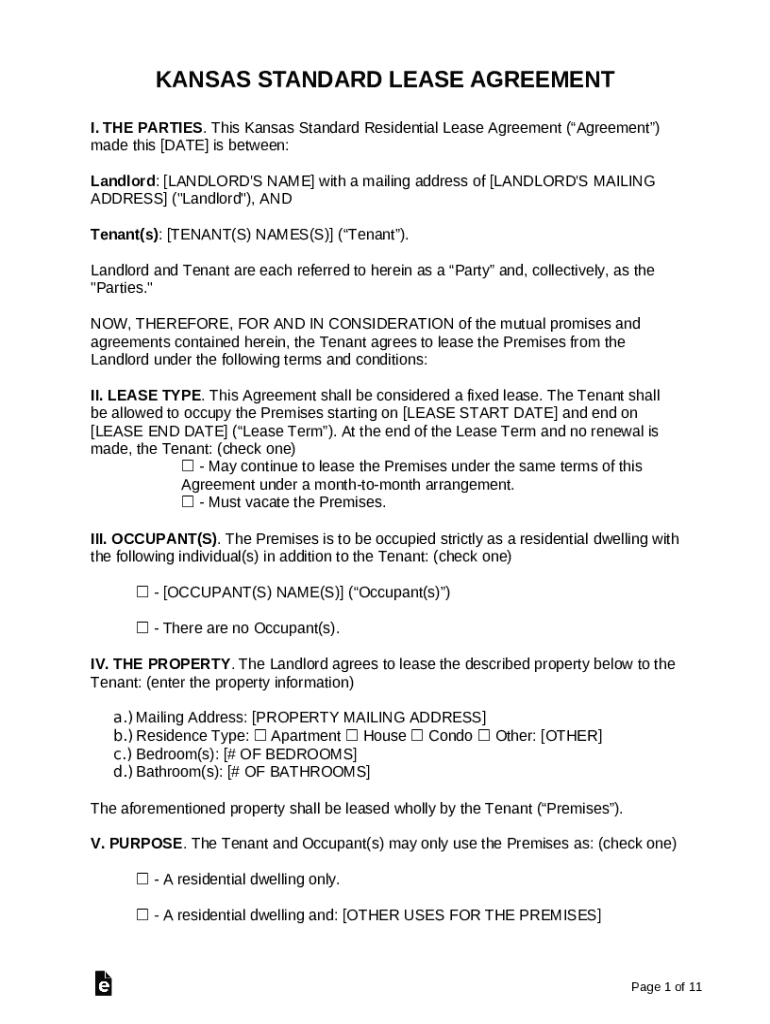
A Kansas Standard Lease Agreement is a legally binding document used in Kansas to formalize the rental relationship between a landlord and a tenant. It outlines the terms and conditions under which the tenant will occupy the landlord's residential property. This agreement details critical aspects such as the duration of the lease, rental payment terms, security deposit requirements, maintenance responsibilities, and more. By establishing clear guidelines, it serves to protect both parties' interests and ensures compliance with Kansas state rental laws.
Key Components
- Parties Involved: Typically includes the full names of the landlord, tenant(s), and any authorized representatives.
- Property Description: A precise description of the rental property, including its address.
- Lease Duration: Clearly states whether it is a fixed-term lease or a month-to-month agreement.
- Rent Details: Specifies the monthly rent amount, due date, late fee policies, and accepted payment methods.
How to Use the Kansas Standard Lease Agreement
The Kansas Standard Lease Agreement should be tailored to suit the specific rental arrangement. Both parties should carefully review all terms and conditions before signing. It is advisable for both the landlord and tenant to maintain a copy of the signed agreement for future reference or in case of disputes.
Steps to Follow
- Draft the Agreement: Use a standard template, ensuring all fields are filled out accurately.
- Review with Parties: Both landlord and tenant should review the document to ensure understanding and agreement on all terms.
- Signatures and Dates: Collect signatures from all parties and note the signing date to validate the contract.
- Document Retention: Both parties should retain copies of the signed agreement for their records.
Steps to Complete the Kansas Standard Lease Agreement
Completing the Kansas Standard Lease Agreement requires attention to detail to ensure clarity and legality.
- Identify Parties and Property: Fill in the full names of the landlord and tenant and include a detailed property description.
- Specify Lease Term: Clearly indicate whether the lease is for a fixed term (usually one year) or is month-to-month.
- Set Rent Terms: Enter the agreed-upon rental amount, due date, and acceptable payment methods.
- Outline Security Deposit Terms: Detail the amount of the security deposit, conditions for its return, and situations that may warrant deductions.
- Include Additional Terms: Address areas such as pet policies, utilities, and property maintenance responsibilities.
- Finalize Agreement: Both parties review the completed agreement, then sign and date it to make it official.
Why Use a Kansas Standard Lease Agreement
Using a Kansas Standard Lease Agreement offers significant benefits by providing a legally enforceable structure for the landlord-tenant relationship. It reduces the likelihood of misunderstandings and disputes by clearly stating each party’s rights and obligations. It ensures compliance with Kansas landlord-tenant laws, safeguarding both the landlord’s property and the tenant’s rights to a peaceful habitation. A formal lease agreement is crucial for maintaining professional and clear rental arrangements.
Who Typically Uses the Kansas Standard Lease Agreement
This agreement is typically used by:
- Landlords: Property owners seeking to rent out their residential property.
- Tenants: Individuals or families renting a residential property.
- Property Management Companies: Agencies handling rental agreements on behalf of landlords.
- Legal Advisors: Attorneys advising clients on residential rental arrangements.


Important Terms Related to Kansas Standard Lease Agreement
Understanding these terms is crucial for both parties involved:
- Security Deposit: A sum of money held by the landlord as security for potential damages or breaches of the lease.
- Late Fees: Penalties enforced if rent payment is overdue, often outlined in the lease to encourage timely payments.
- Maintenance Responsibilities: Refers to the upkeep duties of both tenant and landlord, including any repair obligations specified.
State-specific Rules for the Kansas Standard Lease Agreement
Kansas has unique regulations governing residential leases that all parties must adhere to. These include rules about the maximum allowed security deposit, tenant rights to a safe and habitable living environment, and specific notice requirements for terminating a lease. For instance, landlords must give at least a three-day written notice for non-payment of rent before eviction proceedings can begin. It is essential for both landlords and tenants to be familiar with these state-specific rules to ensure compliance.
Key Elements of the Kansas Standard Lease Agreement
A comprehensive Kansas Standard Lease Agreement will include:
- Contact Information: Full names, addresses, and contact details of both parties.
- Lease Term: Clear start and end dates for the lease period.
- Rent Amount and Due Date: Specifies the monthly rent and the deadline for payment each month.
- Tenant Obligations: Outlines what tenants must do, such as maintaining cleanliness and notifying landlords of needed repairs.
- Landlord Duties: Details landlord responsibilities, including property maintenance and ensuring safety standards.
- Dispute Resolution: Procedures for handling disputes, including any mediation or arbitration clauses.
Understanding and correctly completing the Kansas Standard Lease Agreement is vital for a harmonious landlord-tenant relationship and the smooth management of rental properties.