






Definition and Meaning of Venue Rental Agreement
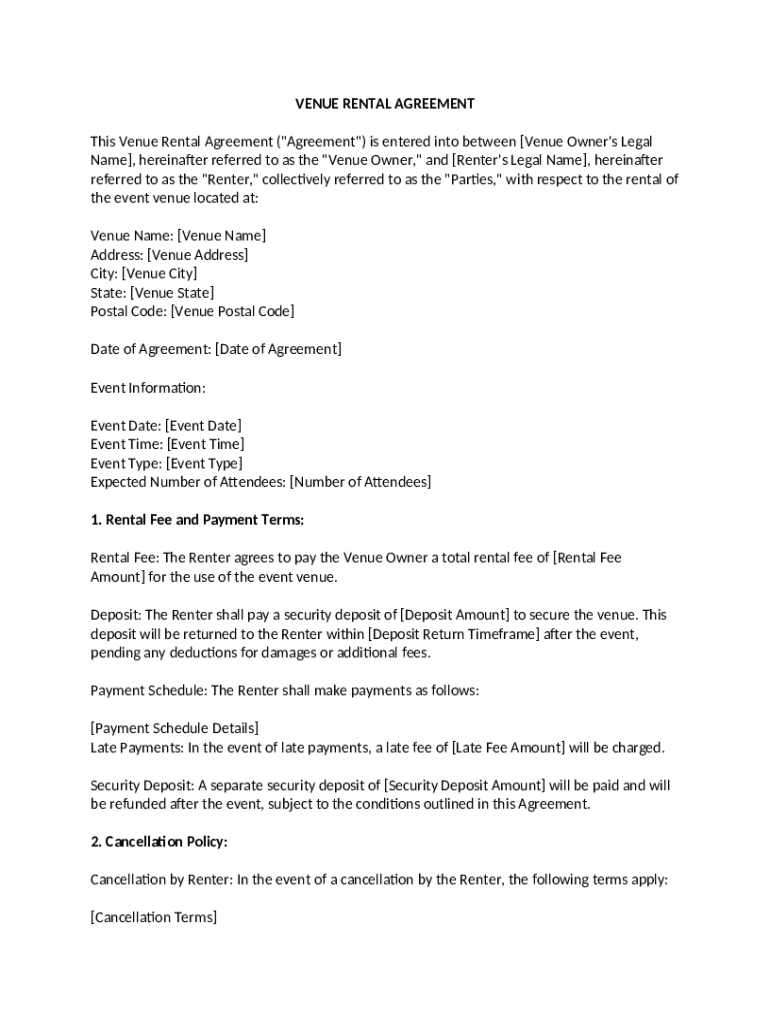
A Venue Rental Agreement is a legally binding contract between a venue owner and a renter that details the terms and conditions under which the venue will be rented. This document serves as a formal agreement specifying obligations, rights, and duties of both parties concerning the rental use of a venue for events such as meetings, parties, weddings, or corporate functions. As a fundamental part of event planning, this agreement often includes essential elements such as payment terms, cancellation policies, usage rules, and liability considerations.
Key Elements of the Agreement
The primary components of a Venue Rental Agreement include:
- Payment Terms: Details regarding rental fees, deposit requirements, payment schedules, and cancellation fees.
- Venue Usage: Specifies permitted activities, duration of use, and any restrictions such as capacity limits or noise regulations.
- Insurance Requirements: Requirements for liability insurance to protect both parties from unforeseen events or damages occurring during the rental period.
- Cancellation Policies: Terms for cancelling the agreement, including deadlines for cancellations without penalty and any forfeited amounts.
How to Use the Venue Rental Agreement
Successfully using a Venue Rental Agreement involves understanding its terms, negotiating conditions when necessary, and ensuring compliance throughout the rental duration. Here's how to effectively manage the agreement:
- Review the Terms Thoroughly: Before signing, both parties should carefully review all terms to ensure clarity and agreement on responsibilities.
- Negotiate Conditions: Discuss any items that require adjustment, such as insurance requirements or additional services like catering or technical support.
- Ensure Compliance: Follow outlined rules of venue use, including adhering to predetermined start and end times, capacity limits, and cleaning requirements.
- Maintain Communication: Keep open lines of communication with the venue owner to address any unforeseen issues that arise during the event planning and execution stages.
Steps to Complete the Agreement
To fully execute a Venue Rental Agreement, follow these steps:
- Gather Necessary Information: Include full legal names, contact information, and details of the venue and the event.
- Specify Terms and Conditions: Clearly outline the conditions under which the venue will be rented, including any special arrangements.
- Provide Signatures: The agreement must be signed by both parties to be legal and binding.
- Make Required Payments: Any required deposits or initial payments should accompany the signed agreement.
Who Typically Uses the Venue Rental Agreement
Various parties utilize Venue Rental Agreements for different purposes:
- Event Planners: They use these agreements to secure venues for clients efficiently.
- Corporate Organizations: Companies entering into agreements for seminars, workshops, or corporate events.
- Private Individuals: Those renting venues for personal events such as weddings or family gatherings.
- Non-Profit Organizations: Groups coordinating charity events or fundraisers.


Business Types Benefiting from the Agreement
Certain business types find venue rental agreements particularly useful:
- Event Management Companies: Streamline operations by ensuring detailed agreements are in place.
- Hospitality Companies: Ensure venues are rented consistently and professionally.
- Conference Centers: Use agreements to manage multiple events simultaneously.
Legal Use of the Venue Rental Agreement
While Venue Rental Agreements are primarily used to establish rental terms, they also serve legal purposes:
- Evidence in Disputes: Provides documentation to resolve disputes about terms and conditions.
- Proof of Liability Coverage: Serves as evidence of compliance with insurance prerequisites.
- Enforcement of Terms: Legal backing for enforcing agreed-upon terms and conditions.
Important Terms Related to the Agreement
Commonly used terms within a Venue Rental Agreement include:
- Lessee and Lessor: The lessee is the individual renting the venue, while the lessor is the venue owner.
- Force Majeure: Provisions that release both parties from liability due to unforeseen circumstances such as natural disasters or pandemics.
- Indemnification: Terms specifying responsibility for damages or claims arising during the event.
State-Specific Rules for Venue Rental Agreements
State laws may affect how venue rental agreements are structured and enforced:
- Local Safety Codes: Compliance with state-required safety codes and health regulations.
- Insurance Regulations: Varied requirements for liability insurance based on state statutes.
- Permits and Licensing: Certain states may require additional permits for specific types of events or venues.
State-by-State Differences
Understanding these differences can prevent legal issues:
- California: Requires comprehensive fire safety regulations.
- New York: Often necessitates specific capacity permits for large gatherings.
- Texas: May have particular alcohol service laws affecting rentals.
Examples of Using the Venue Rental Agreement
Here are some scenarios showcasing real-world applications of the Venue Rental Agreement:
- Corporate Events: A company hosting a quarterly business meeting rents a venue and provides a rental agreement specifying IT equipment use and catering services.
- Wedding Receptions: An individual uses the agreement to book a hall for a wedding ensuring compliance with state alcohol laws.
- Concerts and Festivals: Organizers secure a venue for a music festival that includes terms for stage setup, security measures, and sanitary facilities.
Practical Scenarios
In practical use, these agreements mitigate issues like:
- Damage Disputes: Documentation of venue condition before and after events to address damage claims.
- Overbooking Avoidance: Clearly defined terms to ensure booked dates are honored.
With these guidelines and insights, even those unfamiliar with Venue Rental Agreements can navigate and execute them confidently.