






Definition and Meaning of the Piper Archer - Weight and Balance Sheet
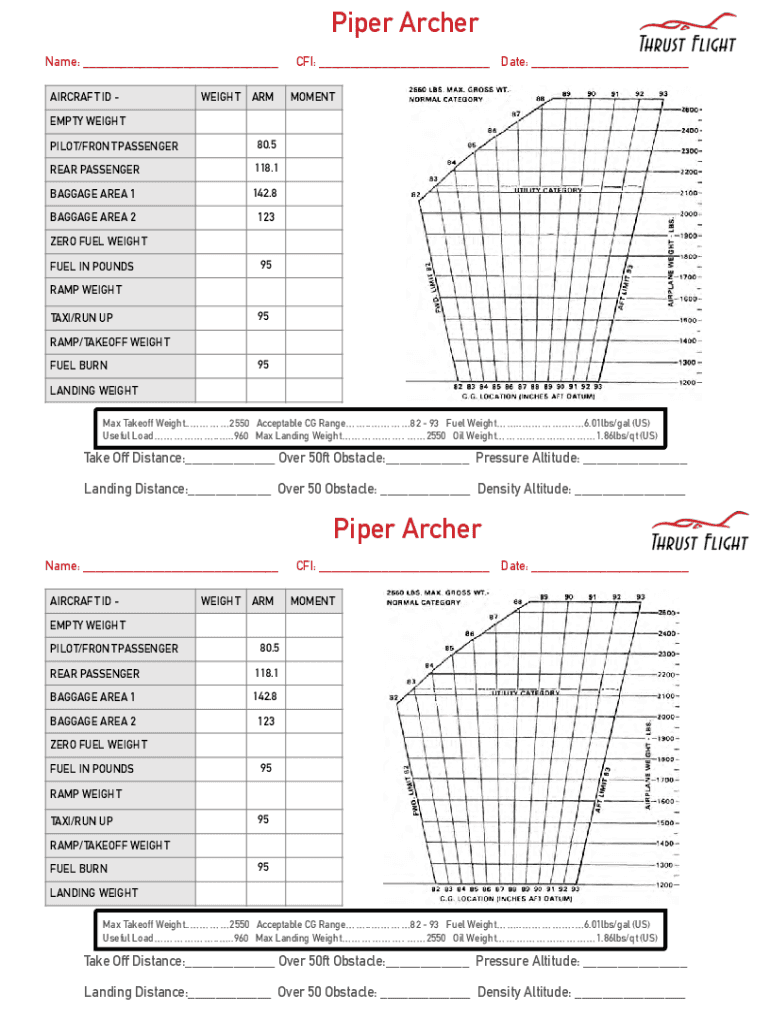
The Piper Archer - Weight and Balance Sheet is a crucial document used in aviation to ensure that the aircraft's weight and balance comply with safety standards. This sheet provides detailed information on the distribution of weight within the Piper Archer aircraft, including specifics on fuel capacity, maximum takeoff weight, useful load, and the acceptable range for the center of gravity. Understanding and maintaining the right balance is vital for aircraft stability and optimal performance during flight. The document plays a vital role in pre-flight planning, ensuring that the aircraft operates safely under given weather conditions and flight parameters.
How to Use the Piper Archer - Weight and Balance Sheet
To appropriately utilize the Piper Archer - Weight and Balance Sheet, pilots and crew should follow these steps:
-
Review Weight Data: Examine the maximum takeoff weight and useful load specified in the document. Ensure the total weight, including crew, passengers, fuel, and cargo, does not exceed the limits.
-
Calculate Center of Gravity: This involves assessing the distribution of weight across the aircraft. The center of gravity must remain within the specified limits to maintain control during flight.
-
Consider Fuel Load: Accurately measure and input the required fuel load. Account for the weight of the fuel as it impacts the overall balance and performance.
-
Plan for Weather Conditions: Check additional data on weather-related factors that might affect the flight. Adjust weight and balance as needed based on wind speed, temperature, and atmospheric pressure.
-
Record and Confirm: Accurately fill in flight data and confirm all calculations align with safety requirements before finalizing.
Steps to Complete the Piper Archer - Weight and Balance Sheet
Filling out the Piper Archer - Weight and Balance Sheet accurately is paramount for flight safety. Here’s a step-by-step guide:
-
Gather Necessary Weights: Collect data on the weight of the pilots, passengers, cargo, and fuel.
-
Input Basic Weights: Start by entering the aircraft's empty weight and the weight of any fixed items.
-
Add Passenger and Cargo Weight: Accurately calculate the sum of passenger and baggage weight.
-
Calculate Total Weight and Moment: Determine the total weight and the center of gravity by calculating the balance point (moment) of the aircraft.
-
Adjust as Needed: If the center of gravity and total weight fall outside the acceptable range, rearrange cargo or adjust fuel levels to comply with balance requirements.
-
Verify Exemplary Conditions: Confirm that under all planned flight conditions, the aircraft maintains compliance with weight and balance restrictions.
Key Elements of the Piper Archer - Weight and Balance Sheet
Understanding the key elements of this document is essential for its effective use:
- Maximum Takeoff Weight: The highest weight at which the aircraft is certified for takeoff.
- Useful Load: The total weight of passengers, cargo, and fuel.
- Center of Gravity: The point where the aircraft's weight is balanced. It must be within specified limits.
- Fuel Capacity: Details the maximum amount of fuel the aircraft can carry, impacting weight and balance.
- Flight Data Recording: Sections for pilots to note specific flights’ operational data.
Who Typically Uses the Piper Archer - Weight and Balance Sheet
The Piper Archer - Weight and Balance Sheet is primarily used by:
- Pilots: Ensure safe flight operations by confirming aircraft is within the permissible weight and balance range.
- Flight Instructors: Educate student pilots about weight management’s importance in aviation safety.
- Aviation Maintenance Technicians: Verify that the aircraft remains within its operational limits after any modifications or repairs.
- Charter Operations: Organizations need to comply strictly with aviation regulations for each chartered flight.


Legal Use of the Piper Archer - Weight and Balance Sheet
The legal use of this document is governed by aviation authorities such as the Federal Aviation Administration (FAA) in the United States, which mandates adherence to weight and balance protocols. A precise weight and balance calculation is legally required before flight to foster safe aircraft operation, limiting liability should an incident occur. Non-compliance or inaccuracies in maintaining this document can lead to severe penalties, including fines and revocation of flying privileges.
Important Terms Related to Piper Archer - Weight and Balance Sheet
Familiarity with key aviation terms enhances understanding and use of the weight and balance sheet:
- Moment: A measure of the tendency of a force to rotate an object around an axis.
- Payload: The weight of cargo, passengers, and baggage.
- Datum Line: A reference line from which all horizontal distances are measured for balance calculations.
- Station: A specific location along the aircraft's length used for weight distribution calculations.
Software Compatibility with the Piper Archer - Weight and Balance Sheet
Many pilots and aviation professionals use digital tools to streamline weight and balance calculations. Software like ForeFlight, Garmin Pilot, and industry-specific tools like MyFlightbook and FlightPlan.com supports these calculations for maximum accuracy. These platforms can automatically factor in variables like fuel burn during flight, providing dynamic weight and balance updates. For businesses that integrate aviation operations with financials, tools like QuickBooks and specialized aircraft maintenance programs offer integrations to manage records seamlessly.