






Definition & Meaning
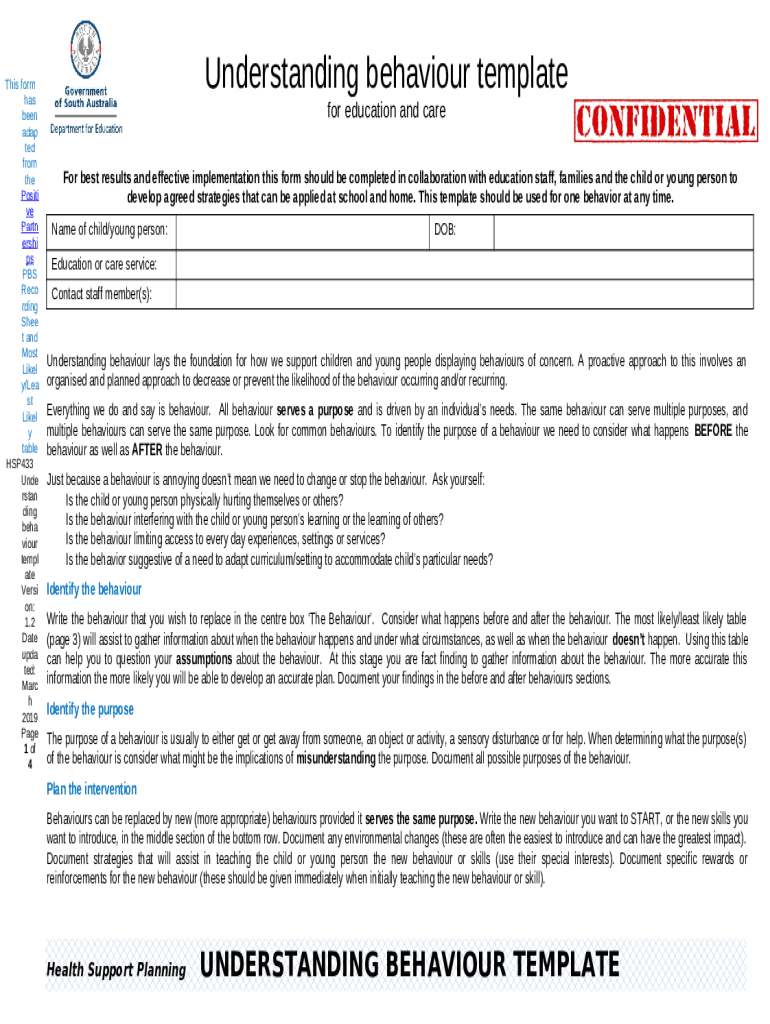
The HSP433 Understanding Behavior Template is a structured tool designed for authorizing the administration of medication. It facilitates a clear, systematic approach to understanding and managing behaviors of concern, particularly in children and young adults who may require such interventions. The form gathers detailed information, including behavioral triggers and environmental factors, to aid in developing effective strategies. This enhances the clarity and precision of protocols for granting medication administration authority, ensuring safety and compliance.
How to Use the HSP433 Understanding Behavior Template
Using the HSP433 template involves several steps. First, identify the specific behaviors that require intervention. This includes outlining the triggers and impacts of these behaviors. Next, detail the recommended medications and the authority granted to administer them. Users must accurately fill out sections regarding dosage, frequency, and intended outcomes. The template should be completed collaboratively, involving medical professionals, caregivers, and educators where applicable. Ensure all sections are completed thoroughly to prevent misunderstandings or errors in administration.
Practical Scenarios
- School Settings: When a child requires medication during school hours, the template helps document consent and detailed instructions for administration by school staff.
- Home Care Plans: Caregivers can utilize the form to create a comprehensive medication plan that aligns with medical directives for home-based care.
Steps to Complete the HSP433 Understanding Behavior Template
Completing the HSP433 form requires a step-by-step approach:
- Gather Necessary Information: Collect detailed information about the individual’s behaviors, including any relevant medical history and current prescriptions.
- Identify Behaviors: Clearly outline the behaviors of concern and document any known triggers or environmental factors that influence these behaviors.
- Specify Medication Details: Enter the name, dosage, and frequency of the medication prescribed, along with the purpose and expected outcomes.
- Authority Documentation: Define who is authorized to administer the medication and under what circumstances they are permitted to do so.
- Review and Approve: Before finalizing, have the form reviewed by a medical professional or supervisor to ensure all information is accurate and complete.
Important Terms Related to HSP433
- Behavioral Triggers: Environmental or emotional factors that provoke or exacerbate unwanted behaviors.
- Medication Administration: The process of supervising and delivering prescribed medications in accordance with legal and medical guidelines.
- Authority Granting: Legal permission given to a specific individual or group to administer medication under specified conditions.
Legal Use of the HSP433 Template
The legal use of the HSP433 template ensures compliance with federal and state laws governing medication administration in educational and caregiving settings. The form acts as a legal document that authorizes designated individuals to administer medication safely and effectively. It is crucial to adhere to the guidelines and complete all sections accurately to maintain legal protection and uphold the trust of stakeholders involved in the individual's care.
Key Elements of the HSP433 Understanding Behavior Template
- Individual Identification: Personal details of the person requiring the medication, including name and age.
- Behavioral Assessment: In-depth analysis of the behaviors prompting medication use.
- Authorized Personnel: Identification of individuals permitted to administer the medication, typically including relationship or role concerning the individual.
- Management Strategies: Outline of alternative strategies to address behaviors, if applicable.
Who Typically Uses the HSP433 Template
The users of this template generally include educators, healthcare providers, and caregivers who manage or oversee the treatment and care of children and young adults presenting specific behavioral challenges. These stakeholders utilize the template to document and coordinate a cohesive plan that integrates medical and behavioral strategies to ensure optimal outcomes.


State-Specific Rules for the HSP433 Template
While the HSP433 template provides a comprehensive framework, state-specific regulations may dictate additional requirements or modifications. These can include variations in legal age for self-administration, parental consent requirements, or specific educational setting protocols. Understanding local mandated standards ensures the form is compliant and effective within different jurisdictions.
Examples of Using the HSP433 Template
- Case Study 1: A school district uses the HSP433 form to obtain parental consent and detail medication administration protocols for a student with ADHD, ensuring teachers have clear guidelines.
- Case Study 2: A home healthcare agency implements the template for individuals with autism, using the form to outline behavior management strategies and medication routines tailored to each client's unique needs.