






Definition and Purpose of RATING SCALE OF GIFTED CHARACTERISTICS - ECSD
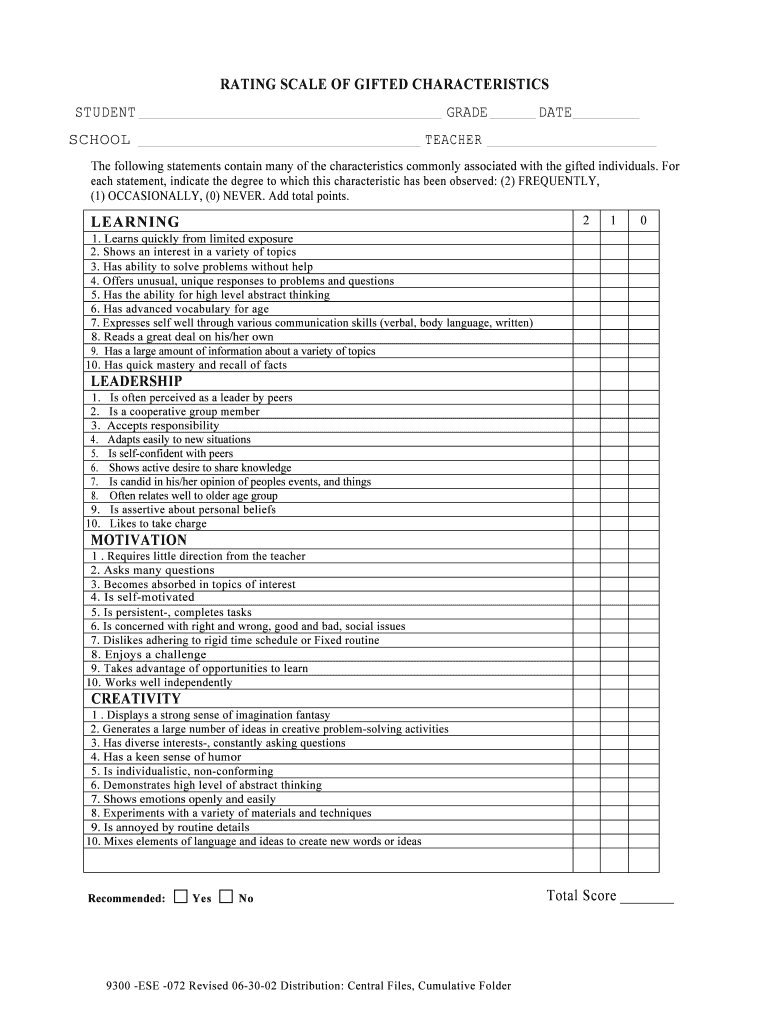
The "Rating Scale of Gifted Characteristics - ECSD" is a formal evaluation tool used primarily within educational settings. This scale is designed to help educators identify students who exhibit characteristics associated with giftedness. Covering four primary categories — Learning, Leadership, Motivation, and Creativity — this rating scale quantifies each observed characteristic within a student population. Teachers are tasked with assessing how frequently a student demonstrates these traits using options such as 'Frequently', 'Occasionally', or 'Never'. The primary goal of this form is to systematically capture the unique strengths and potential of students, supporting their access to appropriate educational programs.
Key Elements of the Rating Scale
-
Learning: Evaluates the capacity of a student to absorb new information quickly and effectively. Indicators might include problem-solving skills, the ability to connect disparate pieces of information, and an affinity for self-directed learning.
-
Leadership: Measures a student's ability to influence peers and effectively communicate ideas. Indicators here include the ability to inspire others, make decisions, and take initiative in group settings.
-
Motivation: Assesses the internal drive of a student to achieve goals and explore new challenges. Variables might include persistence, goal-orientation, and a willingness to take risks in learning endeavors.
-
Creativity: Focuses on a student's originality and inventiveness. Characteristics involve creative problem-solving, novel ideation, and expressive use of arts and media.
Each category is essential for determining whether a student qualifies for advanced educational opportunities tailored to gifted learners.
Steps to Complete the Rating Scale
-
Gather Preliminary Information: Obtain all necessary personal and academic data about the student to support the evaluation process. This may include previous report cards, teacher notes, and observations.
-
Observe Student Interactions: Spend adequate time observing the student's behavior in academic and social contexts. Note relevant examples of the characteristics outlined in the scale.
-
Fill Out the Scale: Assign a rating to each characteristic based on observed frequency. Mark 'Frequently', 'Occasionally', or 'Never' as appropriate.
-
Review and Reflect: Re-evaluate each decision to ensure that the ratings reflect an accurate and comprehensive view of the student's abilities and performance.
-
Submit Completed Form: Ensure all sections are accurately filled in before submission. Provide any additional comments or observations that may support the assessment process.
Who Typically Uses the Rating Scale?
This tool is primarily utilized by educators, including teachers, counselors, and school psychologists, within the educational system. These professionals are tasked with identifying students who might benefit from specialized programs aimed at nurturing gifted abilities. Beyond individual assessments, the scale can inform curriculum adjustments and educational policy for gifted education programs.


Legal Use and Privacy Concerns
Due to its sensitive nature, use of the "Rating Scale of Gifted Characteristics - ECSD" is subject to privacy and ethical considerations. It is crucial to adhere to legal requirements for student data protection, ensuring compliance with laws such as the Family Educational Rights and Privacy Act (FERPA). Educators must obtain parental consent where necessary and ensure that collected data is securely stored and only used for the intended educational purposes.
Examples of Using the Scale
Consider a scenario where a fifth-grade teacher notices a student consistently completing assignments with innovative approaches. Using the rating scale, the teacher might mark the student as 'Frequently' demonstrating creativity. If the same student also displays leadership qualities in group projects, these observations would be reflected in the leadership section of the scale. Successfully identifying and documenting these behaviors could lead to the student’s inclusion in a gifted education program, providing an enriched learning environment tailored to their unique capabilities.
Required Documents for Completion
To effectively complete the rating scale, educators should gather several documents:
-
Academic Records: Report cards and transcripts providing historical academic performance.
-
Teacher Observations: Notes and logs from various classroom activities.
-
Parental Input: Where possible, obtain insights or observations from the student’s home environment.
These documents provide a well-rounded perspective on student performance and help ensure that evaluations are comprehensive and unbiased.