






Definition and Meaning
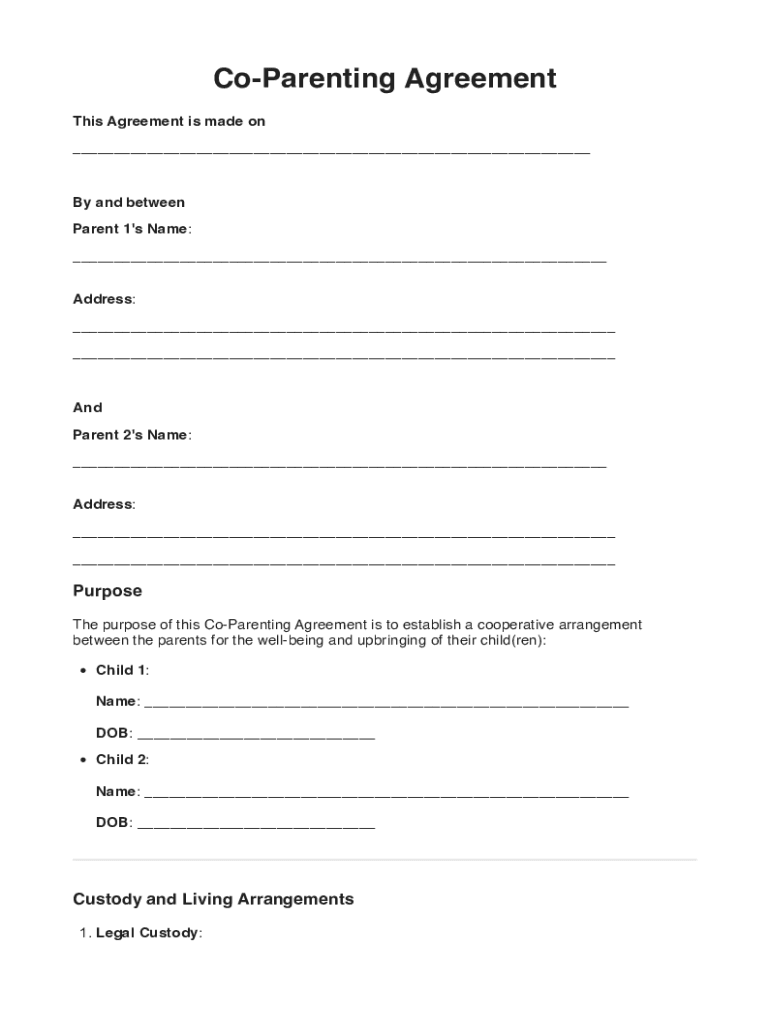
The Co-Parenting Agreement is a formal document outlining the collaborative parenting approach between two individuals sharing parental responsibilities. This agreement specifically addresses key aspects of parenting, such as custody, living arrangements, education, healthcare decisions, and financial contributions. These well-defined sections ensure that both parents have a clear understanding of their roles and obligations in the upbringing of their child, promoting a harmonious co-parenting relationship.
Custody and Living Arrangements
- Joint Custody: Involves sharing responsibilities equally, focusing on maintaining equal involvement of both parents.
- Sole Custody: Designates one parent as the primary caretaker while granting visitation rights to the other.
Communication Guidelines
- Regular Updates: Ensures both parents are informed about significant developments in the child’s life, facilitating timely decision-making.
How to Use Co-Parenting Agreement Templates PDF
Using Co-Parenting Agreement templates streamlines the process of drafting a comprehensive agreement by providing a structured format. This guide walks users through the template, emphasizing the importance of clarity and mutual consent on every provision.
Preparing to Use the Template
- Identify Key Areas: Decide on the primary aspects like custody, holidays, and education.
- Gather Necessary Information: Collect details related to your child's schedule, educational needs, and medical information.
Filling Out the Template
- Fill Sections Sequentially: Begin with personal details, followed by specific terms for custody and communication.
- Ensure Clarity: Avoid ambiguous language to prevent future misunderstandings.
Steps to Complete Co-Parenting Agreement Templates PDF
Successfully completing the Co-Parenting Agreement involves a systematic approach to ensure all areas are covered comprehensively.
- Download and Review the Template: Familiarize yourself with its structure and sections.
- Gather Required Information: Compile all relevant documents and information needed for accurate completion.
- Complete Each Section: Fill out personal details, followed by detailed coverage of custody arrangements and financial responsibilities.
- Review and Revise: Both parents should review the completed document and discuss any necessary changes.
- Finalize and Sign: Once both parties agree, sign the document to formalize it.
Key Elements of Co-Parenting Agreement Templates
Essential components of a Co-Parenting Agreement guarantee comprehensive coverage of all crucial areas of child-rearing responsibilities.
Custody Arrangements
- Physical Custody: Where the child will primarily reside.
- Legal Custody: Involves decision-making regarding the child’s welfare, which could be joint or sole.
Financial Responsibilities
- Child Support: Details the financial contributions required from each parent to support the child's needs.
- Medical Expenses: Allocation of responsibility for health insurance and medical costs.
Dispute Resolution
- Mediation: Procedure for resolving disagreements outside of court, emphasizing cooperative conflict resolution.
Legal Use and Validity
The legal integrity of Co-Parenting Agreements is pivotal, contingent upon adherence to jurisdiction-specific laws and mutual consent.
- Jurisdictional Compliance: Agreements must align with state laws where the agreement resides.
- Notarization: Enhance legal enforceability by notarizing the document.
- Amendments: Provisions for modifying the agreement as circumstances evolve.
Important Terms in Co-Parenting Agreements
Understanding specific terms within the agreement ensures both parties comprehend their responsibilities and rights.
- Visitation Rights: Defines scheduled time that the non-custodial parent spends with the child.
- Primary Residence: Refers to the child's main home for purposes of school registration and taxation.
Who Typically Uses Co-Parenting Agreement Templates
These templates are often utilized by divorced or separated parents seeking a legally binding framework for shared parenting responsibilities.
- Divorced Parents: To maintain structured parenting post-divorce.
- Unmarried Parents: To establish clear parental roles and obligations.
Examples of Using Co-Parenting Agreement Templates
Practical examples illustrate how these templates facilitate structured co-parenting strategies.
- Example Case 1: Two parents leverage the template to establish a bi-weekly visitation schedule, ensuring each parent actively participates in the child's life.
- Example Case 2: A template assists parents in agreeing upon split financial responsibilities for extracurricular activities, reducing conflicts over expenses.
By providing a comprehensive framework, Co-Parenting Agreement templates are a valuable resource for parents seeking an organized, legally compliant approach to shared parenting responsibilities, maximizing cooperation and minimizing disputes.