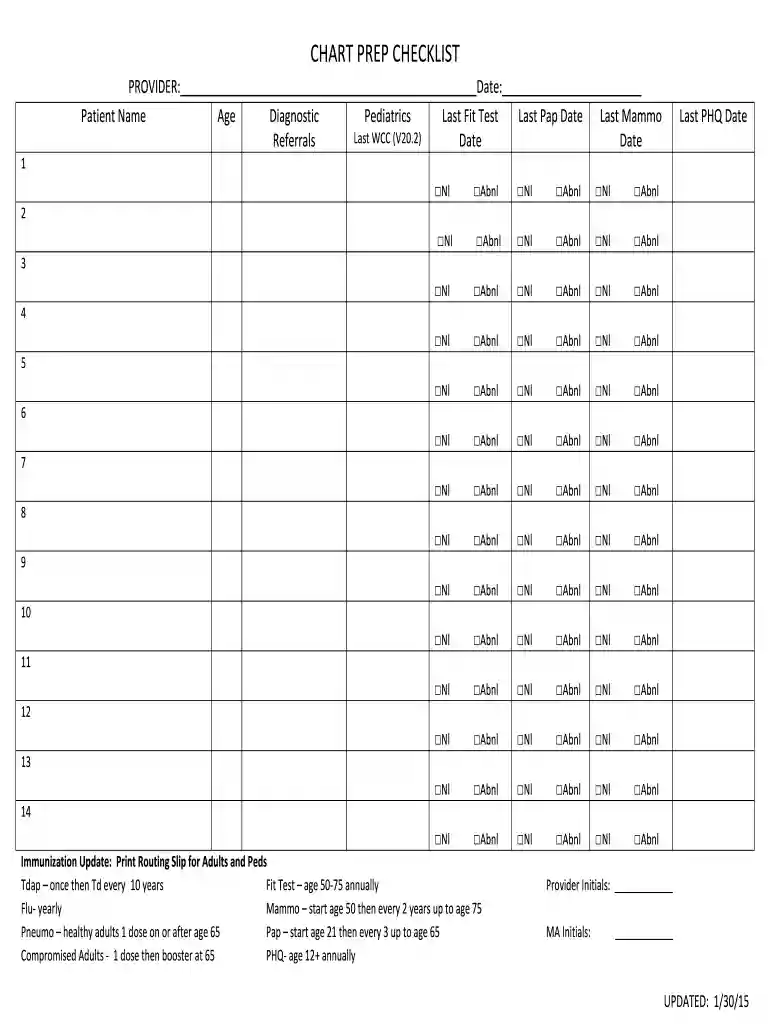
Understanding the Chart Prep Checklist
The chart prep checklist serves as an essential tool for healthcare providers and medical assistants, ensuring that all necessary information and documentation are prepared before patient visits. This checklist helps in organizing patient data, diagnostic tests, and immunization updates, providing a framework for thorough and structured patient care.
Key Elements of the Chart Prep Checklist
- Patient Information: It's crucial to verify and update patient demographics, including name, date of birth, insurance details, and contact information.
- Health Assessment Records: Document previous health assessments, including any chronic conditions, allergies, and medications. Keeping a summary of this information helps facilitate better patient interactions and care.
- Immunization Status: Record the patient's immunization history and identify any updates needed, ensuring compliance with guidelines such as the Centers for Disease Control and Prevention (CDC) recommendations for vaccinations.
- Diagnostic Tests and Results: Include past lab tests, imaging studies, and screening results to provide context for the current visit. This section will help in guiding clinical decisions and patient education.
- Upcoming Appointments and Referrals: Note any scheduled referrals or follow-up appointments that may require additional information.
Steps to Complete the Chart Prep Checklist
- Gather Patient Data: Collect all relevant patient information, including medical history and contact details.
- Assess Health Records: Review past health assessments and update any changes or new conditions.
- Verify Immunization Records: Check the immunization record and ensure that any missing vaccinations are flagged for discussion.
- Compile Diagnostic Results: Assemble results from previous tests and ensure they are easily accessible in the chart.
- Organize for the Visit: Prepare any necessary paperwork for upcoming appointments, including referrals and follow-up actions.
Legal Use of the Chart Prep Checklist
Adhering to legal standards is crucial when utilizing the chart prep checklist. Medical providers must ensure that:
- Patient Confidentiality: All patient data is handled in compliance with the Health Insurance Portability and Accountability Act (HIPAA) regulations to protect patient privacy.
- Accurate Documentation: Maintain accurate and timely records in accordance with state laws and regulations governing healthcare documentation.
- Informed Consent: Ensure that any forms shared with patients comply with legal requirements, allowing for informed consent regarding treatments and procedures.
Examples of Using the Chart Prep Checklist
- Routine Checkup: Before a routine checkup, a medical assistant reviews the chart prep checklist to confirm the patient's immunization status, ensuring that any necessary vaccines are administered during the visit.
- New Patient Intake: For a new patient, the checklist helps gather essential demographic and medical history information, guiding the provider in creating a tailored care plan.
- Specialist Referrals: When preparing for a referral to a specialist, the checklist helps ensure that all relevant medical notes, lab results, and patient information are attached, facilitating smooth communication and care transition.
Important Terms Related to Chart Prep Checklist
- Pre-Visit Planning: The process of organizing and preparing all necessary components of patient care before a scheduled appointment.
- Fillable Forms: Templates that allow for the integration of structured data collection within the patient chart.
- Patient Portal: A secure online platform where patients can access their health information and communicate with providers, enhancing engagement and compliance.
Chart Prep Best Practices
- Regular Updates: Ensure that the chart is routinely updated to reflect recent patient interactions, lab results, and changes in medical history.
- Team Collaboration: Foster an environment in which team members can collaborate effectively on chart prepping to streamline processes and improve patient care.
- Training and Support: Provide ongoing training for staff on how to maximize the use of the chart prep checklist and stay current with best practices and legal requirements.