







Definition and Meaning
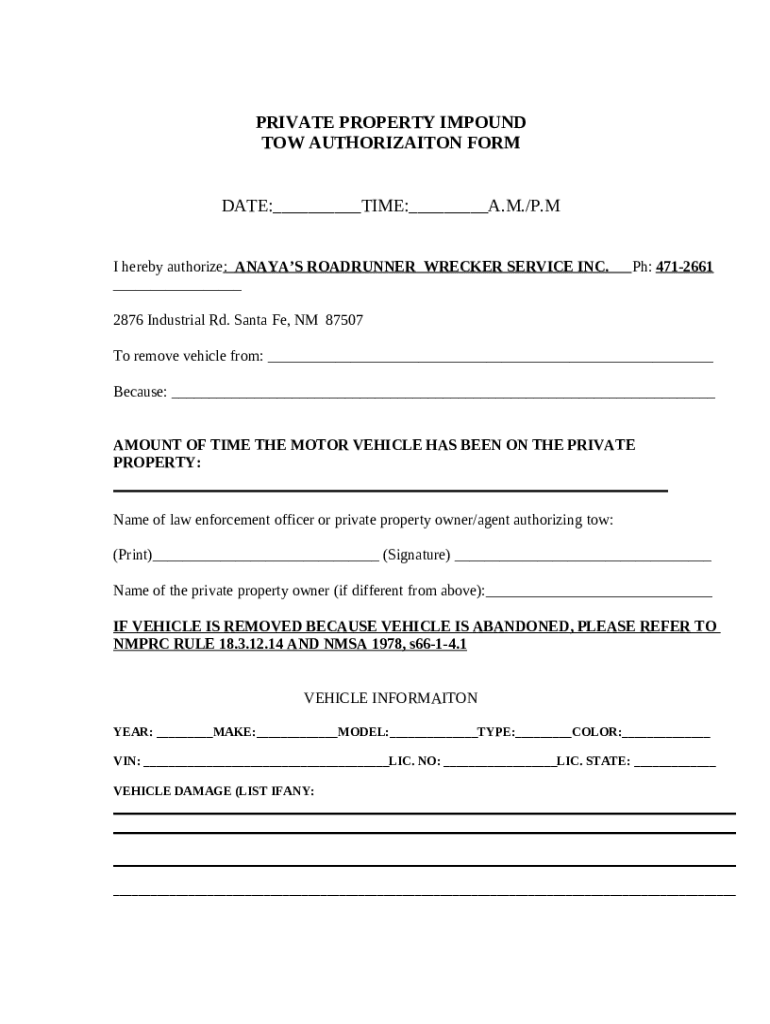
The "Private Property Impound Tow Authorization" is a formal document that grants explicit permission for the removal of a vehicle from private property. This form is essential for property owners or authorized personnel who need to impound vehicles that are illegally parked or abandoned. It serves as a legally binding agreement between the property owner and the towing company, defining the conditions under which a vehicle can be towed. This document protects all involved parties by clearly outlining the responsibilities and limitations of the towing process.
Key Elements of the Private Property Impound Tow Authorization
Several critical components define the effectiveness of this form, ensuring both the property owner and the towing company understand their roles:
- Date and Time: Precisely recording when the authorization is granted ensures transparency and chronological clarity.
- Vehicle Information: Comprehensive details about the vehicle to be towed, including make, model, color, and registration number, facilitate accurate identification.
- Reason for Towing: A section dedicated to explaining why the vehicle is being impounded, such as illegal parking, expired registration, or abandonment.
- Authorization Details: Includes signatures from a law enforcement officer, property owner, or authorized agent, verifying the permission granted.
Understanding these components can prevent misunderstandings and ensure all towing actions are legitimate and defensible.
Steps to Complete the Private Property Impound Tow Authorization
Filling out the Private Property Impound Tow Authorization form involves several clear steps to ensure completeness and legality:
- Gather Vehicle Details: Before completing the form, collect all necessary information regarding the vehicle in question.
- Fill Out Authorization Information: Enter the date and time, alongside relevant details about yourself as the property owner or authorized person.
- Specify the Towing Reason: Clearly note the justification for towing to avoid disputes.
- Obtain Necessary Signatures: Secure signatures from required parties, including law enforcement, to validate the document.
- Submit the Form to the Towing Company: Ensure the towing service has access to the completed form before proceeding with the impoundment.
Following these steps carefully will ensure the form is correctly completed, minimizing potential conflicts or legal challenges.
Legal Use of the Private Property Impound Tow Authorization
Legitimate use of the Private Property Impound Tow Authorization is governed by specific legal frameworks:
- Compliance with Local Regulations: Understanding and adhering to state or municipal laws regarding vehicle impoundment is crucial.
- Proper Documentation: Ensuring the authorization form is filled out accurately and kept on file helps protect against legal repercussions.
- Notification Procedures: Required notifications, such as informing the vehicle owner or law enforcement, must be followed to ensure the impoundment is legitimate.
This form helps property owners navigate legal constraints, providing a clear procedure for vehicle impoundment under U.S. law.
Important Terms Related to Private Property Impound Tow Authorization
Familiarity with key terms related to the tow authorization can enhance understanding and execution:
- Impoundment: The legal process of towing and storing a vehicle.
- Authorization: Official permission provided to carry out an action, such as towing.
- Liability: Legal responsibility for damages or actions undertaken during the towing process.
These terms form the basis of the contractual and legal language used within the context of vehicle towing from private property.
How to Obtain the Private Property Impound Tow Authorization
Securing this document involves several practical steps:
- Contact Local Towing Services: Identify authorized towing companies familiar with the local laws.
- Consult Legal Advice: If unsure about the legality, contact an attorney specializing in property or towing law.
- Download the Form from DocHub: Utilize digital solutions like DocHub to access, fill out, and store the form.
Access to this form ensures property owners can initiate vehicle impoundment legally and efficiently.
Who Typically Uses the Private Property Impound Tow Authorization
This form is commonly used by a range of parties who manage or own property:
- Property Owners and Managers: Individuals responsible for maintaining private property spaces, such as parking lots.
- Law Enforcement Agencies: Officers requiring legal documentation to authorize impoundment for legal compliance.
- Towing Companies: Businesses engaged in vehicle removal services that require documented proof of authorization.
Identifying the typical users helps clarify how this form supports property management and enforcement activities.


State-Specific Rules for the Private Property Impound Tow Authorization
Rules and procedures related to vehicle impoundment can vary significantly by state, highlighting the need for local knowledge:
- California: Requires a specific notification period before vehicle impoundment.
- Florida: Implements strict guidelines for storing and notifying vehicle owners post-impoundment.
- Texas: Local municipal regulations can dictate procedural differences.
Being informed about these state-specific variations ensures compliance and prevents legal issues during the towing process.
Examples of Using the Private Property Impound Tow Authorization
Understanding practical applications can clarify its everyday utility:
- Apartment Complexes: Landlords often use the form to manage parking violations among tenants.
- Shopping Centers: Owners may authorize towing for non-customer vehicles taking up valuable parking space.
- Event Venues: Ensures parking availability during events by controlling unauthorized or extended parking in restricted areas.
These examples provide insight into real-world scenarios where the form proves essential for managing private property effectively.
Digital vs. Paper Version
The choice between digital and paper forms depends on the user's preference and operational requirements:
- Digital Version: Offers convenience, with easy access, filling, and storage via platforms like DocHub.
- Paper Version: While less environmentally friendly, it may be preferred where digital access is limited or for those requiring physical records.
Choosing the right format ensures efficiency in documentation and administrative processes concerning vehicle impoundment.




