






Definition and Purpose of the Eligibility Determination Worksheet
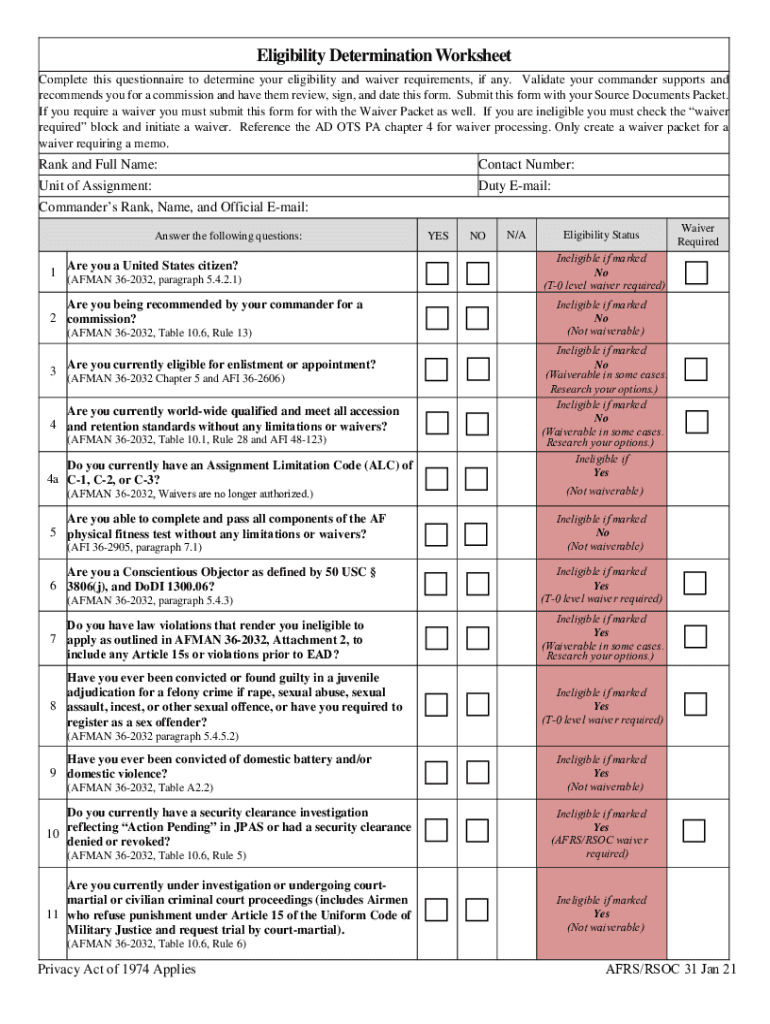
The Questionnaire 1, Eligibility Determination Worksheet serves as a critical tool for individuals seeking a military commission. It is designed to assess applicant eligibility by collecting pertinent data on various criteria. These criteria include factors such as citizenship status, adherence to legal standards, physical fitness, and educational qualifications. This form also guides applicants regarding waiver requirements if any disqualifying conditions exist.
The worksheet aims to streamline the eligibility verification process, ensuring that only qualified individuals pursue military commissions. Being able to identify ineligible cases early saves time and resources for both applicants and military screening personnel. It is imperative that applicants complete this form accurately and thoroughly to avoid delays or misunderstandings in the selection process.
How to Use the Eligibility Determination Worksheet
Applicants should approach the completion of the Eligibility Determination Worksheet with diligence and accuracy. Follow these steps for an efficient process:
-
Review the Form: Begin by carefully reading through the entire form. Understanding the categories and questions posed will help in preparing necessary documentation and information.
-
Gather Documentation: Collect all relevant documents, such as proof of citizenship, educational certificates, and records concerning any legal issues like driving violations or criminal records.
-
Complete the Form: Fill out each section attentively, ensuring that every question is answered truthfully. Double-check that all required fields are filled before moving forward.
-
Seek Clarifications: If there are unclear sections or questions, seek guidance from a military recruiter or authorized personnel to ensure accuracy.
-
Submit the Form: Once completed, submit the worksheet along with additional required documents, such as the Source Documents Packet, to the designated authority for review.
Key Elements of the Eligibility Determination Worksheet
This worksheet comprises several critical components, each designed to gather specific information about the applicant:
- Personal Information: Details such as name, address, and contact information.
- Citizenship Verification: Proof of U.S. citizenship or legal residency.
- Legal History: Disclosure of any past legal issues, arrests, or convictions.
- Educational Background: Highest educational attainment and relevant certifications.
- Physical Fitness Standards: Information on fitness levels, including results from required physical assessments.
- Waiver Considerations: Fields to indicate whether an applicant may need a waiver for any ineligibility.
Each element is integral to forming a comprehensive profile for military eligibility assessment.
Steps to Complete the Eligibility Determination Worksheet
Filling out this form can be broken down into manageable steps:
- Prepare Supporting Documents: Assemble all necessary records you might need to reference or attach to the form.
- Complete in Stages: Tackle the form in sections, verifying completeness and accuracy after each part.
- Check for Updates: Ensure no changes have been made to the form's requirements since your initial review.
- Proofread: Once all sections are filled, review the worksheet for any errors or omissions.
- Consult Help Resources: Use available support options from recruitment officers or official military guides if needed.
- Finalize Submission: After confirming all information, submit the worksheet in accordance with the instructions given by the military recruitment office.
Who Typically Uses the Eligibility Determination Worksheet
Primarily, this form is used by individuals aspiring to join the military as officers. However, its utilization extends to:
- Military Recruiters: They use the form to assess potential recruits' readiness and eligibility.
- Review Boards: These entities evaluate the compiled data to make informed decisions regarding candidate eligibility.
- Applicants Seeking Waivers: Individuals needing exceptions to standard criteria use this form to indicate their intent and basis for such requests.
Understanding the worksheet's audience is critical for ensuring it is completed in a manner that addresses all evaluative needs.


Eligibility Criteria Covered in the Worksheet
The worksheet evaluates a comprehensive range of eligibility criteria, ensuring alignment with military standards:
- Citizenship: Verifying U.S. citizenship or lawful status.
- Legal Standards: Ensuring compliance with legal history requirements; disclosing any past transgressions.
- Educational Certification: Meeting minimum educational thresholds or possessing additional military-relevant certificates.
- Physical and Mental Health: Demonstrating adequate physical health and fitness compatible with military demands.
- Moral Character: Upholding values and behaviors consistent with military ethos.
Each listed criterion must be met or addressed through supporting documentation or waivers.

Important Terms Related to the Worksheet
Understanding specific terminology related to this form enhances clarity and compliance:
- Waiver: A document that exempts the applicant from standard disqualification if granted by authorized military personnel.
- Source Document Packet: A required collection of validation documents to accompany the worksheet.
- Ineligibility Criteria: Specific factors that could prevent an applicant from obtaining a military commission.
Familiarity with these terms helps applicants navigate processes effectively and anticipate necessary actions.
Filing Deadlines and Important Dates
Applicants must be aware of deadlines and essential timelines associated with submitting the Eligibility Determination Worksheet:
- Standard Submission Deadline: Varies based on military branch requirements; checking with recruiters is advisable.
- Waiver Request Deadline: Specific cutoff dates might exist for waiver requests, necessitating timely preparation.
- Notification of Eligibility Status: Applicants should anticipate a timeline for results, understanding that delays might occur based on application volume.
Adherence to these timelines is crucial to ensuring a smooth application process and avoiding missed opportunities.
Software Compatibility and Digital Submission
For those who prefer or require digital submission, understanding the software compatibility can streamline the process:
- Document Editing Platforms: Using tools like DocHub can facilitate the digital completion and submission of the worksheet efficiently.
- File Formats: Ensure compatibility with required file formats such as PDF for electronic submissions.
- Online Submission Protocols: Familiarize with electronic submission guidelines to prevent technical issues during the filing process.
Leveraging digital tools effectively can simplify the application process and enhance document management.