
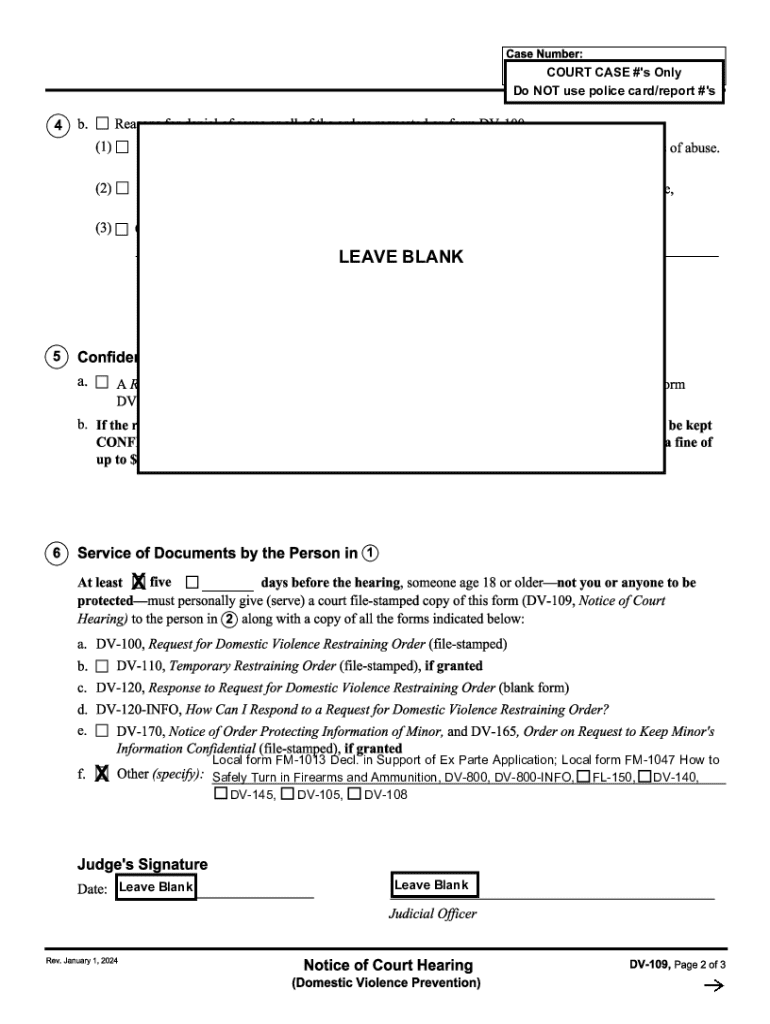







Definition & Meaning
The "Domestic Violence (Family Offense)NYCOURTS" form is critical within the New York State court system, designed to address issues related to domestic violence within families. It serves as a legal instrument to file complaints and seek protection under the law when someone is a victim of domestic violence. The form outlines the specific offenses considered domestic violence, guiding legal actions and protective measures available to victims.
- Domestic Offenses: Includes acts like harassment, assault, stalking, and other behaviors threatening the safety of a family member.
- Protection Measures: Allows individuals to seek immediate protection via restraining orders and other legal remedies.
Steps to Complete the Domestic Violence (Family Offense)NYCOURTS
The process of completing this form involves several critical steps to ensure all necessary information is accurately captured.
- Gather Personal Information: Collect details about yourself, the alleged offender, and any witnesses.
- Describe the Incident: Provide detailed accounts of the events leading to the need for this form.
- Specify the Relationship: Clearly state the relationship with the offender (e.g., spouse, partner, parent).
- Select Offenses: Mark relevant offenses from a provided list that the incident encompasses.
- Sign the Form: Ensure you sign the form where required to validate your claims.
Detailed Example
- Case Scenario: Suppose you are seeking protection against a spouse who has threatened you. Start by detailing incidents systematically and ensuring every section is complete.
Legal Use of the Domestic Violence (Family Offense)NYCOURTS
Understanding the legal implications of using this form is crucial for effective legal protection.
- Court Use: Utilized primarily in family court settings in New York State to secure orders of protection.
- Immediate Relief: Offers immediate court interventions for victims needing urgent protection.
- Judicial Authority: Judges use the information provided to assess the necessity for orders of protection and other legal actions.
Nuanced Details
- Emergency Situations: In cases of severe threat, this form facilitates expedited judicial review and intervention.
Important Terms Related to Domestic Violence (Family Offense)NYCOURTS
Understanding key terms enhances clarity in filling out and using the form effectively.
- Petitioner: The individual filing the form seeking protection.
- Respondent: The person the form is filed against, alleged to have committed the offense.
- Order of Protection: A legal order restricting the respondent's access or contact with the petitioner.
Comprehensive Explanation
- Order of Protection Details: Specifies the actions the respondent must avoid, such as proximity to the petitioner or contact through electronic means.
State-Specific Rules for the Domestic Violence (Family Offense)NYCOURTS
Each state can have specific rules about domestic violence filings, and New York has its unique set of guidelines.
- Filing Locations: Must be filed at local family courts within New York State.
- State Jurisdiction: Limited to incidents occurring within state boundaries or involving state residents.
Regional Variations
- New York City vs. Upstate New York: While procedures are similar, case volume and urgency vary, potentially influencing processing times.
Who Typically Uses the Domestic Violence (Family Offense)NYCOURTS
This form is primarily used by individuals seeking legal protection due to domestic violence threats or actions.
- Victims of Domestic Violence: Individuals facing physical, emotional, or psychological abuse.
- Legal Representatives: Lawyers representing victims in court proceedings.


Examples of Other Users
- Support Services: Shelter organizations assisting clients in initiating legal protection processes.
Key Elements of the Domestic Violence (Family Offense)NYCOURTS
Understanding the core components of the form ensures it is completed correctly.
- Incident Details: Specific events and behaviors described with precision.
- Relationship Disclosure: Clearly defines the relationship between parties involved.
- Requested Relief: Specifies protective measures or actions requested from the court.
Critical Insights
- Detailed Descriptions: More detailed incident descriptions improve judicial understanding and response.
Examples of Using the Domestic Violence (Family Offense)NYCOURTS
Real-world examples illustrate how this form is effectively used to safeguard individuals.
- Scenario 1: A woman facing threats from her ex-partner uses the form to secure an order of protection.
- Scenario 2: A parent seeking protection from an abusive adult child files for court intervention.
- Scenario 3: A roommate living in a shared housing situation files the form due to escalating threats.
Practical Application
- Court Outcomes: In each case, the form helps facilitate protective orders, ensuring the safety and legal rights of victims are prioritized.




