






Definition & Meaning
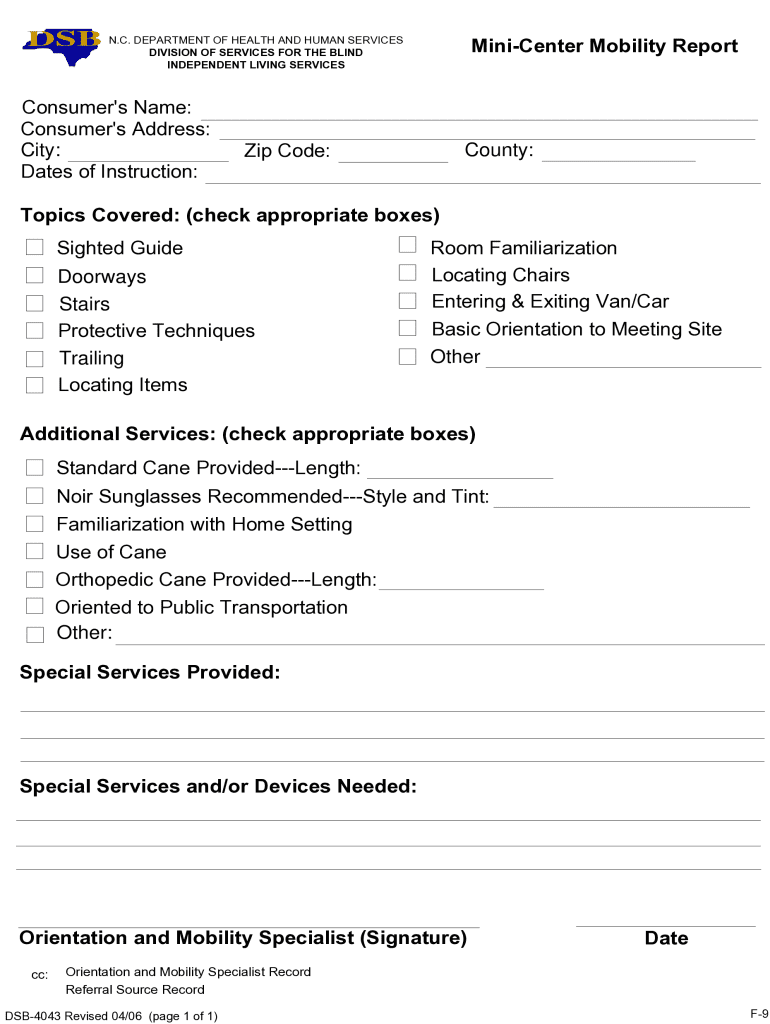
The Mini-Center Mobility Report is a formal document generated by the North Carolina Department of Health and Human Services, specifically within the Division of Services for the Blind. Its primary purpose is to provide a structured outline of services rendered concerning independent living skills, with a distinct focus on orientation and mobility training. This report serves as both a guide and a record, ensuring that consumers are equipped with the necessary skills to navigate their environments independently.
Contextual Importance
This document is not merely for record-keeping; it plays a crucial role in tailoring individual mobility plans that align with each consumer's unique needs and capabilities. It showcases a personalized approach to rehabilitation, enabling practitioners to address the specific mobility challenges encountered by visually impaired individuals. This level of customization is vital for fostering independence and confidence in consumers.
Components Explanation
The report includes sections dedicated to consumer information, details about the training topics covered, additional services provided, and space for signatures from the Orientation and Mobility Specialist. By compiling this information, the Mini-Center Mobility Report ensures that all stakeholders are informed of the progress and outcomes of the mobility training sessions.
How to Use the Mini-Center Mobility Report
Understanding the Report Structure
To effectively utilize the Mini-Center Mobility Report, it is crucial to familiarize oneself with its structure. The report includes detailed sections for various components that collectively give a comprehensive view of the services provided. These sections include fields for consumer details, training modules covered, additional support services offered, and a space for professional acknowledgment via signatures.
Steps for Effective Usage
- Review Consumer Details: Ensure all personal information is accurately recorded. This includes name, contact information, and any relevant background that may affect training outcomes.
- Document Training Topics: Carefully fill out the sections detailing what skills and training sessions were undertaken. This should include specific topics such as orientation skills, use of mobility aids, and navigation techniques.
- Provide Additional Services Information: Note any supplementary services offered, such as counseling or vocational training, to give a holistic view of the support provided.
- Secure Signatures: Collect signatures from both the Orientation and Mobility Specialist and the consumer to validate the training session officially.
Importance of Accurate Record-Keeping
The integrity of the Mini-Center Mobility Report relies on accurate and honest reporting. Inaccurate entries can mislead stakeholders and potentially hamper future training sessions or support decisions. As such, accuracy ensures all parties have a clear understanding of the consumer's progress and accomplishments.
Steps to Complete the Mini-Center Mobility Report
Detailed Completion Process
Completing the Mini-Center Mobility Report requires attention to detail and adherence to a structured process. Here are the steps:
- Gather Initial Information: Before filling out the form, collate all necessary consumer information and training data.
- Fill Out Consumer Information: Enter the consumer's personal details, ensuring correctness and completeness.
- Document Training Activities: In the designated sections, outline the specific orientation and mobility topics covered during sessions.
- Record Supplementary Services: Note any additional services provided that support the consumer’s mobility and independence.
- Finalize with Signatures: Ensure all necessary parties, including the Orientation and Mobility Specialist and, if applicable, the consumer, sign the document to authenticate the report.
Examples for Different Scenarios
- New Trainee: For a consumer new to the service, emphasize introductory sessions focusing on foundational mobility skills.
- Advanced Training: For experienced consumers, detail advanced navigation techniques or personalized mobility aids training.
- Customized Programs: Highlight any tailored sessions or modifications made to the standard training program to suit specific consumer needs.
Key Elements of the Mini-Center Mobility Report
Core Sections Breakdown
The Mini-Center Mobility Report consists of several key elements designed to provide a comprehensive overview of the services rendered. These elements include:
- Consumer Information: Includes personal and contact information, facilitating easy communication and follow-up.
- Training Topics: Describes specific skills and topics covered, such as safe travel techniques, street crossing skills, or familiarization with new environments.
- Additional Services: Lists any further support or aid provided, enhancing the consumer's overall experience and efficacy of training.
- Signatures: Ensures official recognition and accountability, with spaces for the consumer and specialist to endorse the reported information.
Enhancements to Training Sessions
Tracking and documenting the specific topics and skills covered during training sessions provides invaluable feedback for ongoing program improvements. It helps in refining teaching methods and identifying areas where enhanced focus is needed, ensuring that training remains efficient and relevant to consumer needs.
Who Typically Uses the Mini-Center Mobility Report


Primary Users
The Mini-Center Mobility Report is predominantly used by professionals in the visual impairment rehabilitation field, particularly Orientation and Mobility Specialists. These specialists utilize the report to document consumer progress, plan future sessions, and communicate within the broader healthcare framework.
Consumer Involvement
Consumers, typically individuals receiving training from the Division of Services for the Blind, also engage with the report. By signing the document, they verify their participation and acceptance of the outlined services, reinforcing the collaborative nature of the training program.
Role of Regulatory Bodies
The North Carolina Department of Health and Human Services oversees the report's usage, ensuring it aligns with legal and regulatory standards. This oversight helps maintain the report’s integrity and ensures consistent service delivery across different sessions and specialists.
Legal Use of the Mini-Center Mobility Report
Compliance and Regulations
The report is designed to adhere to applicable legal standards, including confidentiality and data protection laws. This compliance ensures consumer data is securely managed, and only authorized individuals have access to these sensitive documents.
Importance in Legal Context
In legal scenarios, the Mini-Center Mobility Report can serve as evidence of services provided and the outcomes achieved. This document may be required in situations where proof of supplied services or consumer progress is necessary, such as insurance claims or audits by regulatory bodies.
Confidentiality Measures
The document incorporates stringent confidentiality measures to protect consumer information. Practitioners must handle these documents with care, ensuring they are stored securely and shared only with authorized personnel.
State-Specific Rules for the Mini-Center Mobility Report
North Carolina Guidelines
The report is specifically tailored to meet the requirements set forth by the Division of Services for the Blind under the North Carolina Department of Health and Human Services. Users of the report must familiarize themselves with these state-specific guidelines to ensure they are fully compliant.
Adaptability and Uniformity
While the report caters specifically to North Carolina's standards, its basic framework provides a template that other states could adapt in the future to suit local regulations and practices. This potential adaptability emphasizes the importance of understanding both uniform and nuanced state-by-state requirements for legal compliance.
Importance of the Mini-Center Mobility Report
Empowering Individuals
The most significant contribution of the Mini-Center Mobility Report is the empowerment of visually impaired individuals. By systematically tracking progress and services, the report ensures a structured and effective approach to developing essential life skills that foster independence.
Accountability and Improvement
The report provides transparency and accountability within the rehabilitation process. By documenting each step in the training sessions, it allows for a critical review and continuous improvement of the services provided. This ongoing evaluation helps service providers identify best practices and areas needing enhancement, ultimately leading to a more effective service delivery for consumers.
Community and Policy Impact
On a broader scale, the aggregated data from multiple reports can influence policy decisions and community support structures. Insights drawn from these reports can guide governmental and non-governmental bodies in developing targeted programs and allocating resources more efficiently to cater to the needs of the visually impaired population.
The comprehensive and detailed manner in which the Mini-Center Mobility Report functions highlights its indispensable role in the broader context of disability services and support systems.