
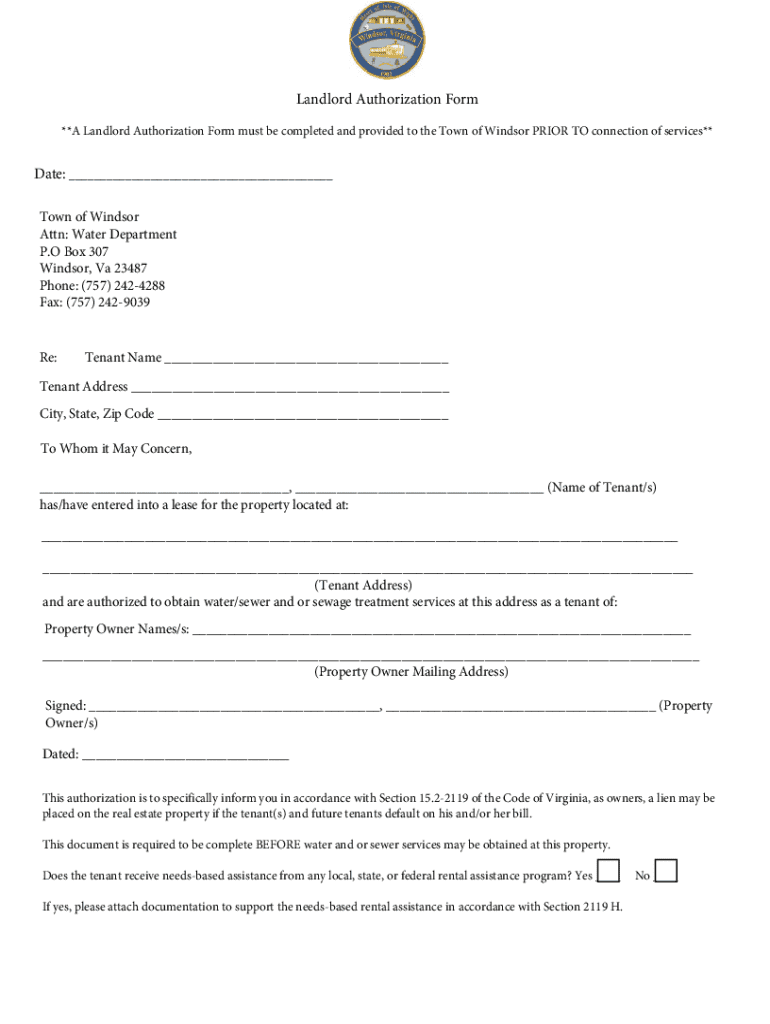







Definition and Meaning of the Landlord Authorization Form
The Landlord Authorization Form is a critical document where a property owner grants permission to a tenant to receive services, such as water and sewer, specific to residential or commercial properties. This form typically requires the completion of sections that specify both the tenant and property owner's details. These details cover essential information, including names, addresses, and contact information. The document further includes a statement of authorization, legally binding the property owner’s consent to allow the tenant to access specified services.
The form plays a significant role in establishing clear communication between utility providers and the tenant while ensuring that all legal consent processes are followed. In case of utility issues or disputes, having this form filled out and on file can prevent misunderstandings about responsibility.
How to Use the Landlord Authorization Form
Using the Landlord Authorization Form involves a few straightforward steps. First, the property owner must obtain the form typically available from the service provider like the Town of Windsor's Water Department or similar local authority. Once obtained, the landlord needs to accurately fill out their section, providing their personal and contact information, as well as property details.
The next step involves the tenant filling out their relevant information in the form. This usually includes tenant identification details alongside the specific services they are authorized to receive. Upon completion, the document needs to be signed by both parties to validate mutual understanding and agreement.
Steps to Complete the Landlord Authorization Form
-
Obtain the Form: Start by acquiring the necessary document from your local utility provider or the appropriate municipal office. Forms are often available online for easy access.
-
Fill Out Landlord Information: The form will require the landlord’s full name, contact information, and details about the property in question. Ensure accuracy as this will be the official record.
-
Provide Tenant Details: The tenant must add their personal information and the specifics regarding the services they wish to have authorized under the landlord’s approval.
-
Sign and Date the Form: Ensure both landlord and tenant sign and date the form. This signature acts as mutual acknowledgment of the terms agreed upon.
-
Submit the Form: Depending on the service provider's requirements, submit the form online, via mail, or in person to complete the setup process.
Key Elements of the Landlord Authorization Form
The form contains several key components critical for its validity and functionality:
-
Tenant and Landlord Information: This includes full names, addresses, and contact details for both parties.
-
Property Details: Precise information about the property in question, including its address and any relevant identifiers, is paramount.
-
Statement of Authorization: A legal statement wherein the landlord authorizes the tenant’s use of specific services is included. This section often outlines the responsibilities of the tenant regarding the services.
-
Signatures: The document must be signed by both the landlord and tenant to be considered legally binding.
State-Specific Rules for the Landlord Authorization Form
The use of the Landlord Authorization Form may vary depending on state regulations. Some states have specific requirements for what must be included in the form or additional procedures for submission. For instance, certain states mandate notarization of the document to further validate the authorization.
It’s crucial for both landlords and tenants to familiarize themselves with state-specific requirements to ensure full compliance. Checking with local authorities or legal advisors can provide clarity on any unique obligations within a particular state.
Who Typically Uses the Landlord Authorization Form
Primarily, this form is employed by both residential and commercial landlords and tenants. Property management companies frequently utilize this document to streamline tenant onboarding processes and manage utility service authorizations efficiently.
Tenants moving into properties that require utility connections to be directly billed to them often complete this form. This ensures they are recognized by service providers, allowing them to set up accounts and make service arrangements seamlessly in their names.


Why You Should Use a Landlord Authorization Form
Utilizing a Landlord Authorization Form offers several practical benefits for both landlords and tenants. For landlords, it provides a clear record of services permitted, reducing legal liabilities associated with unauthorized utility usage.
For tenants, the form ensures they have the formal backing required to establish utility connections without administrative hurdles. Additionally, both parties benefit from having a documented agreement, which is essential in avoiding disputes related to service responsibilities and billing issues.
Examples of Using the Landlord Authorization Form
The form is widely used across various situations. For example, a tenant moving into a new apartment in Windsor might need to connect water services. In such cases, the tenant would initiate the Landlord Authorization Form process with their landlord, ensuring all utility setup requirements are clear and agreed upon.
In another scenario, a business leasing office space might require authorization for industrial waste services from their landlord. Completing the form formally allows the service provider to engage with the tenant directly, ensuring efficient service administration.
Legal Use of the Landlord Authorization Form
Legally, the Landlord Authorization Form acts as a binding agreement stipulating the services a tenant is allowed to access under the landlord’s consent. This form is critical for clarifying responsibility and establishing a clear record of the landlord's consent. Misuse or unauthorized alteration of this document can have legal repercussions, highlighting the need for accuracy and adherence to agreement terms.




