
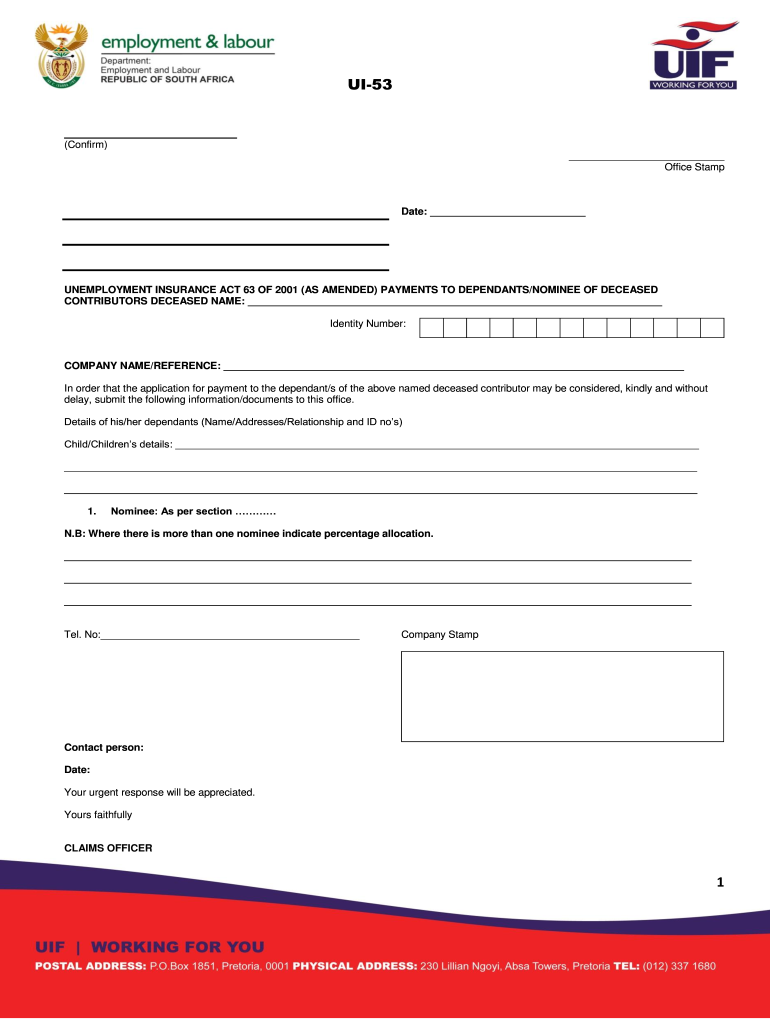







Definition & Meaning of the UI53 Form
The UI53 form, or Unemployment Insurance Nomination Form, is a specialized document used in the context of unemployment insurance benefits in the United States. It serves to formalize the nomination of dependents or beneficiaries who may receive benefits following the death of a contributor. The UI53 is particularly relevant for the dependants of deceased individuals who were actively contributing to unemployment insurance plans. Completing this form is essential for ensuring that the rightful beneficiaries can access any available funds or benefits as stipulated by the Unemployment Insurance Act.
The form requires specific personal details regarding the deceased contributor, including their tax identification number, employment history, and details of the dependants seeking benefits. Understanding the significance of the UI53 is vital for families facing these circumstances, as it protects their rights to claim unemployment benefits and assists in navigating the bureaucratic process.
Key Elements of the UI53 Form
The UI53 form consists of several essential sections that must be accurately completed for successful processing. Key elements include:
- Personal Information: Identification data for both the deceased and the claimants, including names, addresses, and social security numbers.
- Employment History: Detailed records of the contributor's employment status at the time of their passing.
- Beneficiary Designation: A clearly defined section where dependants are named and their eligibility confirmed.
- Documentation Requirements: Instructions for attaching necessary supporting documents such as birth certificates, marriage licenses, or proof of relationship to the deceased.
- Signature Section: Areas where both the claimant and a witness must sign, affirming the validity of the information provided.
Understanding these elements is crucial, as any missing information can delay the processing of claims, potentially hindering timely support for the beneficiaries involved.
Steps to Complete the UI53 Form
Completing the UI53 form involves several methodical steps to ensure accuracy and compliance with legal requirements:
- Gather Required Information: Collect all necessary documentation, including tax IDs, employment histories, and personal details of both the contributor and dependants.
- Fill Out Personal Information: Begin by accurately completing the personal information section for both the deceased contributor and the dependants.
- Document Employment History: Clearly outline the employment history, including dates of employment and employer details. This may require accessing past employment records.
- Designate Beneficiaries: Specify the beneficiaries by listing their full names and relationship to the contributor. Make sure to indicate if they are minors or if additional signatures are required.
- Attach Supporting Documents: Compile any necessary additional documents as stated in the instructions. This may include certifications of birth or marriage to prove relationships.
- Review and Sign: Carefully review all entries for accuracy before signing. Ensure that the form is signed by the claimant and a witness, where applicable.
- Submission: Follow the submission guidelines based on your state’s requirements, either online, by mail, or in person, ensuring to keep copies of all submitted materials.
Completing the UI53 accurately and submitting it correctly is key to accessing funeral benefits and any unemployment insurance payments.
Important Terms Related to the UI53
Understanding the terminology associated with the UI53 form is crucial for accurate completion and comprehension of the claims process. Notable terms include:
- Beneficiary: A person eligible to receive benefits or payments from the deceased contributor's unemployment insurance.
- Claimant: An individual filing the claim on behalf of the deceased contributor or themselves if they are a named beneficiary.
- Dependants: Individuals who rely on the deceased contributor for financial support and are entitled to claim benefits.
- Tax Identification Number (TIN): A unique number assigned to the contributor for tax purposes, crucial for validation in the claims process.
Familiarity with these terms aids in mitigating confusion during the form completion and while dealing with insurance companies or state agencies handling unemployment benefits.
Legal Use of the UI53
The UI53 form must be utilized correctly within the legal framework provided by the Unemployment Insurance Act. It is governed by several significant legal aspects, including:
- ESIGN Act Compliance: Digital signatures made through approved platforms maintain the legal standing of the document per U.S. law.
- Documentation Authenticity: All attached documents must be authentic and verifiable, as any fraudulent entries can lead to severe penalties, including disqualification from benefits or legal action against the claimant.
- Timelines: Specific timelines are often applicable for submitting the UI53 form after the contributor’s death, which must be adhered to in order to secure eligibility.
Awareness of the legal implications of completing the UI53 promotes compliance and helps beneficiaries secure their rightful claims without encountering legal barriers.
Filing Deadlines and Important Dates
Filing deadlines for the UI53 form can vary depending on state regulations, but general timelines include:
- Application Submission: Forms should typically be submitted within a designated period following the contributor’s death to ensure eligibility for benefits.
- Review Period: States often have a stipulated period during which they must process the UI53 claims, which can impact when beneficiaries will receive benefits.
- Notification Period: Claimants should be aware of the notification timeline for approval or denial of their claims, allowing them to follow up if necessary.
Awareness of these timelines is critical for claimants to act promptly, ensuring that no deadlines are missed and that benefits can be claimed in a timely manner.
Examples of Using the UI53 Form
The UI53 form is used in various scenarios where dependants seek unemployment benefits due to the contributor's death. Common examples include:
- Surviving Spouse Claims: A widow or widower may file the UI53 to claim unemployment benefits after their spouse's passing if they were financially dependent.
- Orphaned Minors: Children may use the form through legal guardians to claim benefits after losing their supporting parent, ensuring they receive financial support.
- Other Dependants: Adult children or other relatives living with the contributor who were financially reliant may also file for benefits using the UI53.
These examples illustrate how diverse familial situations can leverage the UI53 to ensure financial security for dependants following an unforeseen loss.




